

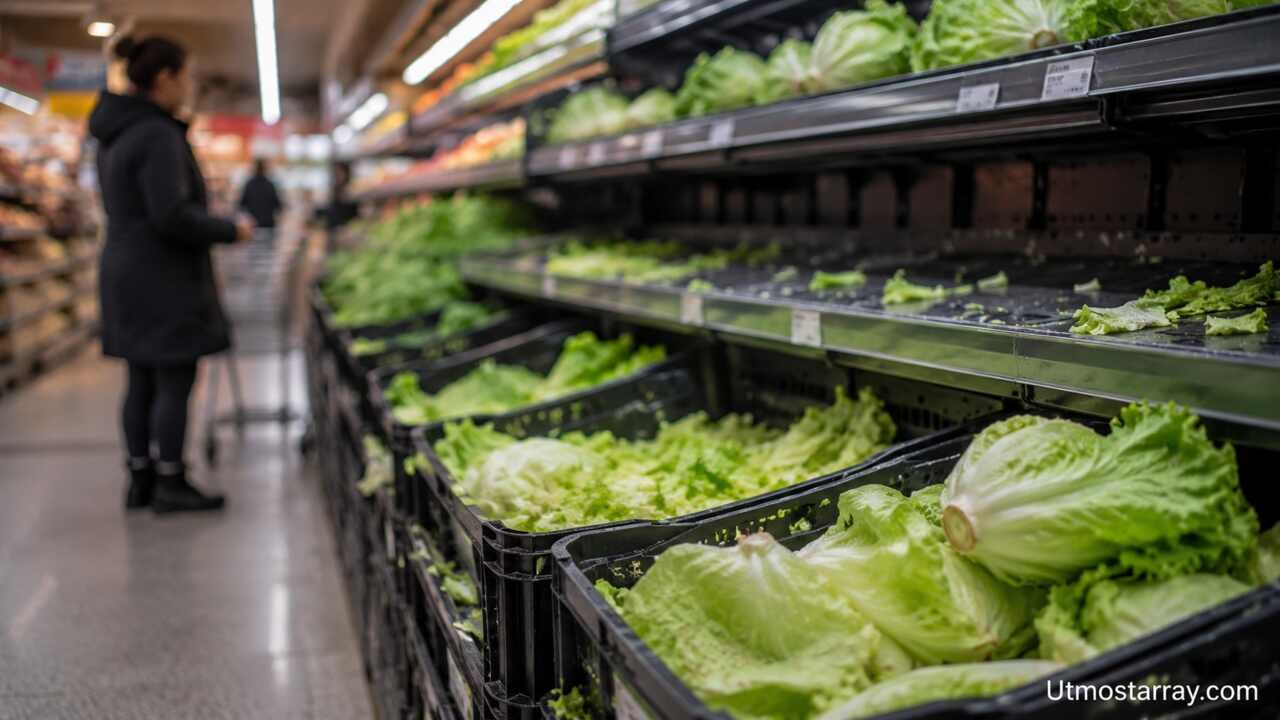
The lettuce shortage has become a major concern for households, grocery retailers, restaurants, and food distributors across many regions of the world. A shortage of a staple leafy vegetable affects far more than salad production. It influences food prices, restaurant menus, agricultural planning, import strategies, and consumer buying habits. When lettuce supplies decline, the ripple effects spread through the entire food supply chain, from farms and transportation networks to supermarkets and food service operations.
The problem often develops through a combination of climate events, crop diseases, labor shortages, transportation delays, rising fuel costs, and changing agricultural conditions. Different lettuce varieties such as romaine lettuce, iceberg lettuce, butterhead lettuce, and leaf lettuce respond differently to weather and disease pressure, which means shortages can vary by season and region. In some years, excessive rainfall damages crops, while in other seasons drought and extreme heat reduce yields.
Understanding the lettuce shortage requires examining agricultural production systems, supply chain vulnerabilities, pricing dynamics, and practical solutions for consumers and businesses. By exploring these factors in detail, individuals and organizations can better manage rising costs, changing availability, and future disruptions in fresh produce markets.
Identify the Main Causes Behind the Lettuce Shortage
The lettuce shortage usually begins with agricultural disruption at the farming level. Weather remains one of the strongest influences on lettuce production because lettuce is highly sensitive to temperature fluctuations, water availability, and soil conditions. Extreme heat can cause lettuce plants to bolt prematurely, reducing quality and market value. Heavy rainfall can flood fields, spread disease, and delay harvesting operations.
Disease outbreaks also play a significant role in reducing lettuce supplies. Soil-borne pathogens, fungal infections, bacterial contamination, and pest infestations can destroy large sections of crops. Growers often face losses when diseases spread quickly through commercial fields. In severe cases, entire harvests become unsuitable for distribution due to food safety concerns or quality deterioration.
Labor shortages create another major challenge for lettuce production. Lettuce farming relies heavily on manual labor for planting, harvesting, trimming, packaging, and transportation preparation. When farms experience worker shortages, harvesting delays increase crop waste and reduce the amount of market-ready lettuce entering the supply chain. Transportation disruptions, fuel price increases, and logistics bottlenecks further intensify supply limitations.
Main Factors Contributing to Lettuce Shortages
| Factor | Impact on Supply | Common Result |
| Extreme Heat | Reduced crop growth | Lower harvest yields |
| Heavy Rainfall | Field flooding and disease spread | Damaged lettuce quality |
| Drought | Limited irrigation capacity | Smaller lettuce heads |
| Plant Diseases | Crop contamination and decay | Destroyed harvests |
| Labor Shortages | Delayed harvesting | Increased waste |
| Transportation Delays | Slower market delivery | Reduced freshness |
| Fuel Price Increases | Higher shipping costs | Increased retail prices |
| Supply Chain Disruptions | Limited inventory movement | Grocery shortages |
Monitor Weather Conditions Affecting Lettuce Production
Weather patterns directly influence lettuce availability because the crop thrives under cool and stable growing conditions. Lettuce farms in major agricultural regions often struggle during periods of excessive heat, drought, or unexpected frost. Even small temperature shifts can affect texture, growth speed, and shelf life.
Heat waves present a particularly serious problem for lettuce growers. High temperatures accelerate plant maturity and cause bitterness in leaves. Romaine lettuce and iceberg lettuce become vulnerable to tip burn, bolting, and dehydration during prolonged hot periods. Drought conditions also reduce irrigation efficiency and increase water management costs for commercial farms.
Flooding and storms create a different type of agricultural damage. Saturated soil encourages fungal growth and root disease while preventing harvesting equipment from entering fields. Strong winds and hailstorms can physically destroy crops in a matter of hours. Climate instability has therefore become one of the central drivers behind recurring lettuce shortages in global produce markets.
Examine How Crop Diseases Reduce Lettuce Supply
Crop diseases significantly reduce lettuce availability because leafy vegetables are highly susceptible to contamination and infection. Downy mildew, lettuce mosaic virus, bacterial leaf spot, and fusarium wilt are among the most damaging diseases affecting lettuce farms. Once pathogens spread through fields, growers often lose large portions of production.
Food safety concerns also force distributors and retailers to remove products from the market during contamination outbreaks. E. coli contamination linked to romaine lettuce has previously caused recalls across supermarkets and restaurants. These recalls reduce consumer confidence and temporarily limit supply as regulatory agencies investigate affected farms and distribution channels.
Disease management requires substantial investment in soil health, crop rotation, irrigation control, and resistant seed varieties. Farmers may increase pesticide applications or implement advanced monitoring systems to reduce future risks. However, these protective measures also increase operational expenses, which contributes to higher lettuce prices for consumers.
Evaluate Transportation and Supply Chain Problems
Transportation disruptions often transform a moderate supply issue into a severe lettuce shortage. Fresh produce requires rapid movement from farms to processing facilities, warehouses, grocery stores, and restaurants. Delays during transportation reduce freshness and shorten shelf life.
Fuel prices strongly affect lettuce distribution costs because refrigerated trucks consume significant energy during long-distance transport. Rising diesel costs increase operational expenses for distributors and retailers. Shipping container shortages, port congestion, and limited trucking availability can further slow the movement of produce across domestic and international markets.
Supply chain disruptions became especially visible during periods of global instability and labor shortages. Distribution centers faced staffing problems, while grocery retailers struggled to maintain consistent inventory levels. Restaurants and food service companies also experienced unpredictable deliveries, forcing menu adjustments and supplier changes.
Track Price Increases Linked to Lettuce Shortages
Lettuce shortages usually result in rapid price increases at supermarkets and restaurants. When supply declines and demand remains stable, wholesale and retail prices rise quickly. Consumers may notice smaller lettuce heads, reduced promotional discounts, and limited variety selection during shortage periods.
Restaurants face major operational challenges when lettuce prices surge. Salad-focused businesses, sandwich shops, and fast-food chains often depend heavily on romaine lettuce, iceberg lettuce, and mixed greens. Higher ingredient costs reduce profit margins and sometimes force businesses to adjust menu pricing.
Retail grocery stores also modify purchasing strategies during shortages. Some retailers limit customer purchases or source lettuce from alternative regions and international suppliers. Importing lettuce from distant markets may maintain availability, but transportation costs frequently lead to higher consumer prices.
Average Effects of Lettuce Shortages on Businesses and Consumers
| Area Affected | Typical Outcome | Financial Effect |
| Grocery Stores | Limited inventory | Higher retail prices |
| Restaurants | Increased ingredient costs | Reduced profit margins |
| Consumers | Smaller product selection | More expensive groceries |
| Farmers | Lower harvest volume | Reduced revenue stability |
| Distributors | Higher transportation costs | Increased operational expenses |
| Food Service Chains | Menu changes | Pricing adjustments |
Compare How Different Lettuce Varieties Respond to Shortages
Different lettuce varieties react differently to environmental stress, disease exposure, and transportation conditions. Romaine lettuce often receives significant attention because it is widely used in salads, wraps, and restaurant dishes. However, iceberg lettuce, butterhead lettuce, green leaf lettuce, and red leaf lettuce also experience supply challenges during difficult growing seasons.
Iceberg lettuce generally tolerates transportation better due to its compact structure and longer shelf life. Romaine lettuce offers stronger nutritional value but remains more vulnerable to contamination concerns and heat damage. Butterhead lettuce provides softer texture and flavor but requires careful handling because of delicate leaves.
Consumers often shift purchasing habits during shortages by choosing spinach, kale, cabbage, arugula, or mixed greens as alternatives. Grocery retailers and restaurants may substitute ingredients depending on availability and pricing. These shifts create changing demand patterns across the broader leafy vegetable market.
Strengthen Agricultural Practices to Reduce Future Shortages
Farmers and agricultural companies continue investing in advanced growing methods to improve lettuce production stability. Controlled-environment agriculture, greenhouse farming, hydroponic systems, and vertical farming help reduce weather-related risks while improving year-round supply consistency.
Hydroponic lettuce farming has gained attention because it uses nutrient-rich water systems instead of traditional soil cultivation. This approach reduces water waste, minimizes disease exposure, and allows growers to control temperature and humidity more effectively. Vertical farming facilities can also produce lettuce closer to urban centers, reducing transportation time and spoilage.
Soil management and crop rotation remain essential for traditional farming operations. Farmers improve resilience by rotating crops, testing soil quality, using disease-resistant seed varieties, and optimizing irrigation systems. Technology-driven agriculture, including drone monitoring and predictive analytics, helps growers detect problems earlier and respond more efficiently.
Improve Water Management for Lettuce Farming
Water availability directly affects lettuce quality, size, and production volume. Lettuce crops require consistent irrigation because shallow root systems cannot tolerate prolonged dry conditions. Drought and water restrictions therefore create major challenges for agricultural regions dependent on irrigation infrastructure.
Efficient irrigation systems help farms reduce water waste while maintaining healthy crop growth. Drip irrigation technology delivers water directly to root zones, reducing evaporation and improving resource management. Some growers also implement moisture sensors and automated irrigation controls to optimize water usage.
Water conservation strategies are becoming increasingly important as climate variability affects agricultural regions worldwide. Governments, agricultural organizations, and researchers continue exploring sustainable water management techniques to protect long-term lettuce production capacity.
Expand Greenhouse and Indoor Lettuce Production
Greenhouse farming offers greater control over environmental conditions compared to open-field agriculture. Indoor production systems protect lettuce crops from extreme weather, pests, and many diseases that commonly affect outdoor farms.
Controlled-environment agriculture allows growers to regulate temperature, humidity, lighting, and nutrient delivery throughout the growing cycle. This stability helps maintain consistent production levels even when outdoor farming conditions become unfavorable.
Urban indoor farms also reduce transportation distance between growers and consumers. Fresh lettuce can reach grocery stores and restaurants faster, improving shelf life and reducing spoilage. Although indoor farming requires substantial initial investment, many companies view it as a long-term solution to recurring supply instability.
Support Local Farmers and Regional Produce Networks
Local agriculture plays an important role during lettuce shortages because shorter supply chains often improve resilience. Farmers selling directly to local grocery stores, restaurants, and farmers markets may respond more quickly to regional demand fluctuations.
Community-supported agriculture programs provide consumers with seasonal produce while supporting nearby farms financially. Restaurants increasingly partner with local growers to secure more reliable produce supplies and reduce transportation dependence.
Regional production networks also reduce some risks associated with international shipping disruptions and cross-border logistics delays. While local agriculture cannot fully replace large-scale commercial production, it strengthens food system flexibility during supply shortages.
Adjust Restaurant Operations During Lettuce Supply Problems
Restaurants frequently modify menus during lettuce shortages to control costs and maintain ingredient availability. Salad portions may become smaller, while alternative greens replace expensive lettuce varieties. Some food service operators redesign recipes to reduce dependency on lettuce-heavy dishes.
Purchasing managers often negotiate with multiple suppliers to secure stable inventory. Restaurants may diversify sourcing strategies by combining regional farms, wholesale distributors, and hydroponic growers. Flexible procurement practices help reduce the risk of sudden shortages.
Customer communication also becomes important during supply disruptions. Transparent menu updates and ingredient substitutions help maintain customer trust while allowing restaurants to adapt to changing market conditions.
Plan Grocery Shopping Strategies During Lettuce Shortages
Consumers can manage rising lettuce prices by adjusting shopping habits and exploring alternative vegetables. Seasonal produce often provides more affordable and accessible options during shortage periods. Cabbage, spinach, kale, Swiss chard, and arugula can replace lettuce in salads, sandwiches, and wraps.
Buying produce from local farmers markets may improve access to fresh greens during supermarket shortages. Consumers can also reduce food waste by storing leafy vegetables properly in refrigerated containers with moisture control.
Meal planning becomes especially useful during periods of limited availability. Preparing recipes around available produce instead of specific lettuce varieties helps households maintain grocery budgets while reducing dependence on fluctuating products.
Use Technology to Improve Lettuce Supply Forecasting
Agricultural technology companies increasingly use predictive analytics and artificial intelligence to monitor lettuce production risks. Weather forecasting systems, satellite imaging, and field sensors help farmers anticipate disease outbreaks, irrigation needs, and harvest timing.
Data-driven forecasting improves supply chain coordination between growers, distributors, retailers, and food service companies. Better forecasting allows businesses to prepare for shortages earlier and secure alternative supply arrangements.
Blockchain technology also supports food traceability and safety monitoring. Faster identification of contamination sources reduces unnecessary recalls and helps maintain consumer confidence in lettuce distribution systems.
Encourage Sustainable Farming Practices for Long-Term Stability
Sustainable agriculture supports long-term lettuce production by improving soil health, conserving water, and reducing environmental degradation. Farmers implementing regenerative farming methods often focus on biodiversity, organic matter retention, and reduced chemical dependency.
Cover crops, compost application, and integrated pest management improve soil quality while reducing disease pressure. Sustainable farming practices can increase resilience against climate variability and help maintain stable crop yields over time.
Consumers and businesses increasingly support sustainability initiatives through purchasing decisions. Demand for locally grown, responsibly produced lettuce encourages investment in environmentally efficient farming systems.
Prepare for Future Lettuce Market Volatility
Lettuce shortages are likely to remain a recurring issue due to climate instability, rising operational costs, labor challenges, and global supply chain complexity. Businesses and consumers must therefore prepare for ongoing fluctuations in availability and pricing.
Diversified agricultural systems offer one of the strongest protections against future disruptions. Combining traditional farming, greenhouse production, hydroponics, and regional sourcing creates more resilient supply networks.
Governments, agricultural researchers, distributors, and food companies continue investing in infrastructure improvements, sustainability programs, and technology solutions aimed at stabilizing fresh produce markets. Long-term adaptation strategies will play a critical role in reducing the severity of future lettuce shortages.
Analyze the Economic Impact of Lettuce Shortages on the Food Industry
The economic impact of lettuce shortages extends far beyond grocery stores and salad restaurants. Farmers experience revenue instability when crop losses reduce harvest volume, while distributors and retailers face increased transportation and procurement expenses. These combined pressures contribute to inflation across broader food categories.
Fast-food chains and large restaurant franchises often sign long-term contracts with suppliers to reduce volatility. However, severe shortages can still disrupt operations when suppliers cannot meet agreed quantities. In these situations, businesses may temporarily alter recipes or shift purchasing toward alternative greens.
Food manufacturers producing packaged salads and ready-to-eat meals also encounter production challenges. Reduced lettuce availability can slow manufacturing schedules and increase packaging costs. This demonstrates how a single agricultural shortage can influence multiple sectors of the food economy.
Explore Consumer Behavior Changes During Lettuce Shortages
Consumer purchasing behavior changes significantly when lettuce becomes expensive or difficult to find. Many shoppers begin searching for substitute vegetables that provide similar texture and nutritional value. Spinach, kale, cabbage, and mixed greens often experience increased demand during major shortages.
Some consumers reduce salad consumption entirely and shift toward cooked vegetable dishes that rely less on fresh lettuce. Others prioritize purchasing locally grown produce because regional farms may offer more consistent availability.
Price sensitivity also affects buying decisions. Households with limited grocery budgets may avoid premium lettuce varieties and purchase smaller quantities. These changing consumption patterns influence retailer inventory planning and supplier negotiations.
Store Lettuce Properly to Reduce Household Food Waste
Proper storage methods help consumers maximize lettuce freshness during periods of high prices and limited availability. Moisture management is particularly important because excess humidity encourages spoilage while dehydration causes wilting.
Refrigerating lettuce in breathable containers lined with paper towels helps absorb excess moisture and extend shelf life. Separating damaged leaves from healthy ones also reduces bacterial spread and preserves freshness longer.
Consumers can further reduce waste by washing lettuce only before use rather than immediately after purchase. Excess water exposure accelerates spoilage and shortens storage life. Careful handling and portion planning therefore become valuable cost-saving strategies during shortages.
Build Stronger Partnerships Between Farmers and Retailers
Closer collaboration between growers and retailers helps improve supply chain stability during difficult growing seasons. Retailers that communicate demand forecasts effectively allow farmers to plan production more accurately.
Long-term purchasing agreements can provide financial stability for growers while giving retailers more reliable access to inventory. Shared investments in cold storage facilities, transportation infrastructure, and quality monitoring systems also improve operational efficiency.
Partnerships with regional farms may strengthen supply resilience by reducing transportation distance and delivery delays. These collaborative approaches help businesses adapt more effectively when market conditions become unpredictable.
Promote Research and Innovation in Lettuce Farming
Agricultural research institutions continue developing solutions aimed at improving lettuce production resilience. Scientists study disease-resistant seed varieties, drought-tolerant crops, and advanced irrigation systems to reduce vulnerability to environmental stress.
Automation technology is also becoming more important in commercial agriculture. Robotic harvesting equipment, precision irrigation systems, and artificial intelligence monitoring tools help farms improve efficiency while reducing labor dependency.
Investment in agricultural innovation supports long-term food security by helping growers adapt to changing climate patterns and market conditions. Research-driven farming practices will likely become increasingly important as global demand for fresh produce continues growing.
Conclusion
The lettuce shortage reflects the complex relationship between agriculture, climate conditions, transportation systems, labor availability, and consumer demand. Weather extremes, crop diseases, supply chain disruptions, and rising operational costs all contribute to reduced lettuce availability and higher prices across grocery stores and restaurants.
Farmers, retailers, restaurants, and consumers each play a role in adapting to these challenges. Advanced farming technology, greenhouse production, hydroponic systems, sustainable agriculture, and improved supply chain coordination provide promising solutions for strengthening long-term resilience.
Consumers can respond by exploring alternative greens, supporting local agriculture, reducing food waste, and adjusting shopping habits during periods of limited supply. Businesses can improve flexibility through diversified sourcing and stronger supplier partnerships.
As climate variability and global market pressures continue influencing agriculture, the ability to adapt quickly will remain essential for maintaining stable lettuce production and reliable food distribution systems.
Frequently Asked Questions
How long do lettuce shortages usually last?
Lettuce shortages can last from a few weeks to several months depending on weather conditions, disease outbreaks, transportation disruptions, and seasonal growing cycles. Recovery time often depends on how quickly farms can restore production levels.
Which lettuce variety is most affected during shortages?
Romaine lettuce frequently receives the most attention because of its popularity in restaurants and packaged salads. However, iceberg lettuce, butterhead lettuce, and leaf lettuce can also experience significant supply disruptions.
Can hydroponic farming reduce lettuce shortages?
Hydroponic farming can improve supply stability because it allows year-round production in controlled environments. These systems reduce exposure to extreme weather and many soil-related diseases.
Why do lettuce prices increase so quickly during shortages?
Lettuce prices rise rapidly because fresh produce has a short shelf life and limited storage capacity. When supply drops suddenly, retailers and restaurants compete for available inventory, which increases wholesale and retail prices.
What vegetables can replace lettuce in meals?
Spinach, kale, cabbage, arugula, Swiss chard, and mixed greens are common alternatives to lettuce in salads, wraps, sandwiches, and side dishes.
How can consumers reduce lettuce waste at home?
Consumers can reduce waste by storing lettuce in breathable containers with paper towels, keeping it refrigerated, removing damaged leaves quickly, and washing it only before use.
