


Highlights
- Use the float test: Fresh eggs sink, old or bad eggs float.
- Always crack eggs into a separate bowl before mixing into your dish.
- A rotten smell (like sulfur) means the egg has spoiled and thrown it out.
- Check the shell for slime, cracks, or powdery mold before using.
- Look for a firm yolk and thick whites in fresh eggs; avoid watery or flat ones.
- Expiration dates are only guides that use sensory checks for real safety.
- Store eggs in the back of the fridge, not in the door.
- Unwashed farm eggs last longer unrefrigerated due to the natural coating.
- Eating spoiled eggs can cause serious food poisoning symptoms.
- Trust your senses when in doubt, toss the egg out.
Introduction
Understanding how to tell if eggs are bad is crucial for anyone who uses eggs regularly in cooking or baking. Spoiled eggs not only ruin recipes but also pose serious health risks. From personal experience in the kitchen and years of navigating food safety practices, I’ve learned that detecting bad eggs doesn’t have to be complicated. You can rely on simple methods like smell, texture, appearance, and even sound. In this article, I’ll walk you through the proven signs, give you my personal tips, and explain how you can confidently determine if your eggs are safe to eat or should be thrown away.
How does the float test help identify bad eggs?
The float test offers a reliable and fast method to assess the freshness of an egg using water. Fill a glass or bowl with cold water and gently place the egg inside. Fresh eggs sink and lie flat on the bottom because their air cell is still small and compact. As eggs age, air seeps through the porous shell, causing the air pocket inside to expand.
When the air cell grows large enough, the egg begins to tilt upwards or even float to the surface. A floating egg usually means it’s no longer fresh and could be spoiled. I use this method often because it takes seconds and gives me an instant reading on whether the eggs are still good.
While this test isn’t 100% accurate for determining safety, it does give a solid idea of the egg’s age. I always recommend pairing the float test with at least one other method like checking the smell or inspecting the shell to be sure.
Why does a fresh egg sink in water?
A fresh egg has minimal air inside its shell. Less air means less buoyancy, causing it to sink and rest flat. This sinking position reflects that the egg was recently laid and is safe to consume when cooked thoroughly.
What does it mean if an egg stands upright or floats?
An upright egg signals it’s about two to three weeks old. A floating egg, however, often means gas buildup from bacterial growth. If an egg floats to the top, especially with a sulfur smell, discard it immediately to avoid foodborne illness.
Can you smell an egg to know if it’s gone bad?

Yes, the smell of a bad egg is unmistakable. When you crack an egg open and notice a strong, foul, or sulfur-like odor, that’s the clearest sign it has spoiled. From my experience, I never second-guess this method if it smells off, it’s going in the trash.
The odor results from hydrogen sulfide gas produced during decomposition. Even if the egg looks fine externally, a rotten smell confirms internal bacterial activity. That’s why I always suggest cracking eggs into a separate bowl before adding them to a recipe.
Using smell as your guide is one of the most effective techniques. Unlike appearance or even the float test, the nose doesn’t lie. If the egg has no odor, it’s likely still good, but if there’s even a slight unpleasant smell, play it safe and don’t use it.
Does the shell smell bad if the egg is spoiled?
Sometimes, yes. If the egg is severely rotten, the sulfur smell can seep through the shell. I once had a carton where just opening the fridge let out a strong odor. That’s when I learned to check the shells directly for odor too.
Should you always crack eggs into a separate bowl?
Always. This gives you a chance to inspect the egg’s odor, consistency, and appearance before mixing it into a larger dish. It protects your recipe and your health. I learned this habit early on, and it has saved many meals from contamination.
How does visual inspection reveal if eggs are still good?
Visual inspection can reveal several indicators of spoilage. First, check the shell for cracks, slimy texture, or powdery residue. A slimy shell could suggest bacterial presence, while powder may signal mold. I always avoid using eggs with these signs.
When cracked open, observe the yolk and white. A fresh egg has a firm, rounded yolk and thick, slightly cloudy whites. Bad eggs often have flat yolks that break easily and watery whites that spread too much. Cloudy whites are not a bad sign; they usually mean the egg is very fresh.
Any discoloration such as pink, green, or iridescent spots in the white or yolk points to bacterial or fungal contamination. In those cases, discard the egg immediately. Trust your eyes if anything looks strange, I’ve found it’s better not to risk it.
What does a cloudy egg white indicate?
A cloudy white usually means the egg is very fresh. Carbon dioxide trapped in the egg hasn’t had time to escape. This cloudiness is natural and not a sign of spoilage, contrary to what many people think.
How should the yolk appear in a good egg?
A firm, round, golden yolk signals freshness. It should sit high in the center and not break easily. A watery or discolored yolk may point to age or spoilage, especially when combined with other signs like odor or float test failure.
Is the expiration date a reliable indicator of egg safety?
Expiration dates offer a helpful reference, but they don’t always reflect whether the egg is bad. Many eggs remain safe to consume weeks past the printed date, especially if stored properly. I’ve used eggs three weeks past the date without any issues after testing them first, of course.
Look for terms like “Sell By,” “Best Before,” or “Expiration Date.” These labels guide retailers more than consumers. The real test lies in your senses: smell, float, and appearance all beat the calendar when determining edibility.
Still, I suggest using the date as a general guide. If the egg is over a month old or the carton looks damaged, I discard it regardless of test results. Safety always comes first in my kitchen.
How long are eggs good after the sell-by date?
Eggs stored in the fridge can remain safe for up to three to five weeks after the sell-by date. Always combine the float test and smell check before use. I keep track by labeling the purchase date on the carton when I bring them home.
Do farm-fresh eggs last longer than store-bought?
Yes. Eggs that haven’t been washed or refrigerated immediately (common with farm-fresh eggs) retain their natural protective coating, called the bloom. This allows them to last longer unrefrigerated, up to two weeks or more at room temperature.
Can egg texture indicate spoilage?
Egg texture changes noticeably when it goes bad. A sticky or slimy shell can signal bacterial growth. Inside, watery whites or a thin, runny yolk often indicate the egg has aged beyond safe consumption. I always feel the shell before cracking the egg open.
Fresh eggs have thick whites that cling to the yolk. Spoiled eggs spread excessively and appear overly runny. The membrane inside may also tear easily in old or bad eggs. These changes are subtle but visible with practice. After cooking thousands of eggs over time, these small signs become second nature.
If the egg feels unusually heavy or light compared to others, it may also be a sign of internal decay or excessive air pocket expansion. When in doubt, discard. One egg is not worth risking a day of stomach cramps.
How do raw egg whites behave when they go bad?
Spoiled egg whites become thin, watery, and fail to hold any structure. They spread out across the pan or bowl, making them hard to cook evenly. They may also carry an unusual tint or bubbles due to microbial activity.
What does a runny yolk mean in a raw egg?
A runny yolk in a raw egg often points to aging or spoilage. It lacks the tight membrane structure that holds it in place. If combined with smell or discoloration, the egg should not be consumed.
How does egg storage affect freshness and safety?
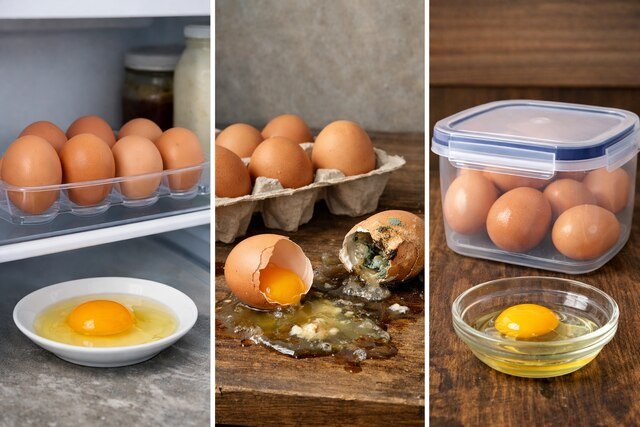
Storage conditions play a major role in determining egg longevity. Eggs kept in the fridge at a consistent temperature of 40°F (4°C) or lower can stay fresh for over three weeks. I store mine in the back of the fridge, not the door, to avoid temperature swings.
Avoid washing eggs before storing because washing removes the protective bloom. If using store-bought eggs, keep them in their original carton to prevent odor absorption and moisture loss. I’ve noticed eggs stay fresher longer when I follow this method strictly.
Eggs exposed to room temperature for several hours become more vulnerable to bacterial growth. Refrigeration slows bacterial multiplication, preserving quality and safety. Always refrigerate eggs after purchase unless they are farm-fresh and unwashed.
Where should eggs be stored in the fridge?
The best place is the coldest section, usually the back or bottom shelf, not the door. The door experiences frequent temperature changes due to opening and closing, which accelerates egg degradation.
Should eggs be washed before storage?
No. Washing removes the natural barrier that protects against bacteria. If needed, gently clean just before use. I only wash dirty farm eggs before cracking, not before storing.
What are the risks of eating a spoiled egg?
Consuming a spoiled egg exposes you to harmful bacteria like Salmonella, which can cause severe food poisoning. Symptoms include nausea, vomiting, diarrhea, fever, and stomach cramps. I once made the mistake of ignoring a slight smell never again.
Foodborne illness from eggs can hit vulnerable groups harder, especially young children, elderly people, and those with weakened immune systems. Even one contaminated egg can infect an entire dish, making it essential to check every egg before use.
Cooking doesn’t always kill all bacteria, especially if the egg is severely spoiled. That’s why checking before cooking is non-negotiable in my kitchen. If you’re unsure about one, don’t risk it out.
What are symptoms of food poisoning from bad eggs?
Symptoms include abdominal pain, vomiting, fever, and diarrhea within 6 to 48 hours of consumption. Dehydration may follow if untreated. If symptoms persist or worsen, medical attention is necessary.
Can you get sick from cooking a bad egg?
Yes. While cooking reduces bacterial load, it doesn’t guarantee safety if the egg was heavily contaminated. Never cook or consume an egg that smells off, floats, or appears discolored.
Comparison of Egg Freshness Indicators
| Test Method | Fresh Egg | Spoiled Egg |
| Float Test | Sinks and lies flat | Floats to the top |
| Smell Test | No smell or neutral | Sulfur or rotten odor |
| Visual Inspection | Clean shell, firm yolk, thick white | Cracked/smelly shell, flat yolk |
| Texture | Thick white, strong yolk membrane | Watery white, broken yolk |
| Storage Location | Stored in fridge in carton | Exposed to warm temperature |
Conclusion
Determining if eggs are bad doesn’t require lab tools or guesswork. Using methods like the float test, smell, appearance, and texture check, you can protect yourself from spoiled eggs with ease. I’ve learned that a few seconds of inspection can save hours of regret. Always check eggs before cooking, store them properly, and trust your senses. Your health and kitchen success depend on it.
FAQ’s
How can you tell if eggs are still good after boiling?
Boiled eggs that smell fine, have a firm white and yolk, and show no green or gray rings are generally safe. Use within one week when refrigerated.
Can you freeze eggs to extend their shelf life?
Yes. Crack and beat the eggs first, then store in airtight containers. Frozen eggs can last up to a year and work well in baking or cooking.
What should I do if I accidentally ate a bad egg?
Monitor for symptoms like nausea, cramps, or fever. Stay hydrated. If symptoms worsen or persist beyond 24 hours, consult a doctor.
Is it safe to eat eggs with blood spots?
Yes. Blood spots occur during formation and are harmless. You can remove the spot before cooking, and the rest of the egg remains safe to use.
