

Highlights
- Sterling silver contains 92.5% pure silver mixed with copper, while white gold contains pure gold blended with white metals and coated with rhodium for brightness and durability.
- White gold offers higher durability and better long term structural strength, especially for engagement rings and everyday wear.
- Sterling silver provides affordability and flexibility, making silver ideal for trend based jewelry and budget friendly purchases.
- White gold holds stronger resale and investment value due to gold content and global market demand.
- Sterling silver requires regular polishing because silver reacts with sulfur and develops tarnish over time.
- White gold requires periodic rhodium re plating to maintain bright white shine.
- Skin sensitivity matters because nickel in some white gold alloys may cause irritation, while sterling silver usually suits sensitive skin better.
- Lifestyle determines the better choice because daily friction and physical activity favor white gold over silver.
- Personal style influences selection because silver gives a softer glow while white gold delivers a sharper, high luxury finish.
- Long term goals matter because white gold supports heirloom jewelry while sterling silver supports flexible fashion choices.
Introduction
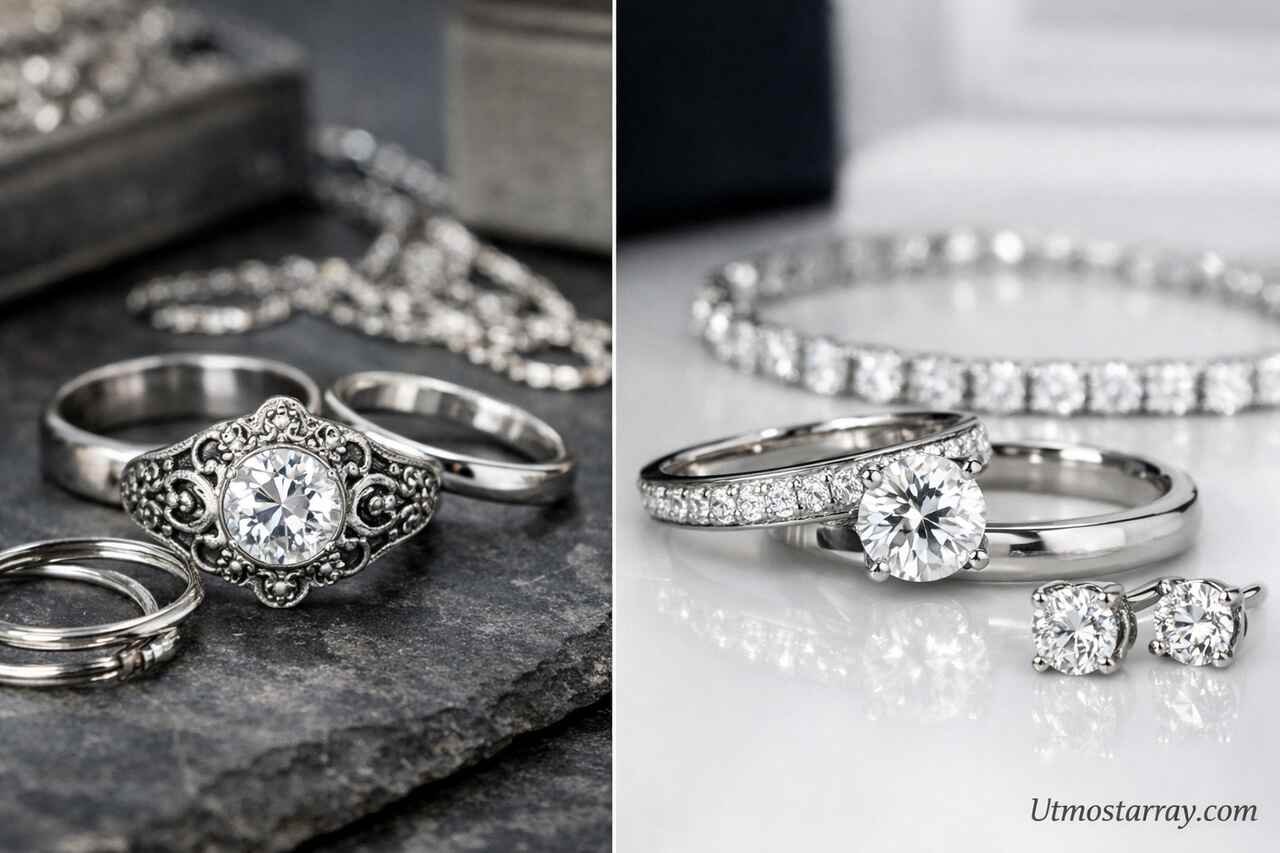
Sterling silver and white gold differ in composition, durability, price, maintenance, and long term value, and buyers choose between them based on budget, lifestyle, and aesthetic preference. Sterling silver contains 92.5 percent pure silver blended with copper, while white gold contains yellow gold alloyed with white metals such as nickel or palladium and usually coated with rhodium. Material composition determines hardness, tarnish resistance, maintenance requirements, and resale value. Jewelry buyers compare sterling silver and white gold when selecting engagement rings, wedding bands, necklaces, earrings, and bracelets because metal choice directly influences durability, skin sensitivity, prestige, and long term wear performance.
What is Sterling Silver and How Does 925 Silver Perform in Jewelry?
Sterling silver consists of 92.5 percent pure silver and 7.5 percent alloy metals, most commonly copper. Silver as a pure metal offers high reflectivity and softness, and copper as an alloy improves strength and shape retention. Jewelers stamp sterling silver pieces with “925” to indicate purity level, and that stamp signals standardized composition recognized in global jewelry markets.
Sterling silver performs well in fashion jewelry, statement pieces, and occasional wear accessories because silver provides a bright white shine that resembles platinum or white gold at a lower cost. Silver offers moderate durability but scratches more easily than gold alloys, and surface oxidation creates tarnish when exposed to moisture, sulfur, or air pollution. Tarnish forms as a chemical reaction between silver and sulfur compounds, and polishing removes that dark layer.
Sterling silver attracts buyers who want affordability, versatility, and bold designs without high financial commitment. I often tell readers that sterling silver works best for trend driven jewelry or pieces that rotate frequently in your collection. If you enjoy changing styles often, sterling silver gives freedom to experiment without the stress of damaging an expensive investment.
Composition and Alloy Structure
Sterling silver contains 92.5 percent silver and 7.5 percent copper, and copper increases hardness while maintaining workable malleability. Alloy structure allows jewelers to create intricate filigree, engraving, and handcrafted textures. Silver molecules bond with copper atoms in a uniform mixture, and that bonding supports casting, hammering, and polishing processes.
Tarnish and Maintenance Requirements
Sterling silver reacts with sulfur in the air, and that reaction forms silver sulfide on the surface. Silver sulfide appears as a darkened layer, and regular polishing cloths or mild cleaning solutions remove discoloration. Proper storage in anti tarnish pouches reduces oxidation and extends shine longevity.
What is White Gold and How Does 14K or 18K White Gold Compare?
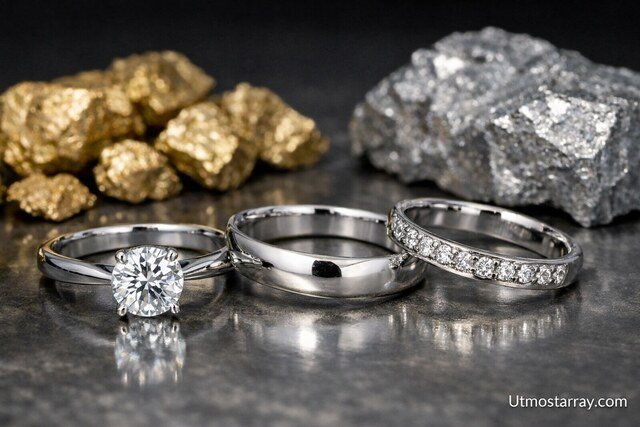
White gold consists of yellow gold mixed with white metals such as nickel, palladium, or silver, and jewellers plate the surface with rhodium for a bright white finish. Gold purity levels such as 14K and 18K represent the percentage of pure gold in the alloy. Fourteen karat gold contains 58.5 percent gold, while eighteen karat gold contains 75 percent gold.
White gold performs strongly in engagement rings and wedding bands because gold alloys offer greater hardness than sterling silver. Rhodium plating enhances scratch resistance and increases brightness, and that plating gives white gold a cooler tone similar to platinum. Over time, rhodium wears down and reveals a slightly warmer undertone, and re plating restores the original finish.
White gold suits buyers who prioritize durability, prestige, and long term wear. I usually explain that white gold feels more substantial on the finger, especially in rings worn daily. If you plan to wear jewelry every day for decades, white gold offers structural integrity that handles constant friction and pressure.
Gold Content and Karat System
Karat measurement defines gold purity, and higher karat means higher gold content. Fourteen karat white gold balances durability and value, while eighteen karat white gold offers richer gold content and softer structure. Buyers choose karat level based on budget and desired longevity.
Rhodium Plating and Re Plating Process
Rhodium plating adds a reflective white coating, and jewelers apply rhodium through electroplating. Plating gradually thins due to friction, and professional re plating every one to three years restores brightness. Maintenance cost depends on jewelry size and local service pricing.
How Do Durability and Strength Compare Between Sterling Silver and White Gold?
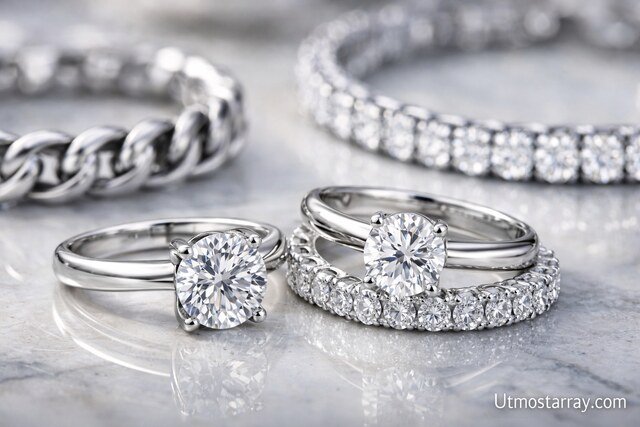
White gold demonstrates greater hardness than sterling silver due to gold alloy density and metal composition. Gold alloys resist bending and denting more effectively, and that resistance makes white gold ideal for prong settings that hold diamonds and gemstones securely. Sterling silver bends more easily under pressure, especially in thin bands.
Sterling silver scratches more quickly because silver has lower hardness on the Mohs scale compared to gold alloys. Surface scratches on silver can be polished, but frequent polishing gradually reduces metal thickness. White gold scratches as well, but scratches appear less pronounced due to rhodium plating and alloy strength.
Daily wear influences durability outcomes. I often advise readers to think about lifestyle before choosing a metal. If your hands experience heavy activity such as gym workouts, gardening, or manual tasks, white gold handles stress better. Sterling silver suits occasional wear and lower impact activities.
Resistance to Scratches and Bending
White gold resists structural deformation due to alloy strength. Sterling silver remains softer and more flexible, which benefits design flexibility but reduces resilience in thin structures.
Longevity in Engagement and Wedding Rings
White gold supports stone security in prong and channel settings. Sterling silver requires thicker designs for similar durability, which may alter aesthetic preferences.
How Do Price and Value Differ Between Sterling Silver and White Gold?
Sterling silver costs significantly less than white gold because silver market value remains lower than gold market value. Gold maintains higher intrinsic value due to scarcity, demand, and global financial recognition. Material cost directly impacts retail pricing for rings, necklaces, bracelets, and earrings.
White gold retains resale value more effectively because gold functions as a commodity and investment metal. Sterling silver holds some scrap value, but resale return remains modest compared to gold. Jewelry stores and gold buyers evaluate karat purity when determining resale offers.
Budget considerations guide many buyers. I always tell readers that sterling silver works well for affordable gifts and fashion accessories. White gold serves as a long term investment for milestone events such as engagements or anniversaries.
| Feature | Sterling Silver | White Gold |
| Base Metal Value | Lower market value | Higher market value |
| Average Jewelry Cost | Affordable | Premium priced |
| Resale Value | Moderate to low | High compared to silver |
| Investment Potential | Limited | Stronger long term value |
Initial Purchase Cost
Sterling silver jewelry typically costs a fraction of white gold jewelry. Material price and manufacturing costs determine final retail pricing.
Long Term Financial Value
White gold maintains intrinsic value due to gold content. Silver fluctuates in price but generally remains less valuable per gram.
How Do Appearance and Color Tone Differ?
Sterling silver displays a bright, cool white shine with high reflectivity. White gold shows a similar white tone when rhodium plated, but underlying gold alloy may produce a slightly warmer hue over time. Color perception depends on lighting, skin tone, and gemstone pairing.
Rhodium plated white gold often appears more mirror like and reflective than sterling silver. Silver may develop a grayish tone if tarnished, and polishing restores brightness. White gold maintains consistent color until plating wears down.
Personal style influences choice. I always encourage readers to compare both metals under natural light. Some people prefer the crisp brilliance of freshly plated white gold, while others appreciate the softer glow of polished sterling silver.
| Attribute | Sterling Silver | White Gold |
| Base Color | Cool bright white | Warm undertone beneath plating |
| Surface Finish | High polish shine | Rhodium enhanced brilliance |
| Aging Effect | Tarnish darkening | Plating fade over time |
| Gemstone Pairing | Complements cool stones | Enhances diamonds strongly |
Shine and Reflectivity
Silver reflects light intensely due to metal purity. Rhodium plating enhances white gold reflectivity beyond natural gold tone.
Aging and Patina Over Time
Silver develops patina when oxidized. White gold gradually reveals warmer tone if plating thins.
How Do Skin Sensitivity and Allergies Compare?
Sterling silver generally causes fewer allergic reactions when alloyed with copper, though some individuals react to trace metals. White gold may contain nickel in certain alloys, and nickel sensitivity affects many people worldwide. Nickel free white gold options use palladium instead.
Skin chemistry influences discoloration. Silver may leave a dark mark on skin due to oxidation reactions with sweat and lotions. White gold rarely discolors skin but may cause irritation if nickel content triggers allergy.
I always suggest asking jewelers about alloy composition before purchasing. If you have sensitive skin, nickel free white gold or high quality sterling silver offers safer choices.
Nickel Content in White Gold
Nickel strengthens white gold but increases allergy risk. Palladium based white gold reduces irritation potential.
Skin Reaction and Discoloration
Silver oxidation may leave temporary marks. White gold reactions usually relate to nickel presence rather than gold itself.
Which Metal Should You Choose for Your Lifestyle and Future Goals?
Sterling silver suits fashion forward individuals who rotate accessories frequently and prefer affordable options. White gold suits long term wearers seeking durability, symbolism, and resale potential. Decision depends on budget, lifestyle, and emotional significance.
White gold supports heirloom quality jewelry due to structural strength and gold value. Sterling silver supports creativity, bold statement designs, and accessible luxury. Both metals deliver beauty when maintained properly.
I often tell readers that jewelry choice reflects both personality and practical needs. If you want a lifelong engagement ring, white gold stands strong. If you love switching styles every season, sterling silver keeps creativity alive without financial pressure.
Best Choice for Everyday Wear
White gold handles constant friction and stress effectively. Sterling silver requires mindful care for daily use.
Best Choice for Budget Buyers
Sterling silver offers elegance at lower cost. White gold requires higher initial investment but offers greater long term return.
Conclusion
Sterling silver and white gold differ in composition, durability, price, maintenance, and symbolic value. Sterling silver provides affordability, bright shine, and design flexibility, while white gold provides strength, prestige, and long term financial value. Silver suits trend driven collections and occasional wear, and white gold suits engagement rings, wedding bands, and heirloom jewelry. Final choice depends on lifestyle, skin sensitivity, budget, and emotional goals. I encourage you to evaluate how often you wear jewelry, how much maintenance you prefer, and how much value you want preserved over time before making your decision.
FAQ’s
Is sterling silver good for engagement rings?
Sterling silver can serve as an engagement ring metal, but white gold offers greater durability and stone security for daily wear.
Does white gold turn yellow over time?
White gold may reveal a warmer undertone when rhodium plating wears off, and re plating restores bright white color.
Which metal lasts longer?
White gold generally lasts longer under daily stress due to stronger alloy composition.
Can sterling silver look like white gold?
Polished sterling silver resembles white gold in brightness, but long term color stability differs due to tarnish and plating factors.
Is white gold worth the extra cost?
White gold justifies higher cost for buyers seeking durability, resale value, and heirloom quality jewelry.
