

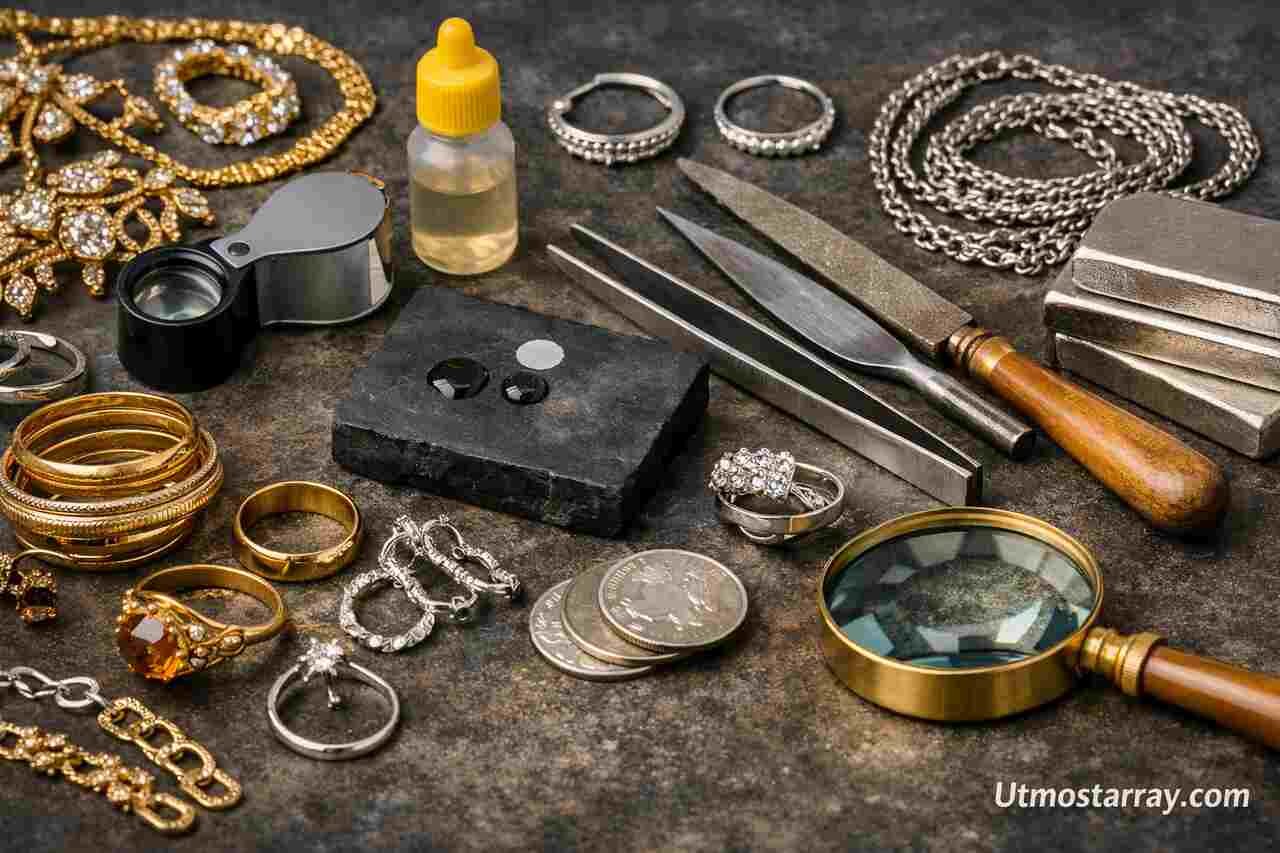
Highlights
- Gold or silver jewelry testing confirms authenticity by identifying real metal content and eliminating counterfeit risk.
- Magnet tests, water tests, and visual inspection provide quick home-based screening before professional verification.
- Acid testing and XRF analysis deliver accurate purity measurement for gold karat and silver percentage.
- Hallmarks such as 14K, 18K, or 925 provide initial clues but require verification for full confidence.
- Gold-plated jewelry differs from solid gold in durability, resale value, and long-term investment potential.
- Market price comparison protects buyers from overpaying for low-purity or fake jewelry.
- Professional certification increases resale value, insurance approval, and estate planning accuracy.
- Jewelry testing empowers owners with financial clarity and emotional security.
Introduction
Gold or silver jewelry test methods help determine authenticity, purity level, and metal composition through physical inspection, chemical reactions, magnetic behavior, density measurement, and professional evaluation. Accurate testing protects buyers from fraud, preserves resale value, and ensures long-term investment security.
Gold and silver jewelry testing matters because counterfeit pieces, gold-plated alloys, and mixed metals circulate widely in the global market. Buyers often assume shine equals value, yet visual appearance rarely guarantees purity. Proper testing methods combine science, observation, and verification tools to confirm whether jewelry contains genuine gold or silver. Knowledge about testing also empowers sellers, collectors, and investors to evaluate heirlooms, estate pieces, or second-hand purchases without uncertainty.
What Is a Gold or Silver Jewelry Test and Why Does It Matter?
A gold or silver jewelry test is a process that determines whether a jewelry piece contains authentic precious metal and identifies its purity level. Testing matters because market value depends on metal content, not appearance. Gold purity uses karat measurement such as 10K, 14K, 18K, and 24K, while silver purity often appears as 925 sterling silver.
Testing protects financial investment. Jewelry value correlates directly with metal composition. A 24K gold ring contains 99.9 percent gold, while gold-plated jewelry contains only a thin outer layer over base metal. Buyers who skip testing risk overpaying for imitation products.
Testing also preserves emotional value. Family heirlooms, gifted jewelry, and antique pieces often carry sentimental meaning. Confirming authenticity ensures long-term preservation, insurance accuracy, and proper storage decisions.
How Does Purity Impact Value?
Purity determines intrinsic metal worth. Higher karat gold contains more gold and commands higher market prices. Sterling silver marked 925 contains 92.5 percent silver and 7.5 percent alloy metals for durability. Lower purity reduces resale value but may increase strength and scratch resistance.
Why Are Fake Pieces Common?
Counterfeit jewelry exists because gold and silver command high global demand. Base metals such as brass, copper, or stainless steel often receive gold plating to mimic appearance. Advanced manufacturing techniques allow imitation pieces to look identical without testing.
How Can You Identify Gold or Silver at Home?
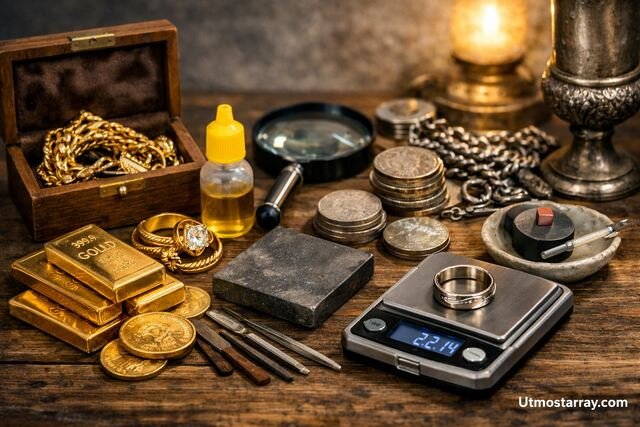
Home testing methods offer quick preliminary verification before seeking professional evaluation. Simple tools such as magnets, water, and magnifying lenses help detect common fakes. Home methods cannot replace laboratory analysis but provide useful screening.
Surface inspection often reveals plating wear. Gold-plated pieces show discoloration at edges, clasps, and corners. Silver-plated items may display greenish oxidation from copper beneath the surface. Observing these visual clues strengthens early assessment.
Weight comparison provides additional insight. Gold feels significantly heavier than most base metals. Silver also carries noticeable density compared to aluminum or stainless steel.
Magnet Test
Gold and silver are non-magnetic metals. Strong magnets attract iron and steel. If jewelry strongly reacts to a magnet, base metal likely dominates composition. Weak reaction may indicate mixed alloys.
Water Float Test
Gold and silver possess high density and sink quickly in water. Lightweight plated metals sometimes float or sink slowly. Drop the piece gently into water and observe movement for early clues.
What Are the Most Reliable Professional Testing Methods?
Professional testing ensures accurate and legally recognized results. Jewelers and laboratories use chemical, electronic, and spectroscopic tools to determine purity levels with precision. Professional evaluation reduces risk in high-value transactions.
Acid testing remains widely used in jewelry shops. Nitric acid reacts differently with various gold karat levels and silver content. Reaction color reveals approximate purity. Skilled professionals apply acid carefully to avoid damage.
Electronic gold testers measure electrical conductivity. Gold and silver conduct electricity differently from base metals. Digital devices provide rapid readings with minimal surface impact.
Acid Test
Nitric acid testing involves scratching a small line on a testing stone and applying acid solution. Reaction color indicates karat rating. No reaction often confirms high-purity gold.
XRF Analysis
X-ray fluorescence analysis measures metal composition without damaging jewelry. XRF machines detect elemental structure and provide precise percentage breakdown of gold, silver, and alloy metals.
How Does Hallmarking Help in Jewelry Testing?
Hallmarks provide stamped indicators of metal purity and manufacturer information. Common gold stamps include 10K, 14K, 18K, and 24K. Silver commonly carries 925, Sterling, or 999 markings.
Hallmarks offer first-layer verification. Reliable stamps align with country regulations. However, counterfeit stamps also exist. Visual confirmation should pair with testing.
Country-specific standards govern hallmarking practices. Different regions enforce different purity regulations, so understanding local standards strengthens evaluation.
Gold Hallmarks
Gold hallmarks indicate karat content. A 14K stamp confirms 58.3 percent gold composition. European systems often use 585 instead of 14K.
Silver Hallmarks
Sterling silver typically carries 925 marking. Fine silver may show 999 marking. Additional symbols may indicate assay office or manufacturer.
What Are the Differences Between Gold-Plated and Solid Gold Jewelry?
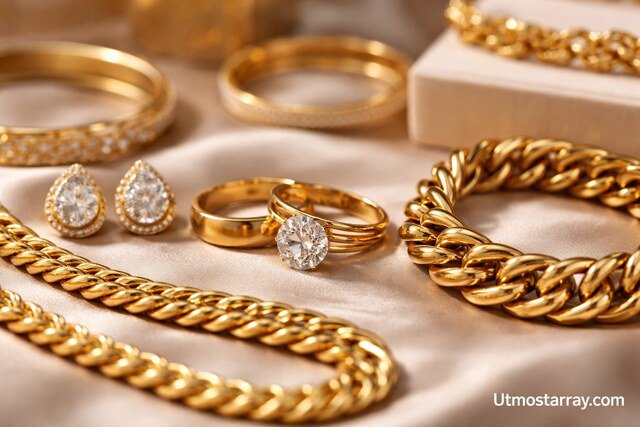
Gold-plated jewelry contains a thin gold layer over base metal. Solid gold jewelry contains consistent gold composition throughout. Weight, durability, and value differ significantly between the two.
Gold-plated pieces wear down over time. Friction removes outer gold layer and exposes base metal underneath. Solid gold retains color and intrinsic value despite surface scratches.
Cost difference reflects metal content. Gold-plated items cost significantly less but offer limited resale value. Solid gold maintains investment potential.
| Feature | Gold-Plated Jewelry | Solid Gold Jewelry |
| Gold Content | Thin surface layer | Consistent throughout |
| Durability | Wears off over time | Long-lasting |
| Resale Value | Low | High |
| Price | Affordable | Expensive |
Thickness of Gold Layer
Gold-plated items contain micron-thin gold coating. Gold vermeil offers thicker gold over sterling silver, providing better durability.
Investment Perspective
Investors prefer solid gold because metal content determines resale value. Gold-plated jewelry serves mainly fashion purposes.
How Can You Protect Yourself When Buying Gold or Silver Jewelry?
Verification protects financial investment and prevents fraud. Always request certification for high-value purchases. Reputable jewelers provide documentation indicating metal purity.
Compare weight and price with market gold or silver rates. If price appears significantly below market value, authenticity may be questionable. Precious metals maintain consistent global pricing.
Build relationships with trusted jewelers. Professional appraisers provide independent confirmation. Documentation increases resale confidence and insurance validity.
Ask for Certification
Certificates from recognized assay laboratories confirm purity and authenticity. Documentation strengthens resale opportunities.
Understand Market Pricing
Check daily gold and silver prices before purchasing. Awareness prevents overpayment and unrealistic bargains.
What Are the Long-Term Benefits of Testing Gold or Silver Jewelry?
Testing builds financial security. Accurate identification ensures fair resale pricing and inheritance planning. Precious metals often act as hedge against inflation and economic instability.
Testing also supports insurance documentation. Insurers require confirmed purity and valuation for coverage approval. Professional reports simplify claims.
Future demand for precious metals remains strong due to jewelry consumption, industrial applications, and investment interest. Understanding testing methods prepares you for long-term ownership.
| Benefit | Explanation |
| Financial Security | Accurate valuation supports resale |
| Fraud Prevention | Early detection avoids scams |
| Insurance Coverage | Verified purity simplifies claims |
| Investment Confidence | Reliable testing supports long-term planning |
Estate Planning Advantage
Confirmed metal value simplifies inheritance distribution and taxation planning.
Resale Preparation
Buyers trust verified documentation. Testing improves negotiation power and market credibility.
Conclusion
Gold or silver jewelry testing ensures authenticity, protects financial investment, and strengthens resale value. Home tests provide early clues, while professional methods deliver precise results. Hallmarks offer guidance but require verification. Understanding differences between plated and solid gold clarifies value distinctions. Certification, market awareness, and professional consultation reduce risk. Personal experience confirms that knowledge builds confidence and long-term security. Anyone who owns, buys, or inherits jewelry benefits from understanding proper testing methods.
FAQ’s
How accurate is a home gold test?
Home tests provide preliminary results but lack precision. Professional acid or XRF testing offers more reliable measurement.
Can gold-plated jewelry pass a magnet test?
Gold plating may pass magnet screening if base metal is non-magnetic. Additional testing remains necessary.
Is sterling silver real silver?
Sterling silver contains 92.5 percent silver and qualifies as genuine silver alloy.
Does testing damage jewelry?
Acid testing may create minor scratch marks. XRF analysis remains non-destructive.
Should I test inherited jewelry?
Testing inherited jewelry ensures accurate valuation, insurance documentation, and fair distribution among heirs.
