

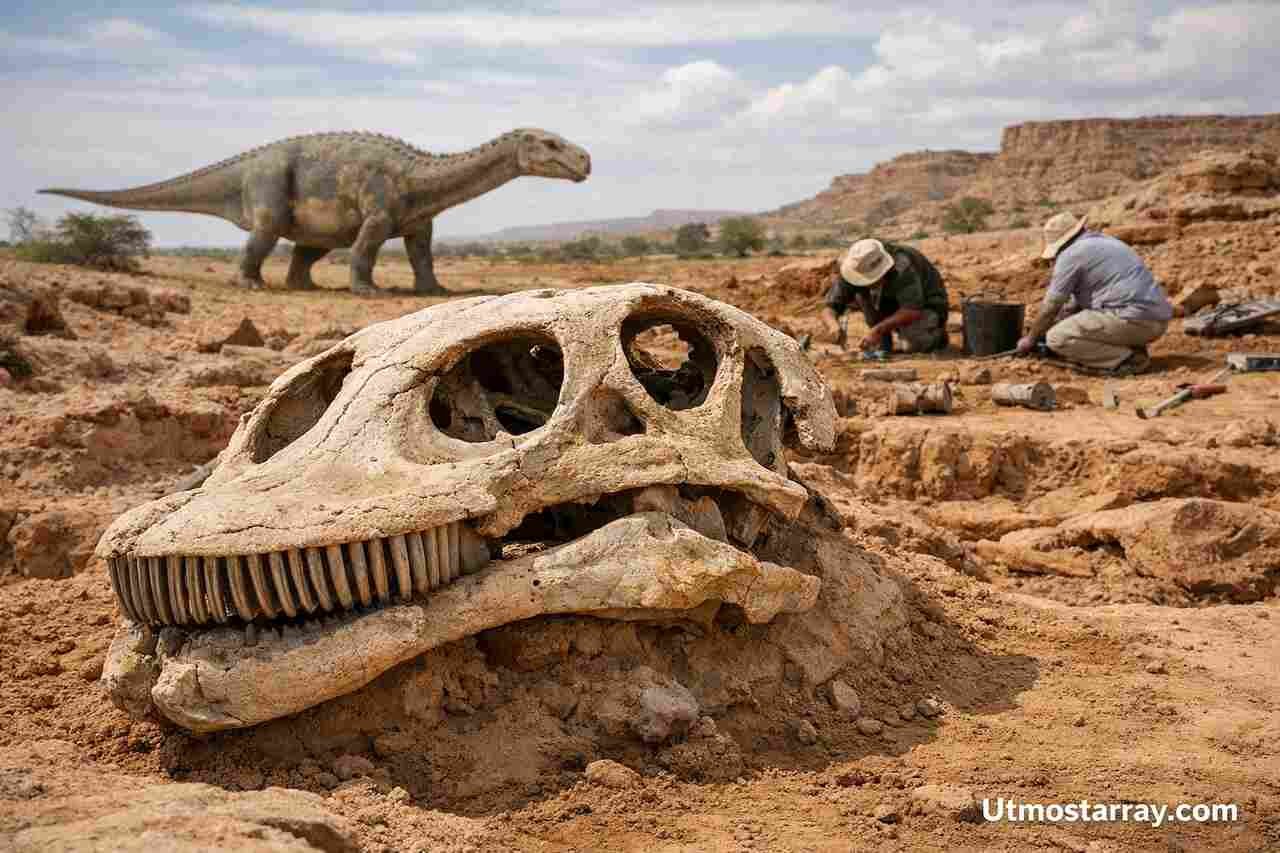
Highlights
- A dinosaur named Nigersaurus had over 500 narrow, replaceable teeth.
- It lived about 110 million years ago during the middle Cretaceous period in West Africa.
- Its wide, flat snout and light skull were perfectly built for ground-level grazing.
- The teeth were arranged in rows and replaced constantly due to heavy wear from eating soft plants.
- It was discovered in the Elrhaz Formation in Niger, a fossil-rich desert that was once a lush wetland.
- Its body was about 30 feet long, smaller than other sauropods, with a short neck and lightweight bones.
- Nigersaurus used its teeth like a vacuum rake, sweeping across vegetation without chewing.
- Its feeding style was unique among sauropods, which usually browsed from trees.
- Museums now feature its reconstructed skull and jaw, showcasing its strange yet efficient dental design.
- The dinosaur teaches us about evolution, dietary specialization, and how diverse dinosaurs truly were.
Introduction
If you’re wondering what dinosaur had 500 teeth, you’re likely thinking about the unique herbivore known as Nigersaurus. Unlike the fearsome carnivores commonly associated with dinosaurs, Nigersaurus stood out for a very different reason: its unusual mouth full of hundreds of tiny, comb-like teeth. Designed not for biting into meat but for cropping plants close to the ground, this dinosaur reveals fascinating insights into prehistoric ecosystems.
What Kind of Dinosaur Had 500 Teeth and Why?
The dinosaur with 500 teeth was called Nigersaurus, a member of the sauropod group. Its name means “Niger lizard,” because its fossils were first discovered in the Republic of Niger, in West Africa. It lived approximately 110 million years ago during the middle Cretaceous period. What made Nigersaurus so extraordinary was its broad, vacuum-shaped muzzle lined with over 500 narrow, replaceable teeth. These weren’t randomly placed; they were organized in rows that allowed it to continuously replace worn-out teeth, much like a conveyor belt.
The design of Nigersaurus’ mouth was perfect for a grazing lifestyle. The dinosaur didn’t chew like mammals do but instead nipped at soft plants with its wide snout, sweeping across low-lying vegetation like ferns and horsetails. The teeth were packed tightly, optimized for efficiency, and wore down quickly, which explains why replacements were needed so often. Its skull was relatively light but structurally adapted to support this unique feeding strategy without sacrificing strength.
By understanding the reason behind its 500 teeth, paleontologists learned more about the variety in dinosaur diets. Not all large dinosaurs were high-browsing giants; some like Nigersaurus adapted to ground-level grazing, opening up new theories about how diverse and competitive ancient ecosystems were.
Skull Structure and Tooth Arrangement
The skull of Nigersaurus was remarkably specialized. Its jawbones were wider than those of most other dinosaurs, allowing for a horizontal tooth row that extended across the front of the snout. The teeth themselves were small, column-shaped, and closely spaced, creating a perfect tool for grazing.
Unlike other herbivores of its time, the teeth were not embedded deep into the jawbone. Instead, they were supported by a lightweight skull reinforced with struts, like the framework of a bridge. This allowed the head to be both strong and agile. Scientists believe it could crop plants in a wide arc with minimal movement.
Tooth Replacement and Lifespan
The constant tooth replacement was a major feature of Nigersaurus. Each tooth would wear down quickly due to the coarse nature of the plants and sand it likely ingested. Behind each active tooth were up to nine replacement teeth waiting in line. This system ensured that the dinosaur always had functional teeth available for feeding.
Where Was the Dinosaur With 500 Teeth Discovered?
The first fossils of Nigersaurus were discovered in the Elrhaz Formation of Niger, a region rich in fossilized bones from the mid-Cretaceous era. This area is now a dry desert, but during the time Nigersaurus lived, it was a lush environment filled with rivers, lakes, and plenty of vegetation. The environment played a crucial role in supporting the diverse wildlife, including crocodile-like creatures, fish, and other dinosaurs.
Paul Sereno, an American paleontologist, led an expedition in the early 2000s that brought Nigersaurus into public awareness. Though fragments were known earlier, Sereno’s team recovered a near-complete skull and several bones, allowing for a detailed reconstruction. The completeness of the skull was particularly important because it confirmed the presence and layout of the hundreds of teeth.
The discovery site also helped researchers understand the dinosaur’s environment. The sediment layers and fossilized plant matter revealed a floodplain ecosystem, with soft soil and aquatic plants. This supports the idea that Nigersaurus fed close to the ground, possibly even with its head lowered for extended periods while grazing.
Geological Conditions of the Elrhaz Formation
The Elrhaz Formation is part of the larger Tegama Group in Niger and is characterized by sandy deposits, riverbeds, and claystone layers. These layers preserved bones extremely well, creating a natural time capsule for mid-Cretaceous life. The fossils found here often show signs of rapid burial, which helped prevent decomposition.
The preservation of Nigersaurus remains was made possible by a combination of fast sedimentation and water flow, protecting the bones from scavengers and erosion. This allowed for the unusually complete recovery of the skull and other skeletal elements.
Paleoenvironment of the Cretaceous Sahara
The Sahara desert today is dry and barren, but 110 million years ago it was a thriving wetland. Large rivers meandered across the landscape, surrounded by forests and open grassy plains. This provided ample food for dinosaurs like Nigersaurus and created an ecosystem where ground-level grazers thrived.
How Did the Dinosaur Use Its 500 Teeth?
Nigersaurus used its hundreds of teeth primarily for cropping soft plants close to the ground. Its wide mouth acted like a rake, sweeping across low vegetation and scooping it into its mouth without needing much chewing. The teeth were ideal for repetitive, horizontal motion, clipping the plants before swallowing.
The position of the jaw and the shape of the neck suggest that Nigersaurus often held its head downward while feeding. Its neck was relatively short compared to other sauropods, which is consistent with a ground-feeding strategy. The dental structure and jaw mechanics confirmed that it was not suited for eating tough, woody plants or chewing extensively.
This method of feeding made Nigersaurus an efficient, low-level browser. The replacement teeth ensured that even after constant wear, the dinosaur never lacked the tools needed for gathering food. This specialization likely allowed it to occupy a niche without competing with taller, long-necked herbivores.
Feeding Behavior and Daily Routine
Nigersaurus probably spent most of its day foraging slowly across open plains. The repetitive movement of the jaws and the layout of the teeth suggest that feeding was a continuous process, much like modern-day cows or horses that graze all day.
The dinosaur’s light skull and wide jaw allowed it to cover more ground with less effort, ensuring it could consume large amounts of plant material to sustain its large body. The neck posture further confirms its downturned feeding angle.
Digestive Adaptations for Soft Plants
To process soft vegetation, Nigersaurus relied more on its stomach than its teeth. Unlike animals that grind food with their molars, it likely swallowed plant material whole and let internal processes do the work. Fermentation chambers or a large gut might have helped break down cellulose.
What Did the Body of the Dinosaur Look Like?
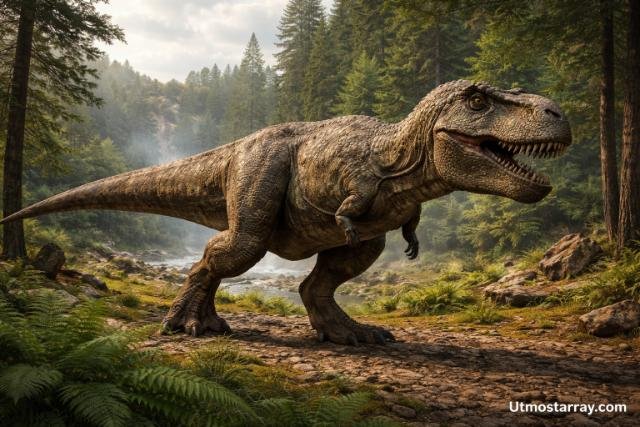
The body of Nigersaurus followed the classic sauropod shape but with some noticeable differences. It had a relatively short neck for its group and a long, lightweight tail. Its body size was modest, about 30 feet long, making it one of the smaller sauropods. The skeletal structure was built for agility and low-level browsing, not for high browsing or defense.
The limbs were column-like, similar to other sauropods, helping support its massive weight. However, the bones were more hollow and lighter, which reduced the energy needed for movement. This design allowed Nigersaurus to be surprisingly mobile despite its size.
The light frame of the skull and neck aligned with its feeding behavior. Its posture supported head-down grazing, and the center of mass likely rested near the hips, giving it balance and stability. Overall, the body design reflected its specialized role in the ecosystem.
Tail and Locomotion Features
The tail of Nigersaurus was long and flexible, used more for balance than defense. Unlike some other dinosaurs, there’s no evidence it used the tail as a weapon. Instead, it likely helped with stability while walking and feeding.
The legs were positioned directly under the body, allowing vertical support. The joint structure indicates slow but steady movement, suitable for a low-energy grazer.
Neck and Posture Mechanics
The neck was made of around 13 vertebrae and was built to hold the head low. CT scans and 3D modeling have shown that the neck had limited vertical flexibility but allowed horizontal sweeping motion. This setup was ideal for scanning large patches of ground vegetation.
How Does Nigersaurus Compare to Other Dinosaurs?
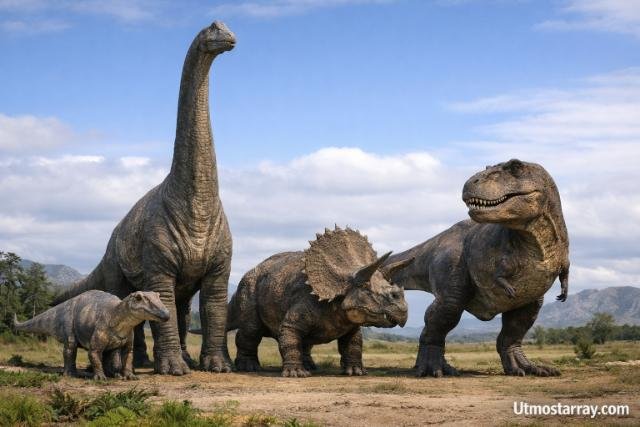
Nigersaurus differed from other sauropods in both form and function. While most sauropods are known for their long necks and high browsing, Nigersaurus flipped the script. It preferred to stay close to the ground, focusing on a niche that few other dinosaurs filled. This reduced direct competition and added diversity to the ecosystem.
Other sauropods, such as Brachiosaurus, had tall necks for accessing trees. In contrast, Nigersaurus evolved features that made it efficient at sweeping across fields. Its lightweight bones and replacement teeth system were not common among its cousins, making it a standout in its family.
The size also played a role in the comparison. At only 30 feet, it was much smaller than the massive 80-foot sauropods that roamed in the same era. However, its efficiency in feeding and mobility may have been an evolutionary advantage in certain environments.
Differences in Feeding Habits
While Diplodocus or Apatosaurus used their necks to reach mid-level plants, Nigersaurus stayed grounded. This created a vertical feeding layer system in prehistoric ecosystems, where each dinosaur fed at a different level.
The specialization in low vegetation allowed for resource sharing and minimized food competition among herbivores.
Bone Density and Skull Mass
The bones of Nigersaurus were lighter than those of many other dinosaurs. Its skull mass was extremely low due to thin bones supported by internal struts. This allowed a large jaw structure without making the head too heavy.
Why Is the Dinosaur With 500 Teeth Important Today?
Learning about Nigersaurus gives scientists a better picture of how ancient ecosystems worked. It reveals that not all dinosaurs were fierce predators or towering giants. Some were highly specialized for unique tasks like grazing, which contributed to ecological balance. This kind of diversity is key to understanding evolution.
Modern researchers use Nigersaurus as a model for studying dietary specialization and skull mechanics. Its tooth arrangement and feeding behavior offer insights into how animals adapt to specific environments. These lessons are even being applied in robotics and biomechanical engineering.
Public interest in this dinosaur also raises awareness about paleontology and encourages exploration of less-famous species. Understanding lesser-known dinosaurs like Nigersaurus deepens our appreciation of prehistoric life and sparks curiosity in future scientists.
Educational Relevance and Museums
Several museums now feature Nigersaurus reconstructions and skull models. These displays help students and visitors visualize how different dinosaurs lived and thrived. By seeing a dinosaur with 500 teeth, people often reconsider their assumptions about what makes a dinosaur unique.
Interactive exhibits allow learners to explore the mouth structure, tooth replacement, and more, enriching the educational experience.
Impact on Evolutionary Biology
Studying Nigersaurus contributes to evolutionary biology by showing how different species can adapt in wildly different directions within the same family. These adaptations are not random. They follow survival needs and available resources. Such examples help us understand the paths evolution can take.
Comparison of Nigersaurus with Other Sauropods
| Feature | Nigersaurus | Brachiosaurus | Diplodocus |
| Neck Length | Short | Very Long | Long |
| Feeding Height | Ground-Level | High-Browsing | Mid-Level |
| Teeth Count | 500+ | ~40 | ~60 |
| Tooth Replacement Speed | Very High | Moderate | Moderate |
| Skull Mass | Very Light | Heavy | Medium |
What Does the Future Hold for Research on This Dinosaur?
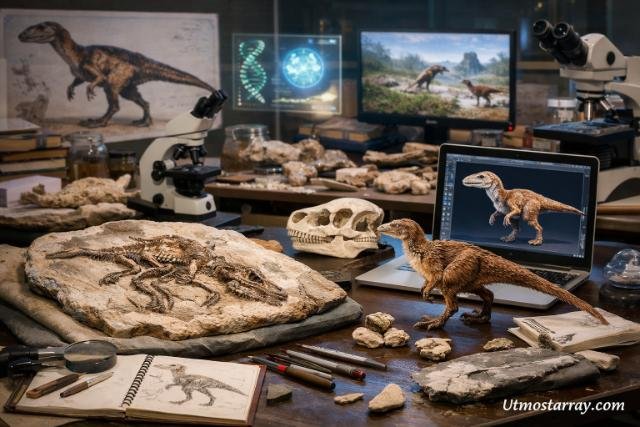
The study of Nigersaurus is far from over. As technology improves, paleontologists continue to uncover new details about how it lived, moved, and evolved. CT scans, 3D printing, and biomechanical modeling are already helping reconstruct how the jaw worked and how fast it could replace teeth.
Future discoveries may reveal more about its social behavior, growth patterns, and even how it raised its young. If new fossils are found in other parts of Africa or in better-preserved conditions, the puzzle of its life could be even more complete. Each new bone or tooth adds to the picture.
For readers, following updates about Nigersaurus is a great way to stay engaged with science and understand how knowledge evolves. Every fossil, every scan, every reconstruction pushes us closer to understanding not just dinosaurs, but life itself.
Conclusion
The answer to what dinosaur had 500 teeth leads to one of the most unique prehistoric creatures ever found. Nigersaurus shows how nature uses specialization to create balance in an ecosystem. Its dental structure, feeding behavior, and discovery all tell a story far deeper than just tooth count. For anyone curious about dinosaurs, science, or ancient life, learning about Nigersaurus opens the door to a richer understanding of evolution, adaptation, and survival.
FAQ’s
Q1: What was the exact number of teeth in Nigersaurus?
Nigersaurus had over 500 teeth, including both functional teeth and those in the process of replacement.
Q2: Did Nigersaurus eat meat?
No, it was a strict herbivore that fed on soft plants close to the ground.
Q3: How big was Nigersaurus compared to other dinosaurs?
At about 30 feet long, it was smaller than many other sauropods like Brachiosaurus or Apatosaurus.
Q4: Why were the teeth replaced so often?
The plant material it ate was gritty and coarse, causing the teeth to wear down quickly, which required constant replacement.
Q5: Where can I see a Nigersaurus skeleton today?
Several museums, especially those focused on paleontology, feature skull replicas and skeletal reconstructions of Nigersaurus.
Explore more insightful and valuable content on our blog utmostarray.com! Stay updated with helpful tips, expert advice, and in-depth articles that enhance your knowledge.
