

Highlights
- The U.S. Dollar declined as global investors brace for an uncertain Federal Reserve policy meeting.
- Market participants are recalibrating expectations on interest rates, driven by mixed economic data and shifting inflation projections.
- The Fed’s December 2025 decision could influence risk assets, bond yields, and currency markets across emerging and developed economies.
- Traders are pricing in the possibility of rate cuts in early 2026, impacting forex positions and short-term treasury yields.
- Euro and Yen gain strength amid Dollar weakness, highlighting investor divergence in global macroeconomic outlooks.
Why Is the U.S. Dollar Declining Before the Federal Reserve’s Rate Decision?
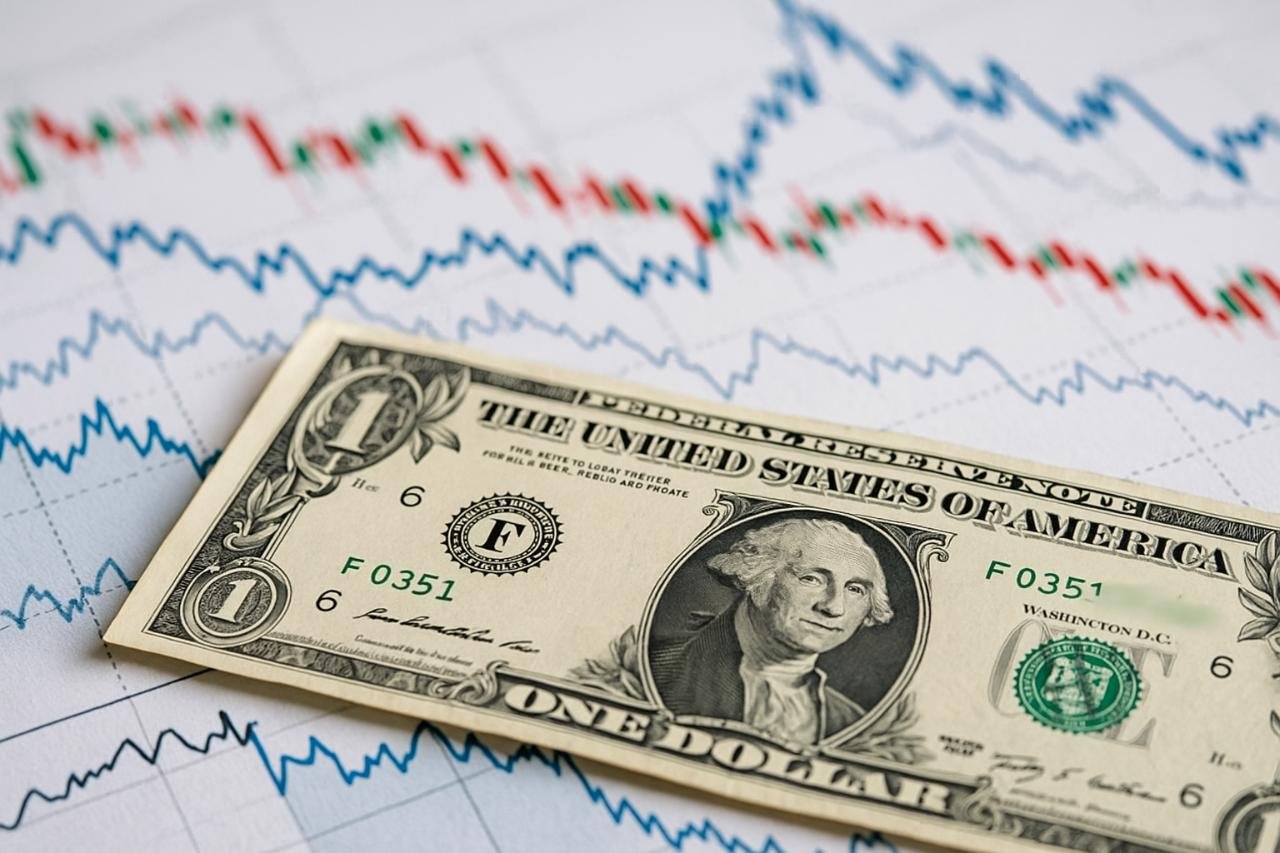
The U.S. Dollar Index (DXY), which measures the value of the Dollar against a basket of major currencies, declined due to increasing investor uncertainty surrounding the Federal Reserve’s upcoming monetary policy stance. Investors are interpreting recent economic indicators as signs of potential dovishness in future rate guidance.
What Is the Federal Reserve’s Current Monetary Policy Outlook?
The Federal Reserve’s stance is transitioning from a hawkish tightening cycle to a more data-dependent neutral phase. Core inflation data remains above the 2% target, but slowing wage growth and consumer spending suggest reduced inflationary pressure. The Federal Open Market Committee (FOMC) is likely to maintain rates in December 2025 but may revise forward guidance to indicate future cuts in 2026.
How Are Economic Indicators Influencing Market Sentiment?
Recent U.S. economic data reveals mixed signals:
- Nonfarm Payrolls showed resilience, but job creation has decelerated month-over-month.
- CPI Inflation remains elevated in shelter and services sectors, yet goods inflation is flattening.
- PMI Surveys from ISM indicate a slowdown in both manufacturing and services.
- Retail Sales growth is moderating due to high interest rates and consumer credit exhaustion.
How Are Investors Adjusting Forex and Fixed-Income Positions?
Currency traders are rebalancing portfolios in anticipation of a more dovish Fed in 2026:
- Short-Dollar Positions increased across hedge funds and institutional traders, reflecting bearish Dollar sentiment.
- Long-Euro and Long-Yen Bets have intensified as the European Central Bank and Bank of Japan adopt divergent policies.
- 10-Year Treasury Yields have retraced from recent highs, reflecting increased demand for U.S. government bonds amid cooling economic expectations.
- Fed Funds Futures are pricing in a 60% chance of a rate cut by March 2026, compared to 30% last month.
How Are Global Currencies Performing Against the U.S. Dollar?
The Euro, Yen, and British Pound have all appreciated against the Dollar, driven by comparative shifts in macroeconomic fundamentals and monetary divergence.
How Is the Euro Responding to Fed Uncertainty?
The EUR/USD pair strengthened due to reduced Dollar demand and moderately hawkish remarks from ECB officials. Eurozone inflation showed signs of easing, but growth indicators remain fragile. Traders anticipate fewer ECB cuts relative to the Fed in 2026, which supports the Euro.
Why Is the Japanese Yen Gaining Strength?
The USD/JPY pair declined as Japanese bond yields rose amid speculation that the Bank of Japan could end negative interest rates in early 2026. Governor Ueda’s recent comments hint at gradual normalization, boosting demand for the Yen, especially from carry-trade reversals.
What Is Driving the British Pound Higher?
The GBP/USD pair is benefiting from stronger-than-expected UK wage growth and persistent core inflation, which could force the Bank of England to maintain a higher-for-longer policy stance. In contrast to the Fed’s potential easing, this divergence strengthens the Pound.
How Are Emerging Market Currencies Reacting?
Emerging Market currencies such as the Brazilian Real, Mexican Peso, and Indian Rupee have shown relative stability or mild appreciation. These currencies attract capital due to attractive real yields and expectations of a weaker Dollar, which reduces capital outflow pressures.
What Are the Broader Implications of Dollar Weakness for Financial Markets?

Dollar depreciation impacts multiple asset classes through macro-financial channels, influencing trade balances, capital flows, and commodity prices.
How Does a Weaker Dollar Affect Commodities?
Commodity prices such as oil and gold tend to rise when the Dollar weakens:
- Gold Prices surged past $2,100 per ounce due to increased safe-haven demand and lower real yields.
- Crude Oil rebounded slightly, as a weaker Dollar reduces import costs for oil-importing countries.
- Industrial Metals like copper and aluminum also gained amid improved global risk sentiment.
What Is the Impact on Equities and Risk Assets?
U.S. and global equity markets tend to perform better in a Dollar-weakening environment:
- Emerging Market Stocks benefit from stronger local currencies and easing capital repatriation concerns.
- Technology Stocks in the U.S. gain from lower interest rate expectations, reducing discount rates on future earnings.
- Multinational Corporations see improved earnings translations from foreign revenues.
How Does Dollar Weakness Influence Global Trade?
A softer Dollar improves U.S. export competitiveness by lowering the relative price of American goods. Trade balances may benefit, but U.S. import costs rise, especially for energy and raw materials. Meanwhile, other economies may face tightening liquidity due to capital inflow shifts.
What Should Investors Monitor Going Forward?
Investors should focus on:
- The tone and forward guidance of the Fed post-meeting.
- Updated projections from the Summary of Economic Projections (SEP).
- Labor market trends and consumer sentiment surveys.
- Global central bank responses to evolving U.S. monetary policy.
Conclusion
The U.S. Dollar’s depreciation reflects shifting investor sentiment on the Federal Reserve’s policy direction in 2026. With global monetary divergence intensifying, capital markets are adjusting to a potential regime change in interest rate cycles. Forex volatility and risk-sensitive assets will remain responsive to every macroeconomic data release and central bank communication. Understanding this interplay is critical for informed trading and long-term asset allocation.
