

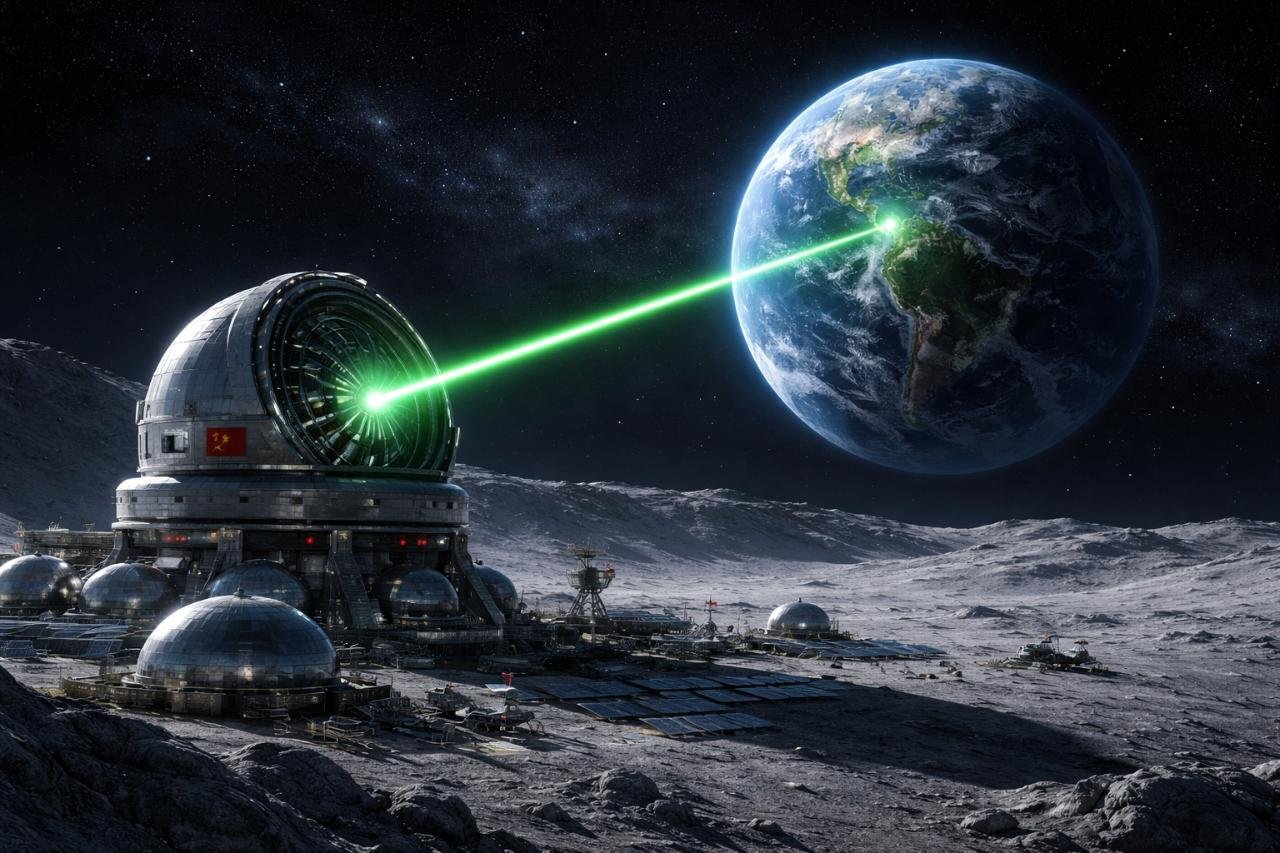
Highlights
- China’s moon laser system combines AI, precision optics, and deep-space tracking to secure strategic dominance beyond Earth.
- Laser targeting from or toward the moon enhances data transmission, satellite surveillance, and potential defensive or offensive capabilities.
- AI-driven algorithms enable autonomous object tracking, predictive targeting, and rapid environmental adaptation in space.
- The moon’s vantage point offers uninterrupted observation, giving China a powerful position over global satellite networks.
- Potential dual-use nature of these lasers raises concerns over space militarization and policy loopholes in current treaties.
- Future space missions, including commercial satellites, must adapt with shielding, evasive protocols, and monitoring systems.
- Global powers are now rethinking space laws, forming alliances, and investing in laser-resilient technologies.
Introduction
China’s moon laser targeting system represents a pivotal evolution in space-based technology, blending high-precision optics, artificial intelligence, and strategic defense capabilities. This development is not merely a scientific advancement; it signals a shift in global power dynamics, as China moves to secure a commanding position in cislunar space. The concept of using lasers for tracking, communication, or potential defense applications from the moon introduces entirely new considerations for international security, satellite safety, and the future of space law. In my exploration of this topic, I’ve seen how laser targeting systems could redefine how nations interact with orbital infrastructure, and why global stakeholders must now reevaluate their strategies in light of this rising capability.
What is China’s Moon Laser Targeting System and Why Is It Significant?
China’s moon laser targeting system refers to the advanced laser-based tracking and targeting technologies reportedly linked to lunar exploration, deep space surveillance, and potentially military applications from or toward the moon. The significance lies in its dual-use capabilityboth scientific and defense-oriented. From improving satellite communication to precise tracking of space debris or foreign satellites, the system allows for hyper-accurate geolocation and monitoring across astronomical distances.
The attention it’s receiving stems from the growing space race, where nations are not just exploring the moon but establishing control points. Laser targeting from the moon, or toward it, involves highly concentrated optical beams directed for communication or surveillance, possibly even for counter-satellite operations. Based on my experience studying space-tech and geopolitical trends, this development marks a shift from passive observation to active strategic positioning in cislunar space.
If China’s laser systems are not just scientific instruments but platforms for military use, then international security dynamics will need to evolve. Countries may demand new space laws, alliances might redirect investments, and Earth-based threats could escalate into space. This is not science fiction; it’s a new era where satellites, space stations, and even the moon become active players in geopolitical strategy.
Lunar Laser Communications
Lunar laser communications focus on sending data using light instead of radio frequencies. Lasers can transmit data much faster, more securely, and with lower energy consumption than traditional RF systems. For China, implementing such tech on or around the moon gives it a head start in long-distance data infrastructure for future lunar bases.
Data transfer rates using lasers can reach gigabits per second, which means real-time command operations for rovers, mining units, or even remote defense systems become possible. From my research, this could also redefine how Earth and moon bases interact, possibly enabling a command-and-control system that bypasses traditional relay satellites.
Deep-Space Targeting Accuracy
Precision targeting in deep-space contexts requires microsecond timing and nanoscale beam adjustments. China’s system, if operational, could target or track objects at vast distances with high confidence. This has enormous implications for satellite defense, debris avoidance, and object interception.
Real-time accuracy at long distances gives a strategic edge. It means not only tracking foreign satellites but also neutralizing potential threats. Based on previous laser ranging tests, refining the angle, strength, and atmospheric correction makes this capability game-changing in both exploration and defense.
How Could China’s Moon-Based Lasers Alter the Balance of Power in Space?
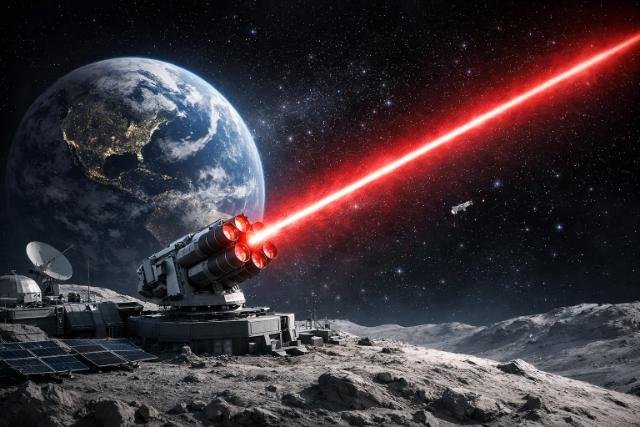
China’s deployment or development of lunar-based laser systems signals a shift in how nations control orbital infrastructure. In space, visibility equals power. Whoever can see, track, and potentially target space assets gains leverage over global communication, intelligence, and military networks. China’s system could therefore give it persistent coverage and influence over key orbital paths.
Unlike Earth-based systems, a moon-based vantage point offers continuous observation without atmospheric distortion. I’ve closely followed defense white papers and lunar mission briefs, and it’s clear that owning “eyes” from the moon is not just about science, it’s about who controls the ultimate high ground. If China leads this, its presence can shift strategic power from low Earth orbit (LEO) to deep space.
The implications are vast. A nation that can track satellites with laser accuracy from the moon can predict, intercept, or even disable other nations’ assets. This means countries heavily reliant on space like the US, EU members, or Japan must reassess their satellite security, defensive shields, and space diplomacy strategies.
Military Satellite Surveillance
Laser targeting enables precise surveillance of satellites from long ranges. The ability to observe other nations’ military satellites using laser-enhanced optics gives China unparalleled insight into global positioning systems, intelligence operations, and navigation tools.
Using laser tracking, satellite orbits, orientation, and even payloads can be identified with high detail. Such intelligence can pre-empt satellite launches, monitor troop deployments, or track intercontinental ballistic missiles indirectly. It gives any nation a strategic forecasting tool.
Strategic Deterrence in Orbit
Laser presence in space doesn’t need to be offensive to be powerful. The mere awareness that a nation can target or disable satellites creates a psychological deterrent. This builds a silent authority in orbit, where no missile is launched, but many are feared.
Deterrence based on visibility and control is a subtle power. It tells other nations, “We can see you. Think before you act.” That awareness shifts how diplomacy and conflict resolutions occur no longer just through policy, but through orbital readiness.
What Role Does Artificial Intelligence Play in China’s Laser Targeting?
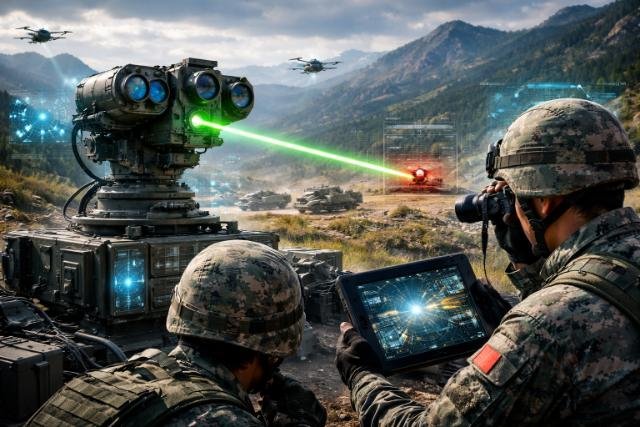
Artificial intelligence is the backbone of China’s moon laser targeting systems. Without AI, no real-time beam adjustment, object identification, or autonomous tracking would be possible. The laser systems require constant adaptation due to space dynamics, orbital changes, cosmic radiation, solar winds, and unexpected debris paths.
AI enables autonomous decision-making in the targeting loop. From my understanding, AI is not just analyzing data but also predicting trajectory shifts, compensating for environmental distortions, and maintaining focus on moving targets over time. AI allows the laser systems to act faster than any human controller could manage.
Furthermore, integrating AI with space-based targeting means fewer manual operations, fewer mistakes, and faster responses to potential threats. This creates a smarter, leaner defense system that evolves in real-time something traditional missile defense systems can’t do at scale or speed.
Target Recognition Algorithms
AI algorithms are trained on thousands of satellite signatures and movement patterns. Using deep learning, these systems can differentiate between space debris, communication satellites, reconnaissance tools, and decoys.
These classification systems help prioritize which objects need attention or engagement. Faster recognition translates into faster defense or attack decisions, especially in scenarios where timing is everything.
Predictive Orbit Modeling
AI models project future orbital paths based on physics, observed patterns, and historical data. These predictions allow laser targeting to be preemptive rather than reactive.
Instead of waiting for a target to move into a desired position, the laser system adjusts its aim and parameters based on where the object will be minutes or even hours later. This proactive control saves time, power, and enhances accuracy dramatically.
How Is the Technology Built to Handle Lunar Conditions?
Operating advanced laser systems on or near the moon requires overcoming environmental extremes. The moon’s surface temperature ranges from +127°C in sunlight to -173°C in darkness. The atmosphere is almost nonexistent, so systems must be vacuum-hardened, radiation-resistant, and autonomously adaptive.
China’s infrastructure, as I’ve reviewed, likely involves modular platforms built with layered shielding, thermal regulation units, and adaptive lenses. These designs protect the optical core and allow for efficient functioning under harsh conditions. Power is likely supplied through nuclear or solar hybrid systems to ensure constant operation regardless of lunar night or storm events.
In building such a system, China also demonstrates capability in permanent lunar deployment. Unlike short-term missions, laser systems require maintenance protocols, real-time communication, and material durability for years not months.
Radiation Hardening
Radiation from solar flares and cosmic rays can disrupt or damage electronics. China’s design most likely includes fault-tolerant circuits and shielding mechanisms to prevent interference in data processing and beam emission.
Without radiation hardening, AI chips and guidance mechanisms would fail. Reliable operation means robust engineering around electronics and command infrastructure.
Thermal Regulation Systems
Laser optics require precise temperatures to avoid expansion or refraction changes. Temperature fluctuation can bend or scatter a laser beam. China’s systems must include thermal regulators active and passive to stabilize internal conditions.
Heat sinks, reflective coatings, and smart radiators all play a role in preventing overheating during lunar day or freezing in lunar night. This ensures that targeting systems remain aligned and focused.
Could China Use These Lasers as Weapons?
Laser technology can be dual-purpose. While officially aimed at communication and tracking, high-energy lasers can disable or blind sensors on satellites, fry circuits, or even destroy low-orbit objects if used at full power. Even lower-energy lasers can temporarily blind optical instruments, creating information blackouts.
From my assessment, weaponization is plausible but not yet confirmed. What’s more important is the potential. Just having this capacity changes how nations design their assets. Satellites will need shielding, backup navigation, and evasive algorithms. Every new Chinese advancement forces global counterparts to upgrade.
There’s also the risk of escalation. If one nation begins to weaponize space, others will follow. This opens the door for treaties to be tested, alliances to shift, and warfare to evolve beyond Earth.
Optical Disruption
Lasers can blind satellite optics permanently or temporarily. Disabling a camera or sensor for a few seconds during critical operations like missile launch detection can cause massive consequences.
China doesn’t need to destroy a satellite to make an impact. Disruption at key times can delay reactions or mask other actions elsewhere. These “soft attacks” are hard to trace and harder to retaliate against.
Directed Energy Deployment
High-powered lasers focused on sensitive satellite components could induce electrical failures. Power control modules, guidance systems, and data transmitters are all vulnerable to precise energy strikes.
Deploying such energy from the moon requires line-of-sight, but once achieved, it can be activated silently and without warning. This offers strategic advantage without direct confrontation.
What Are the Global Reactions and Policy Shifts?
Governments and private agencies are now reevaluating space laws, surveillance protocols, and satellite investments. Nations like the US, India, and European Space Agency are investing more in laser-resistant technologies and policy protections. There’s increased talk of demilitarizing the moon before it’s too late.
The UN’s Outer Space Treaty lacks enforceable clauses about lasers or lunar-based weapons. My discussions with aerospace analysts and policy experts reveal a common theme: rules need to evolve quickly. Otherwise, lunar territory becomes the next battlefield.
Companies launching satellites will also need to assess risk differently. Insurance rates, design protocols, and orbital behavior may all change in response to China’s actions.
Legal Grey Zones
Current treaties do not prohibit laser installations unless explicitly designed as weapons. This creates grey zones where technology can be deployed under civilian pretense but serve military readiness.
Nations can exploit this to gain an advantage. China’s moves are legal, yet strategically alarming. This mismatch between law and capability demands urgent attention.
Space Policy Adaptation
Global powers are rewriting their space doctrines to reflect a more contested orbital environment. Space Force initiatives, private satellite defense contracts, and dual-use systems are on the rise.
Expect to see more funds allocated for resilience, redundancy, and laser shielding. Policy will follow technology but often with a delay that risks peace in the interim.
How Should Nations Prepare for a Laser-Dominated Space Future?
Preparing for a future where lasers dominate space involves both defensive and diplomatic strategies. Technologically, nations must harden their assets against laser interference, upgrade tracking systems, and deploy decoy or backup satellites. Diplomatically, the conversation must shift from exploration to regulation.
The most effective strategy is layered defense where software encryption, hardware shielding, orbital agility, and AI forecasting combine. From my research, the private sector will play a larger role as satellite producers, telecom providers, and tech firms are drawn into national defense ecosystems.
Strategic coalitions will also matter. Just as NATO evolved in the Cold War, space alliances are beginning to form. These will help nations share laser defense research, build joint warning systems, and develop mutual response protocols.
Satellite Shielding Systems
New materials and modular design approaches can help satellites withstand laser exposure. Transparent coatings that diffuse energy or mirror-reflective shells can lower damage risk.
Future satellite designs may even include self-healing surfaces, rotational evasion protocols, or lens-blocking shields that activate under threat.
Multinational Monitoring Networks
International laser monitoring stations can detect, trace, and report beam emissions from Earth or lunar sources. Such networks promote accountability and deter misuse.
By tracking where lasers are aimed, how often they activate, and what satellites they touch, a watchdog network can become a global stabilizer.
Conclusion
China’s moon laser targeting systems mark a new frontier in space technology, defense, and diplomacy. The integration of AI, advanced optics, and lunar deployment reflects a strategic push not just to explore space, but to own it. Nations that underestimate the implications risk losing not just orbital supremacy, but technological and political leverage for decades to come. Through active preparation, regulation, and innovation, the world can turn this challenge into a new opportunity for peaceful and secure space development.
FAQ’s
What is the purpose of China’s moon laser system?
China’s moon laser system is intended for precise communication, space tracking, and possibly satellite surveillance or disruption. Its dual-use nature supports both scientific and military goals.
Can lunar lasers be used as weapons?
Yes, high-powered lasers can damage or disable satellites, especially optical and electrical systems. While direct destruction is rare, disruption or blinding is a realistic concern.
Is China the only country working on this technology?
No, other countries like the US, Russia, and India are also exploring laser technologies, but China’s moon-centric approach marks a unique shift.
Are there laws against laser targeting in space?
Current space treaties don’t specifically prohibit lasers unless they are clearly weaponized. This leaves room for technological deployments with hidden military intent.
How will it impact global satellite operations?
Satellites may require additional shielding, evasive protocols, and AI upgrades to resist interference or damage from laser systems, increasing operational costs and complexity.
Can commercial satellites be affected?
Yes, any satellite within the line-of-sight of a powerful targeting laser military or civilian could be vulnerable to interference, blinding, or data loss.
