

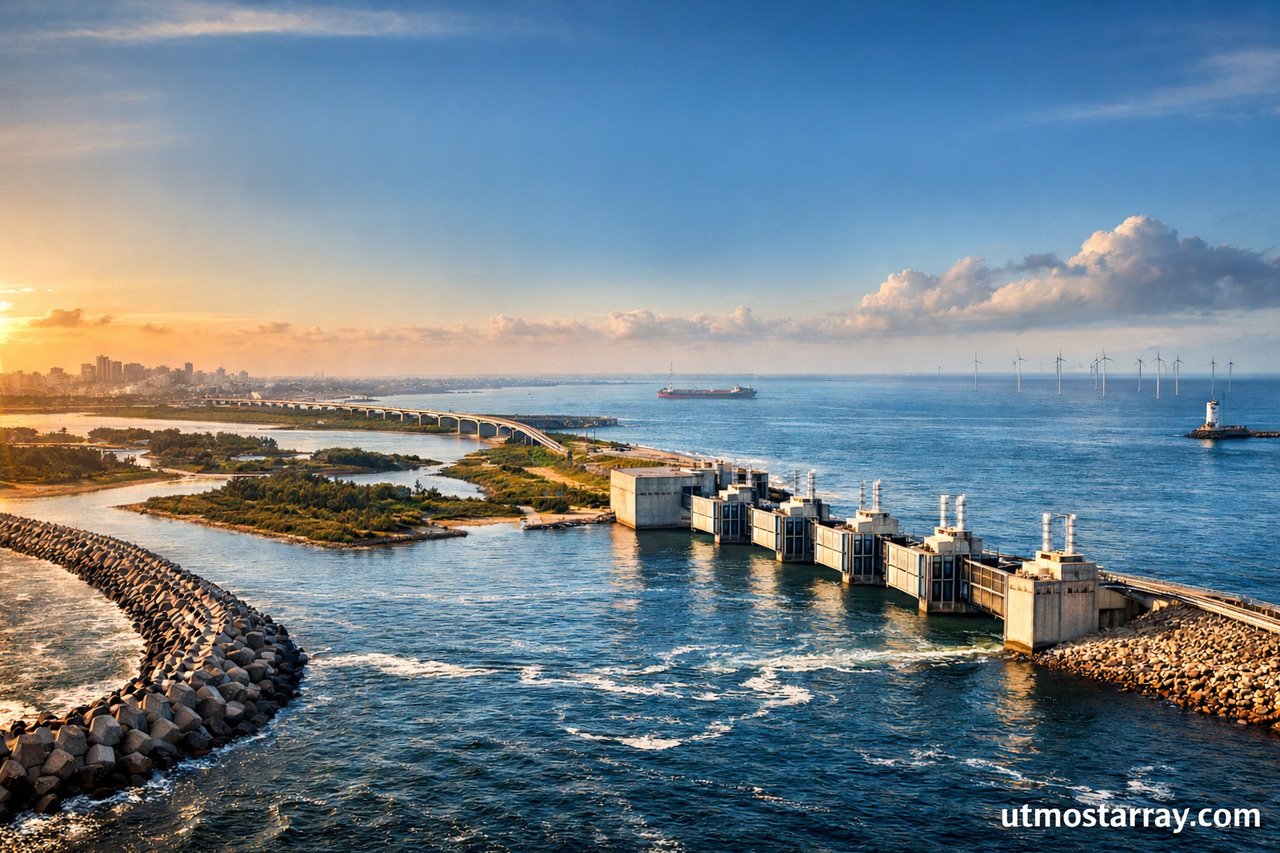
The “Ike Dike” plan is a well-known nickname for a larger storm surge strategy built around Galveston Bay. It describes a system approach, where multiple defenses work together instead of relying on one wall or one gate. More region focused than most local flood programs, Gulf Coast Protection District serves as the nonfederal sponsor for the full set of features that make up this barrier concept. The plan combines major coastal structures with smaller steps that limit damage when water still pushes inland. That mix matters because hurricanes can push surge through different openings and low areas at the same time. A quick way to see the key features of the coastal Texas barrier is to view the seven building blocks as one connected system.
Feature One Is The Main Bay Entrance Gate
The first feature is The Gate, known as the Bolivar Roads Gate System at the entrance to Galveston Bay. Its purpose is to limit storm surge from moving through the opening between Galveston Island and Bolivar Peninsula during extreme events. In normal conditions, a gate based system can support navigation and daily bay activity while remaining ready for storms. This feature often gets the most attention because it sits at a strategic choke point for water flow into the bay. Still, a gate is most effective when shorelines and interior connections are strengthened at the same time. That is why the broader plan includes other barriers that reduce surge routes around and behind the entrance.
Feature Two Uses Beaches And Dunes As A Natural Line Of Defense
The second feature is Beaches and Dunes along Bolivar and West Galveston, which strengthens the coast using a more nature-based profile. Healthy dunes can reduce wave energy, lower erosion, and provide a buffer before water reaches roads and buildings. This feature supports protection that looks and functions more like a living shoreline than a purely vertical wall. It also helps preserve the beach landscape that communities rely on for recreation and habitat. Dune systems are not a one-time fix, since storms and tides can reshape sand over time. Ongoing management and replenishment are part of what makes this feature work alongside engineered structures.
Features Three And Four Reinforce Galveston’s Shoreline And Perimeter
The third feature strengthens the Galveston Seawall by improving weak spots along an important stretch of coastline. Seawalls help reduce wave impact and limit surge damage in heavily developed shoreline areas. The fourth feature is the Galveston Ring Barrier, which helps keep water from surrounding areas out of the city. Together, these features address the fact that a surge can enter from multiple directions. A stronger perimeter can support faster recovery by limiting how widely floodwaters spread during major storms. These upgrades also work best when paired with interior gates and pumping that manage water once it is inside the system.
Features Five Through Seven Address Interior Bay Openings And Home Level Risk
The Dickinson Bay Gate and Pump Station helps keep the surge from moving farther inland through this opening. The Clear Lake Gate System and Pump Station protects another key opening near neighborhoods and industrial areas. Pump stations matter because even when gates close, rain and runoff still need to be moved safely. The sixth feature is Home Elevation and Floodproofing, which reduces damage by changing how individual structures interact with floodwater. This matters because no regional system can prevent every flood, and some homes remain more exposed than others. When these interior and home level features are layered with the coastal barriers, the plan shifts from a single line of defense to a more complete protection strategy.
The “Ike Dike” plan is best understood as seven connected features that share one goal, reducing storm surge impacts around Galveston Bay. The Gate helps control the bay entrance, while beaches and dunes help reduce wave force along the coast. Seawall improvements and the ring barrier strengthen Galveston’s shoreline and reduce routes for water to bypass primary defenses. Interior gates and pump stations at Dickinson Bay and Clear Lake focus on surge pathways that can carry flooding deeper into communities. Home elevation and floodproofing address the reality that even strong regional projects leave some residual exposure. Together, these seven features form a system that reduces damage, protects key areas, and speeds recovery after storms.
