

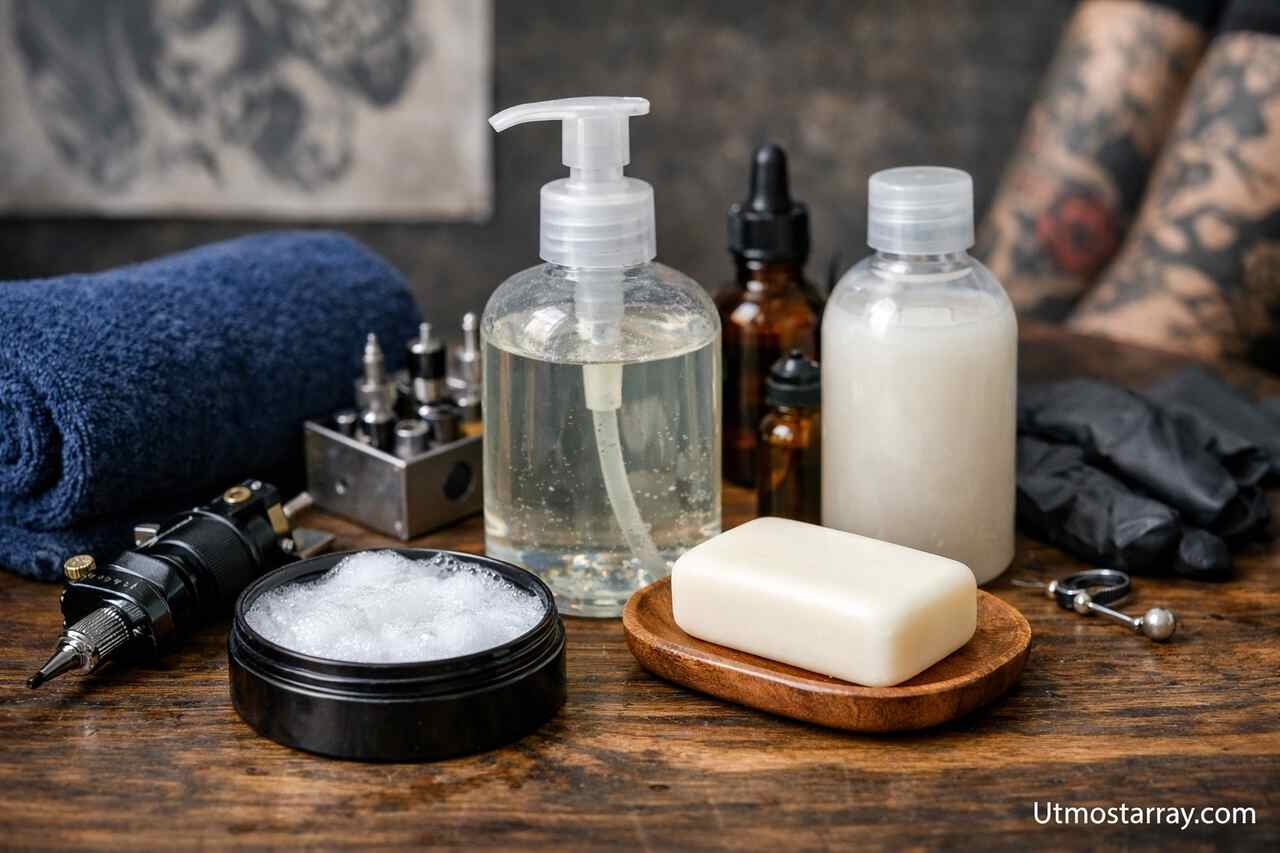
Highlights
- Use gentle, fragrance-free soap to clean your tattoo and avoid irritation, especially during the healing stage.
- Avoid alcohol, parabens, and sulfates, which can dry out or damage the skin and fade your ink.
- Choose a soap with moisturizing ingredients like aloe vera or vitamin E to support healing and long-term color retention.
- Foaming liquid soaps are more hygienic and easier to use than bar soaps for new tattoos.
- Wash your tattoo twice daily with lukewarm water and pat dry with a clean towel or paper towel.
- Don’t overwash or rub your tattoo, which can lead to scabbing, peeling, or ink loss.
- Tattoo-specific soaps are optional, but make sure any soap you use is pH-balanced and skin-friendly.
- Stick to mild soap even after healing to preserve tattoo vibrancy and avoid long-term fading.
- Choose antibacterial soaps carefully, avoiding harsh antiseptics that can sting or dry out the skin.
- Read ingredient labels before using any soap to ensure it meets tattoo aftercare standards.
Introduction
Choosing the best soap for tattoos is one of the most important steps in tattoo aftercare. Tattooed skin is highly sensitive, especially in the initial healing phase. Using the wrong soap can cause irritation, delay healing, or even damage the ink. Over the years, I’ve guided many people through proper tattoo care, and one question always comes up: What soap should I use? In this article, I’ll walk you through everything I’ve learned and personally experienced about cleaning and protecting tattooed skin with the right soap. We’ll explore the qualities that make a soap ideal for fresh ink, what to avoid, and how to maintain that vibrant look long-term.
What Makes a Soap Safe for Tattoo Care?
A soap becomes suitable for tattoo care when it maintains pH balance, excludes irritants, and supports skin healing. From my experience, most problems happen because people use body washes that strip natural oils or include synthetic fragrances.
Soaps meant for tattoo cleansing need to be fragrance-free and free from alcohol or sulfates. These ingredients can dry the skin or cause inflammation, which disrupts the tattoo’s healing process. When the skin is freshly inked, it is technically an open wound. You want to avoid any harsh reactions at all costs.
Tattoo-safe soaps often come with antibacterial properties to protect against infection while still being gentle. Foaming soaps or liquid castile soaps with minimal ingredients tend to work well. I always advise going for a transparent ingredient list that includes mild cleansers and soothing agents like aloe vera or chamomile.
pH-Balanced Formula
Cleansers with a pH close to the skin’s natural level (around 5.5) help avoid disruption of the skin barrier. I learned this the hard way once I used a regular bar soap after a session, and my tattoo felt tight and itchy for days.
Alcohol-Free Ingredients
Avoiding alcohol-based cleansers ensures the skin doesn’t dry out or crack. Alcohol can sting and cause redness around new tattoos. Look for gentle alternatives like glycerin or coconut-derived cleansing agents.
How Do You Properly Wash a Tattoo with Soap?
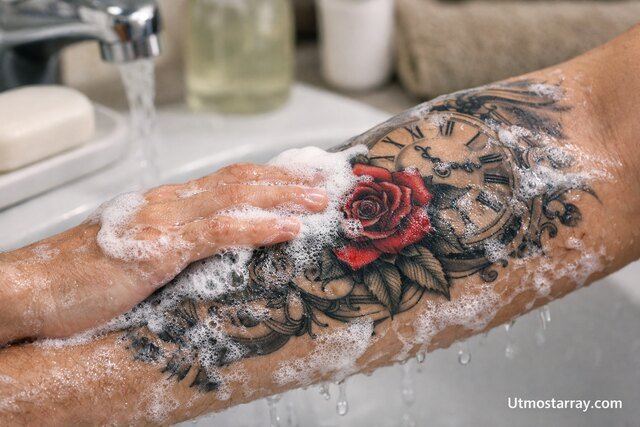
The correct method of cleansing a tattoo plays just as big a role as the soap itself. During my own tattoo healing routines, I always follow a consistent process to ensure optimal results.
Start by washing your hands thoroughly. Then, use lukewarm water to wet the tattooed area never hot. Gently apply a small amount of soap with your fingertips in circular motions. Avoid using washcloths or sponges since they harbor bacteria and may be too abrasive.
Rinse the area with clean water, making sure there’s no residue left behind. Pat the skin dry using a soft paper towel or clean cloth. Air drying is also fine if you have time. Repeat this process twice daily during the first week, and reduce to once daily after that.
Timing and Frequency
I recommend washing a new tattoo within 2-3 hours after getting it. After that, cleanse it twice a day, once in the morning and once before bed. Overwashing can lead to dryness and irritation.
Pat Dry, Don’t Rub
Using a fresh towel or paper towel to pat the tattoo dry reduces the risk of infection. Rubbing can cause scabbing or dislodge ink. In my own tattoo journeys, patting dry has always made healing smoother and less itchy.
Which Types of Soap Are Best Suited for Tattoo Healing?
Soaps designed specifically for sensitive or wounded skin are the best for tattoo aftercare. In my conversations with tattoo artists and skincare professionals, we often agree that fewer ingredients equal better healing.
Liquid antibacterial soaps are widely recommended, but only if they are fragrance-free and designed for daily use. Bar soaps can be used too, but only if they are dermatologist-tested and made from natural oils.
I always lean toward liquid castile soap for its purity and moisturizing properties. Brands that offer unscented versions often become long-term staples in tattoo care routines.
Liquid Soap vs. Bar Soap
Liquid soap tends to be more hygienic for new tattoos since it avoids direct contact with the skin from a solid surface. Bar soaps may collect bacteria if not stored correctly, especially in shared bathrooms.
Antibacterial But Gentle
Not all antibacterial soaps are created equal. You want one with mild agents like benzalkonium chloride or tea tree oil instead of harsh triclosan or alcohol-based antiseptics. My tattoos healed much faster when I used gentle antibacterial soaps versus stronger ones.
What Ingredients Should You Avoid in Tattoo Soaps?
Certain chemicals found in everyday soaps can severely irritate healing tattoos. My own negative experience came from using a “moisturizing” soap that included lanolin, which caused redness and delayed healing.
Avoid anything that contains synthetic fragrance, alcohol, parabens, or sodium lauryl sulfate (SLS). These substances can strip away the skin’s natural moisture, making it hard for the skin to repair itself properly.
Reading the ingredient list before purchase is a must. If you can’t pronounce most of the ingredients or the label lacks transparency, stay away from it.
Synthetic Fragrance and Dyes
Artificial colors and scents serve no healing purpose. These additives may cause allergic reactions or dry patches. I always look for products that say “unscented” instead of “fragrance-free,” because the latter can still contain masking scents.
Parabens and Sulfates
These are often added to preserve soaps or increase lather but have no benefit to healing skin. They can trigger eczema or dermatitis in sensitive individuals, especially when applied over a fresh tattoo.
How Can Proper Soap Help Prevent Tattoo Fading and Infection?
Using the right soap not only helps a tattoo heal it also maintains the brightness of the ink. I’ve noticed that my tattoos that received consistent gentle cleansing healed faster and stayed vibrant longer.
Infections from improper cleansing can lead to excessive scabbing, pus formation, or even ink loss. A high-quality soap keeps harmful bacteria away without disturbing skin regeneration.
Over time, using the wrong soap causes skin to dry out and flake, which slowly removes the top layer where your tattoo ink sits. Maintaining skin hydration through proper soap ensures the ink stays trapped where it belongs.
Long-Term Ink Protection
Cleansers with moisturizing ingredients like aloe, vitamin E, or coconut oil create a skin barrier that shields the ink from environmental stress. These components keep tattoos looking sharp, even years later.
Reduces Risk of Complications
When healing skin remains clean and undisturbed, risks like infection, blowouts, and discoloration significantly decrease. I once had a client come back with faded patches due to using a body wash with exfoliating beads. Don’t make that mistake.
What Are the Pros and Cons of Using Specialty Tattoo Soaps?
Tattoo-specific soaps are often marketed as essential aftercare items. I’ve tried several over the years, and while some are truly beneficial, others are just overpriced versions of regular mild cleansers.
Pros include carefully selected ingredients, pH-balanced formulas, and recommendations by artists. However, the cons usually involve cost, availability, and occasionally unnecessary ingredients that don’t add much to healing.
In many cases, a gentle, fragrance-free, pharmacy-grade soap can work just as well without the fancy label. But for peace of mind, tattoo-specific brands can offer reassurance during the vulnerable first week of healing.
Cost vs. Value
Specialty soaps often cost more because of branding and packaging. Look beyond the label to see whether the ingredients match what’s needed for tattoo aftercare.
Real Benefits or Marketing Hype?
Some tattoo soaps use buzzwords like “tattoo reviver” or “ink enhancer” with no real science behind them. I always suggest comparing ingredient lists to decide whether you’re paying for quality or just clever branding.
What Are the Best Practices for Long-Term Tattoo Soap Use?
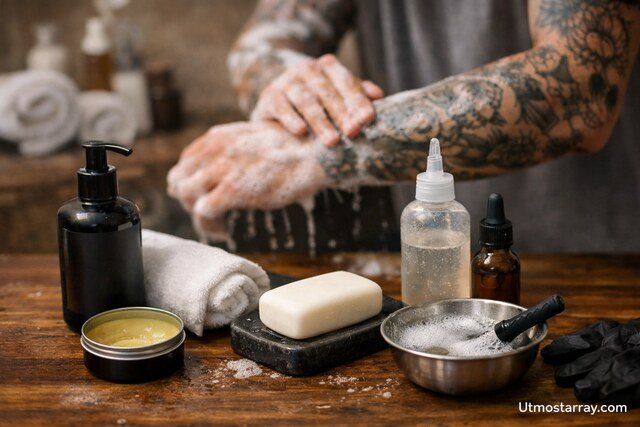
Cleansing a tattoo doesn’t stop after the healing phase. Long-term soap choices affect how skin holds pigment, especially for large or colored designs. Over the years, I’ve found that continued use of mild, moisturizing soap helps tattoos remain sharp and irritation-free.
Switching back to perfumed body washes too soon can dull the design or lead to recurring dryness. Many people overlook this and blame their artist for fading, when in reality, it’s a skincare issue.
Even after your tattoo heals, maintaining a gentle cleansing routine can significantly extend its visual quality. Adding sunscreen and moisturizer on top of that routine keeps the skin supple and ink vibrant.
Daily Skincare Integration
Choose soaps you can use daily, not just during healing. Avoid switching back to heavily perfumed options. The soap you use every day becomes a part of your long-term tattoo preservation.
Seasonal Care Adjustments
Winter months require more hydration. Use soap with added moisturizers when the air is dry. In summer, go for antibacterial options that prevent sweat-related irritation and clogged pores over tattooed areas.
Recommended Soap Features for Tattoo Aftercare
| Feature | Recommended for Tattoos | Reason |
| Fragrance-Free | Yes | Prevents irritation and allergic reaction |
| Alcohol-Free | Yes | Avoids skin drying and stinging |
| Antibacterial (Gentle Type) | Yes | Reduces risk of infection during healing |
| Moisturizing Agents | Yes | Helps keep skin supple and supports ink retention |
| Harsh Preservatives | No | Can damage the skin barrier and fade ink |
| Foaming Texture | Preferred | Easier to apply gently over healing skin |
Conclusion
The best soap for tattoos must be gentle, moisturizing, and free from harmful additives. Tattooed skin deserves protection both during healing and long after. I’ve seen incredible differences in ink quality just by switching to the right cleanser. Choosing wisely not only avoids complications but also preserves the meaning, color, and beauty of your tattoos. No matter how good the tattoo artist is, your aftercare routine makes the final result. So treat your skin like the canvas it is and use the soap that respects that.
FAQ’s
What kind of soap is safe for a new tattoo?
A fragrance-free, alcohol-free, and pH-balanced soap is safe for a new tattoo. Liquid castile soaps or tattoo-specific cleansers are ideal choices.
Can I use regular body wash on my tattoo?
No, regular body wash often contains fragrances, sulfates, and preservatives that can irritate fresh tattoos and slow down healing.
When should I stop using tattoo soap?
Continue using gentle soap for at least 2-4 weeks. For long-term care, keep using mild cleansers to maintain ink vibrancy and skin health.
Is antibacterial soap necessary for tattoo care?
Yes, but only if it’s non-drying and free from alcohol. The goal is to prevent infection without stripping natural oils or causing irritation.
Can I use bar soap on my tattoo?
Yes, if it’s unscented, made for sensitive skin, and kept dry between uses. Liquid options are generally more hygienic and preferred.
