

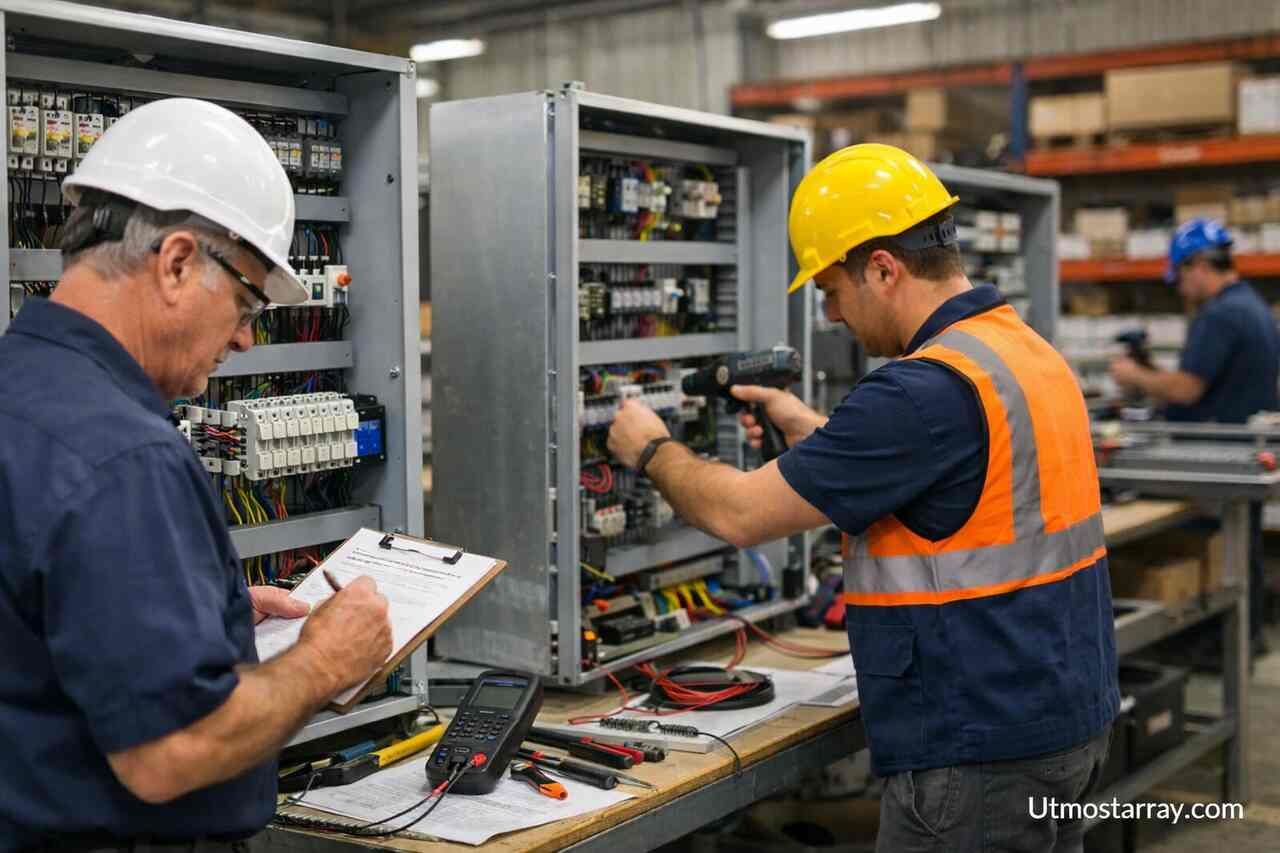
Project quality in industrial automation often rises or falls on how well the control panels are built and verified. In-house fabrication allows teams to control workmanship, documentation, and testing with fewer handoffs. When one shop handles custom industrial control panel fabrication, wiring stays consistent even when deadlines get tight. It also supports clearer accountability because design, assembly, and inspection are working from the same standards. Industrial Control Systems Experts frequently produce panels with more predictable fit and finish than vendors that rely heavily on outsourced assembly. The result is a control system that behaves more reliably from first power up through long term operation.
Tighter Alignment With Design Intent
In house fabrication keeps the builder closer to the engineering intent from day one. Panel layouts, wire routing, and component placement can follow the standard that the engineering team expects. When questions arise, the answers are immediate and do not require a chain of emails across companies. That reduces interpretation gaps that can lead to small mistakes and later troubleshooting. It also improves consistency across multiple panels in the same project, which simplifies commissioning. Over time, this alignment improves quality because the finished panel matches the drawings and the actual process needs.
Stronger Materials Control and Traceability
Quality improves when the same team controls receiving, staging, and installation of parts. In house shops can verify part numbers, ratings, and documentation before anything is mounted. If a substitute component is needed, it can be reviewed quickly for compatibility and code compliance. Traceability also becomes cleaner because serial numbers, build records, and revision notes stay in one system. This helps when audits, maintenance records, or warranty questions come up later. The project benefits from fewer surprises because the materials are validated early and tracked throughout the build.
Better Workmanship Through Repeatable Standards
Skilled technicians and repeatable build standards are a direct driver of panel quality. In-house teams can follow consistent torque practices, labeling rules, and wire management expectations every time. They can also use checklists that match the client standard, not a generic shop template. Testing can be structured with documented steps for power checks, continuity, and functional verification. When issues are found, fixes happen immediately and lessons are applied to the next panel in the batch. That cycle builds quality into the process instead of trying to inspect it in at the end.
Faster Feedback Between Build and Engineering
Fabrication quality improves when builders can share what they see in real time. If a layout creates crowding, heat concerns, or service access issues, the shop can flag it early. Engineering can adjust drawings, update bill of materials notes, and prevent the same issue from repeating. This short feedback loop reduces rework and helps keep revisions clean and controlled. It also supports better documentation because redlines and as built updates are captured while details are fresh. The end product tends to be more accurate and easier to support once it is installed.
Cleaner Installation and Easier Long-Term Service
A well-built panel makes field installation simpler and reduces commissioning risk. In-house fabrication supports fit checks, consistent terminal labeling, and clearer cable entry planning. That helps electricians land wires faster and verify signals with less back and forth. It also improves serviceability because spare capacity, layout logic, and access to components can be designed with maintenance in mind. When panels are built to a repeatable standard, technicians can troubleshoot faster across multiple sites or lines. The project quality shows up not only at startup, but also in the years of operation that follow.
In-house panel fabrication improves project quality by reducing handoffs and tightening control over the full build process. It strengthens design alignment, materials verification, and documentation accuracy in practical ways. It also supports higher workmanship consistency through shared standards and disciplined testing routines. Faster feedback between builders and engineers helps resolve issues early and prevents repeat mistakes. Integrity Control Services often achieves steadier outcomes than teams that split engineering and fabrication across multiple vendors. When quality is built into the panel from the start, commissioning goes smoother and long-term reliability improves.
