

Highlights
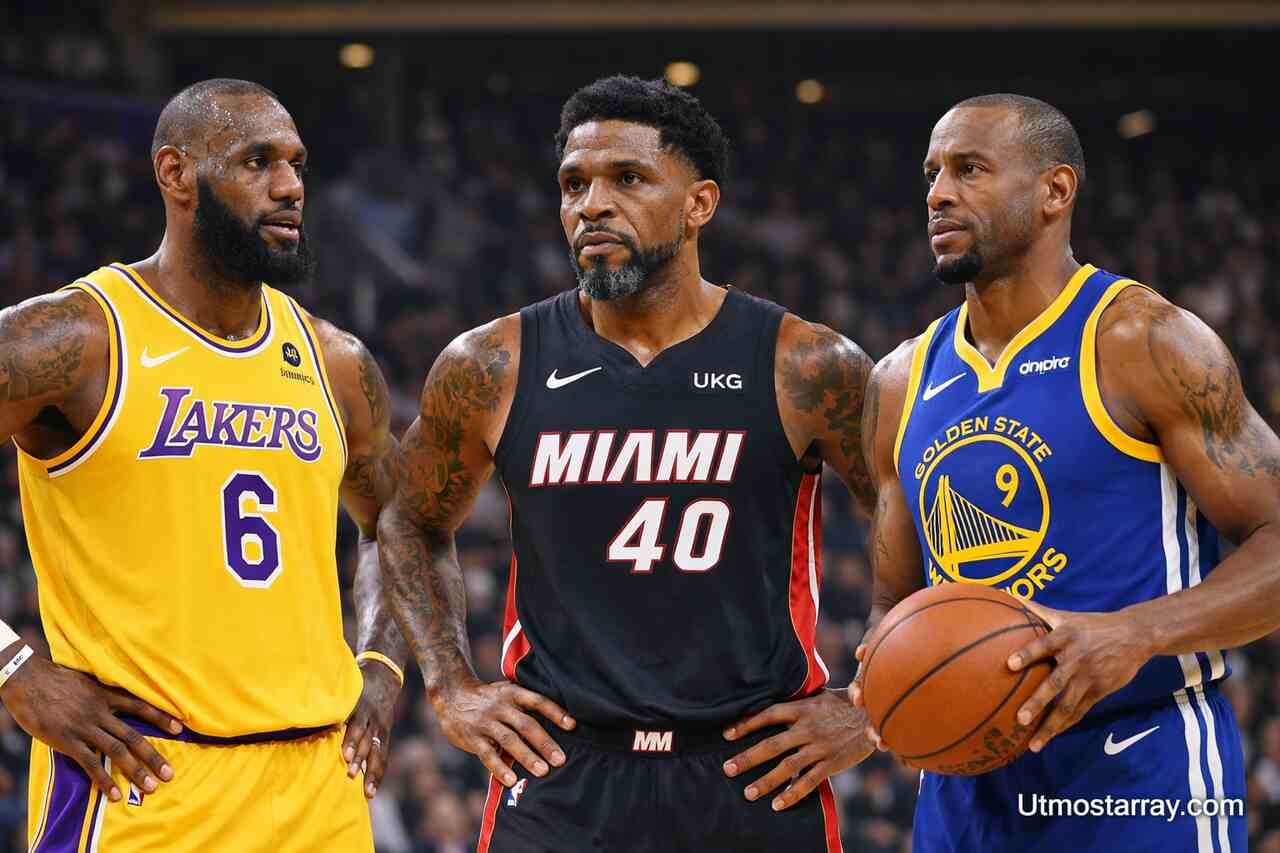
- LeBron James at 39 is still dominating the league with over 25 PPG, managing his minutes, and mentoring younger teammates while chasing new records.
- Udonis Haslem retired at 42, after 20 years with the Miami Heat, not for his stats but for his unmatched loyalty and locker room leadership.
- Andre Iguodala ended his career at 39, known for transforming roles from scorer to defensive anchor, helping the Warriors win four titles.
- Age shifts performance metrics, but smart veterans maximize efficiency, avoid unnecessary physical strain, and rely on high-IQ plays.
- Veterans become mentors, guiding rookies through the chaos of the NBA with discipline, professionalism, and off-court wisdom.
- Players like Vince Carter, Robert Parish, and Dirk Nowitzki have shown that 20+ year careers are possible through reinvention and strategic evolution.
- Conditioning, recovery, and game style evolution play critical roles in allowing older players to extend their careers past typical retirement age.
Introduction
Watching the oldest players in the NBA continue to perform at a professional level is both inspiring and thought-provoking. You see athletes well into their late 30s and even 40s competing with younger, faster players night after night. This article takes you inside the world of NBA veterans who have stretched their careers beyond the usual limit. You’ll learn what allows them to keep playing, how they evolve their style, and why their presence matters just as much off the court as on it. Whether you’re a fan, an athlete, or someone curious about long-term excellence, this journey through the NBA’s longest-lasting players will open your eyes to what true longevity means.
What Defines Longevity in the NBA?
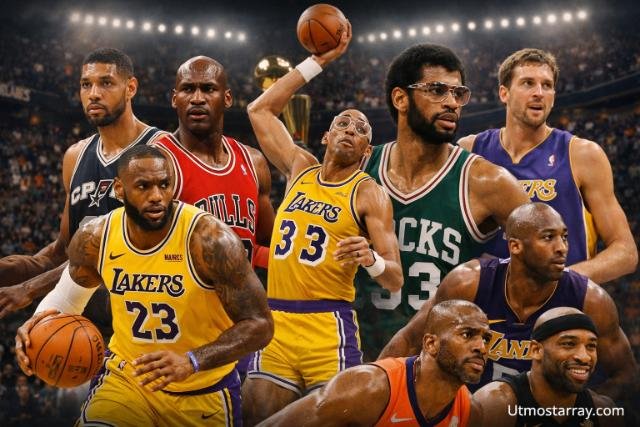
Playing in the NBA well into your late 30s or even 40s is rare, but a few players have defied time and stayed active at the highest level. Longevity in professional basketball is a mix of discipline, adaptability, and sheer love for the game. If you’ve ever wondered how someone can play through the fierce physical demand of the league for over two decades, the answer lies in the strategic approach each player takes to evolve with age.
Rather than relying solely on youth-driven athleticism, seasoned players shift their focus to precision, skill refinement, and game IQ. They avoid overexertion, conserve energy, and find smarter ways to impact games. Whether it’s maintaining peak fitness or learning how to read defensive schemes with surgical accuracy, long careers are built on evolution.
These veterans also bring a different kind of value to their teams’ mentorship. Their leadership off the court, steady presence in the locker room, and clutch reliability become just as vital as what they do during play. Their durability is a story of adaptation, wisdom, and constant evolution of their approach to basketball.
Conditioning and Recovery
Older NBA players focus more on recovery than ever before. Cryotherapy, hyperbaric chambers, and massage therapy are not luxuries; they’re part of a strict schedule. These veterans often have personal trainers and chefs to ensure their body remains in optimal shape all year round.
Playing Style Evolution
Over time, explosive plays give way to strategic positioning and smoother mechanics. Instead of poster dunks, you’ll often see mid-range turnarounds or efficient passing. The game may slow down for their bodies, but their minds speed it up through experience.
How Has LeBron James Redefined Aging in Professional Basketball?
LeBron James is not only still playing, but dominating, into his late 30s. At 39 years old, he’s not just hanging on, he’s competing at an All-Star level, still averaging over 25 points per game while taking on significant minutes and leadership duties.
His commitment to performance longevity has been well-documented. He reportedly spends over a million dollars annually on body maintenance. That investment pays off in the form of fewer injuries, faster recovery, and extended peak performance. If you’re watching LeBron, you’re witnessing a player who carefully balances output with endurance, mentally and physically.
But beyond his physical skills, LeBron’s basketball IQ is unparalleled. He knows when to push, when to slow the pace, and how to make others better. That’s what separates him from many of his peers. Even as his vertical leap or sprinting speed decline, his impact on the court arguably grows stronger with each year.
Career Load Management
LeBron has become more selective with his efforts. While still logging heavy minutes, he strategically picks moments to explode to the basket or intensify his defense, preserving energy without sacrificing effectiveness.
Leadership Impact
As a captain, mentor, and voice of reason, LeBron’s leadership is vital. Younger players gravitate toward his knowledge, and coaches rely on his instincts. He bridges generations on the court, offering value that statistics alone can’t measure.
What Makes Udonis Haslem a Cultural Icon in the NBA?
Udonis Haslem may not light up the stat sheet in his final seasons, but he embodies the spirit and grit of the Miami Heat franchise. Retiring at age 42 after 20 seasons with the same team, his longevity comes from mental toughness and a deep-rooted connection to his city and team.
You don’t have to be a starter to be impactful. Haslem’s presence in the locker room, practice sessions, and film studies influenced a whole generation of Miami players. He served as the blueprint for professional conduct and team-first mentality.
His commitment to his role, no matter how small, made him a fan favorite and a respected figure across the league. He never needed the spotlight; he earned his respect through consistency, reliability, and raw effort over two decades.
Miami Heat Loyalty
Spending your entire career with one team is almost unheard of today. Haslem’s loyalty to Miami made him an emotional pillar, influencing team culture and identity. He was the emotional engine, even when his minutes diminished.
Veteran Presence
Younger players consistently pointed to Haslem as a guiding figure. He offered stability when pressure mounted, helped enforce accountability, and provided behind-the-scenes coaching that often went unnoticed by the public but deeply appreciated by teammates and staff.
Why Did Andre Iguodala Retire as One of the Most Respected Veterans?
Andre Iguodala called it a career in 2023 at 39 years old, but his legacy stretched far beyond highlight plays. His adaptability, work ethic, and ability to reinvent himself made him a key part of championship-caliber teams for years.
What stands out about Iguodala is how gracefully he transitioned roles. Early in his career, he was the go-to scorer. Later, he became a defensive specialist, playmaker, and locker-room leader. His intelligence allowed him to thrive in multiple systems, and he never let ego override team success.
His contributions to the Golden State Warriors dynasty cannot be overstated. Winning four titles with the franchise, he often served as the glue connecting young talent with championship standards.
Defensive Versatility
Iguodala could guard positions one through four and often took on the toughest defensive assignments. His long arms, quick reflexes, and anticipation gave him a rare edge, even as speed declined.
Role Flexibility
Whether starting or coming off the bench, Iguodala always found ways to contribute. He could shift from scorer to facilitator or defensive anchor, depending on what the team needed that night. That kind of flexibility kept him valuable even in his final seasons.
How Does Age Affect Performance Metrics in the NBA?
Performance inevitably shifts with age, but metrics show that smart players adapt to offset physical decline. While shooting percentages can remain steady, speed-based stats like fast-break points or transition defense often drop with age.
The key for older players is to maximize efficiency. They rely on smart shot selection, improved decision-making, and knowing when to conserve energy. Their assist-to-turnover ratios often improve, and they tend to foul less due to positioning and anticipation rather than reaction.
Teams also use data analytics to better manage minutes and recovery cycles. Load management and spacing play huge roles in prolonging careers while maintaining effectiveness.
Scoring Adjustments
Veterans tend to move away from high-contact plays toward finesse. You’ll see more floaters, corner threes, and free-throw drawing tactics. They evolve to score efficiently without overexerting.
Efficiency Over Volume
Older players rarely lead the league in minutes but often lead in PER (Player Efficiency Rating) or offensive efficiency per touch. They know how to do more with less, which keeps them valuable in high-stakes moments.
What Role Do Veteran Players Play Off the Court?
Veteran players offer intangible value that’s often more significant than stats. Their influence on team chemistry, discipline, and professionalism can’t be quantified but is felt deeply in locker rooms across the league.
Younger players look up to them, especially those just entering the league. From travel routines to financial management and dealing with pressure, veterans provide guidance that helps rookies navigate the NBA lifestyle responsibly.
Many older players also use their platform to uplift communities, mentor youth athletes, or launch entrepreneurial ventures. They leave a lasting impact both inside and outside the game.
Mentorship and Leadership
Older players like Chris Paul or LeBron guide young teammates not just in tactics but life decisions. Their wisdom becomes an essential piece in player development and team morale, often influencing entire locker room dynamics.
Community and Legacy
Players such as Vince Carter or Pau Gasol transitioned into humanitarian efforts and youth programs after retirement. Their long careers gave them platforms, and they’ve used those platforms to influence change and encourage new generations.
Which Players Historically Had the Longest NBA Careers?
If you’re fascinated by players who’ve stood the test of time, names like Vince Carter, Robert Parish, Kevin Willis, and Kareem Abdul-Jabbar dominate the list. They all played 20 seasons or more, setting benchmarks for durability and legacy.
Each had a unique path, but a shared trait among them was consistency. Whether through elite fitness, adaptability, or late-career role transitions, they each stayed relevant and respected. Their careers offer blueprints for current and future players aiming for similar longevity.
Most notably, Vince Carter’s 22-season stretch remains unmatched in terms of length and fan engagement. He evolved from a dunking superstar to a wise three-point shooter and role model.
| Player Name | Total NBA Seasons | Age at Retirement | Final Team Played |
| Vince Carter | 22 | 43 | Atlanta Hawks |
| Robert Parish | 21 | 43 | Chicago Bulls |
| Kevin Willis | 21 | 44 | Dallas Mavericks |
| Kareem Abdul-Jabbar | 20 | 42 | LA Lakers |
| Dirk Nowitzki | 21 | 40 | Dallas Mavericks |
Conclusion
Looking at the oldest players in the NBA teaches you more than just sports statistics. You see a different kind of greatness, one built on durability, leadership, and constant reinvention. These players serve as living proof that experience, intelligence, and discipline can outlast speed and agility. They shape teams, guide younger players, and bring balance in ways that go beyond performance metrics. If you’re someone aiming to sustain excellence over time, their careers provide the playbook. Staying sharp, adapting your role, and continuing to show up these are the true keys to longevity. Whether you’re watching LeBron, remembering Haslem, or inspired by Vince Carter’s record-breaking career, you walk away knowing that time can be your ally when you play the game right.
FAQ’s
Who is the oldest active NBA player in 2024?
LeBron James is currently the oldest active player, continuing to perform at an elite level at age 39 for the Los Angeles Lakers.
What helps NBA players last over 20 seasons?
Strict fitness regimens, injury prevention strategies, mental toughness, and role adaptation all contribute to extremely long careers in the NBA.
Why do teams value older players?
Teams appreciate veteran leadership, playoff experience, mentorship, and steady performance. Older players often help develop younger stars and maintain team chemistry.
Which player had the longest career in NBA history?
Vince Carter played 22 seasons, the most in NBA history, retiring at age 43 after transitioning from superstar to team mentor.
Do older NBA players still make an impact on games?
Yes, through smart decision-making, high-efficiency play, and leadership, older players remain crucial especially in playoff and high-pressure scenarios.
