

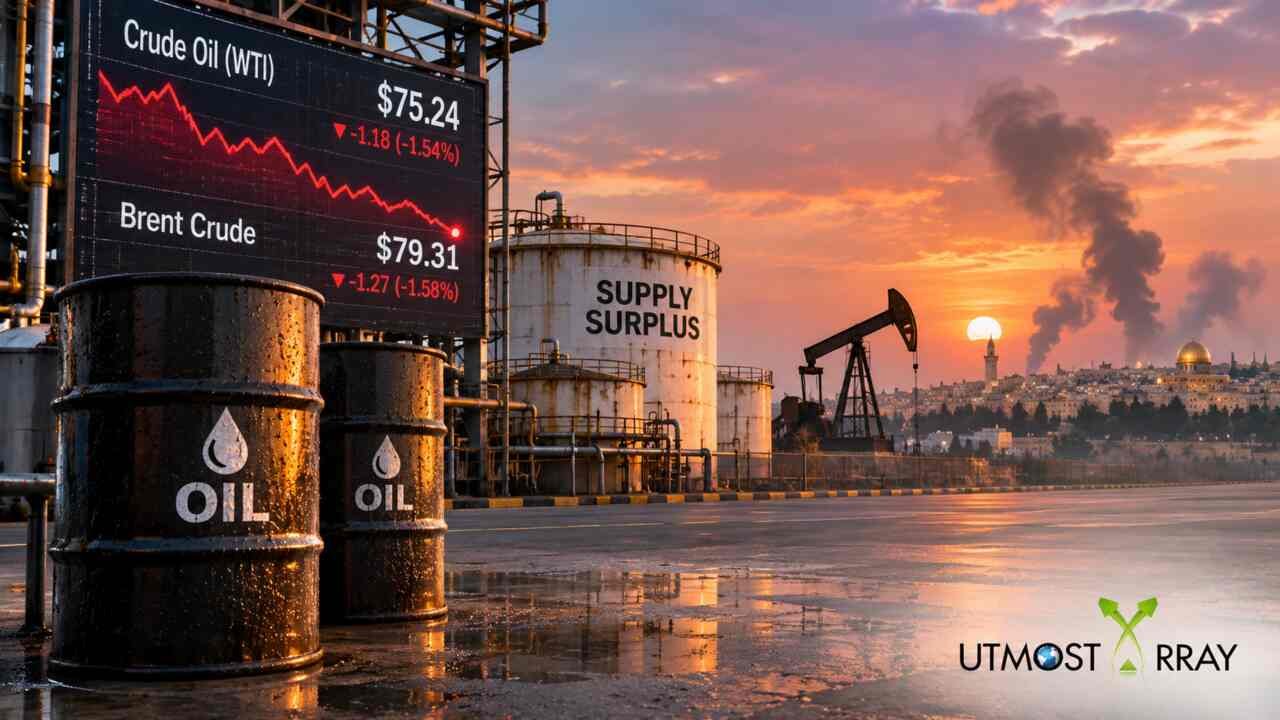
Oil prices edged lower on Monday as recovering Middle Eastern crude exports strengthened expectations of a global supply surplus, despite renewed threats to shipping in the Strait of Hormuz.
At 11:14 GMT, Brent crude futures fell 0.5% to $95.32 per barrel, while U.S. West Texas Intermediate (WTI) crude declined 0.3% to $88.29 per barrel, according to Reuters
IEA Forecasts Global Oil Supply Surplus
The International Energy Agency’s November Oil Market Report, published November 13, signals a significant shift in global energy markets.
Global oil production reached 105.4 million barrels per day in October, supported by recovering Gulf exports. The agency now expects fourth-quarter supply to exceed demand by 1.7 million barrels per day, reversing its previous deficit forecast.
However, land-based oil inventories remain under pressure. Much of October’s inventory recovery came from crude being transported aboard tankers, rather than supplies stored on land.
Middle East Tanker Incidents Keep Supply Risks Elevated
Iran’s Revolutionary Guards reported that two oil tankers struck mines in the Strait of Hormuz. Reuters could not independently verify the claims.
Although regional exports are recovering, further shipping disruptions could slow the supply recovery and increase energy transportation costs.
As UtmostArray previously explored in its coverage of the Iran–Israel–Hezbollah conflict, regional instability continues to expose global energy markets and maritime trade to significant risks.
What Falling Oil Prices Mean for Consumers and Businesses
Sustained declines in crude prices could reduce fuel, freight and operating expenses for American households and businesses. However, consumers may not experience immediate savings because retail fuel prices also reflect refining, distribution and taxation costs.
Businesses can manage these uncertainties through effective logistics and transport management, particularly when fuel expenses and shipping conditions remain unpredictable.
As reported by The Wall Street Journal, supply surplus expectations continue to weigh on crude prices despite renewed regional tensions.
The direction of oil prices will depend heavily on whether Middle Eastern exports continue recovering without significant disruptions.
