

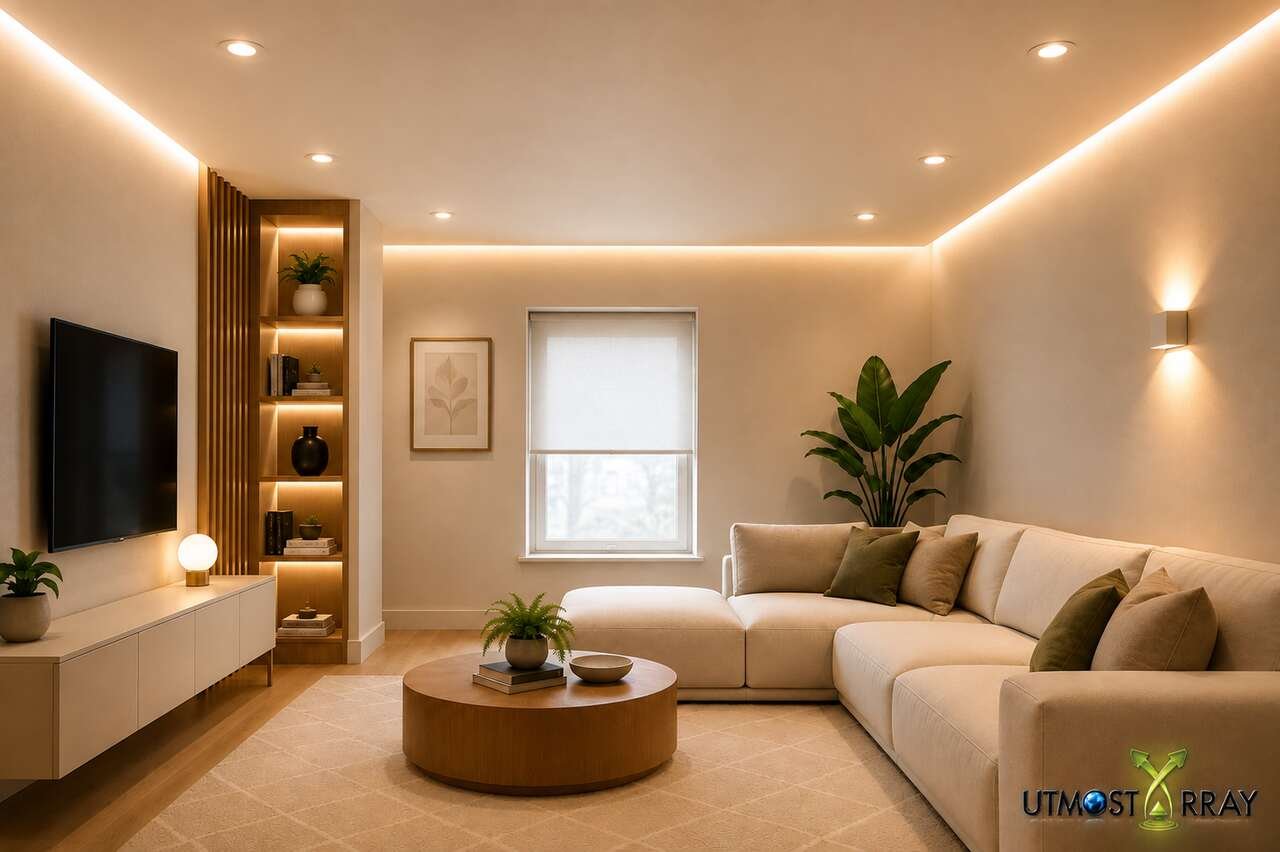
Most homeowners deal with at least one room that feels awkward. Maybe it’s a guest bedroom with an 8-foot ceiling. Maybe it’s a home office tucked under a slanted roof. Whatever the case, these rooms often get ignored when it comes to lighting and comfort upgrades, simply because nothing seems to fit right. Big chandeliers look silly. Bulky ceiling fans feel like they’re closing in on you. So people just settle for a boring flush-mount light and call it a day.
But there’s a smarter way to handle this problem, and it doesn’t involve giving up on style.
Why Small Rooms Need a Different Approach
Low ceilings and tight spaces change the rules of design. A fixture that looks perfect in your living room might feel completely wrong in a small bedroom or hallway. Height matters. Scale matters. And function matters too, especially in warmer months when you still want airflow but don’t have room for a full-size fan.
This is where combination fixtures come in. Instead of choosing between a light and a fan, you get both in a single, compact design. These fixtures blend the elegance of a chandelier with the practicality of a fan, so you’re not sacrificing one for the other. If you’ve been struggling to find something that fits a smaller room, it’s worth looking at a fandelier ceiling fan here, since these are built specifically for tighter spaces like bedrooms, offices, and hallways. They stay close to the ceiling, which means you don’t lose precious headroom, and they still bring a decorative touch that a plain flush mount just can’t match.
For the best results, choose a model with reversible blades and multiple speed settings so it can provide year-round comfort. Matching the fixture’s size to your room also helps maintain balanced airflow without overwhelming the space visually.
Layering Light Instead of Relying on One Fixture
Once you’ve picked the right centerpiece fixture, the next step is thinking about how light moves through the room. A single overhead source rarely does the job well in a small space. It can create harsh shadows or leave corners feeling dim and forgotten.
Try layering your lighting instead. Add a small lamp on a side table. Consider a wall sconce near a reading chair. If you want more control over brightness and mood without adding extra wiring, a smart lighting kit is a simple upgrade that pairs nicely with your main fixture. In fact, this approach was covered in detail in a guide on smart lighting kits, which walks through some easy options for controlling brightness and color from your phone. Pairing that kind of flexibility with a compact ceiling fixture gives you a room that feels warm, cozy, and well thought out, even if it’s on the smaller side.
Also, don’t underestimate the power of dimmers. A room that feels too bright at night can feel cold and uninviting. Being able to dial things down instantly makes a small space feel more like a retreat.
Warm white bulbs are another easy improvement, creating a softer atmosphere that’s especially welcoming in bedrooms and living rooms. Combining multiple light sources at different heights also adds depth, making compact spaces feel larger and more comfortable.
The Height Rule Most People Forget
Here’s something a lot of homeowners overlook when shopping for ceiling fixtures. There’s an actual clearance guideline that professional designers follow, and it matters more than you might think. The general rule is that the bottom of your fixture shouldn’t hang lower than six feet eight inches from the floor, unless it’s positioned above a table where people won’t be walking underneath it.
This detail was explained clearly in a lighting guide for low ceilings, which points out that even standard 8-foot ceilings only leave about 16 inches of usable space for a fixture. That’s not a lot of room to work with, and it’s exactly why flush and semi-flush designs tend to work best in these situations. Ignoring this rule is one of the easiest ways to end up with a fixture that looks awkward or, worse, becomes a hazard for anyone tall walking through the room.
Before you buy anything, measure your ceiling height and subtract the minimum clearance. That number tells you exactly how much room you have to play with. It sounds simple, but skipping this step is one of the most common mistakes people make.
Bringing It All Together
Small and low-ceiling rooms don’t have to feel like an afterthought. With the right fixture, some smart layering, and a little attention to clearance rules, these spaces can feel just as intentional and comfortable as any other room in your home.
Start with a fixture that solves two problems at once. Add lighting that gives you flexibility throughout the day. And always keep those height guidelines in mind so your choice feels natural rather than cramped. A little planning goes a long way, and soon that awkward room won’t feel like a compromise anymore. It will feel like one of the best spots in the house.
