

Highlights
- Iran expands direct military signaling: Iranian strikes reinforce Tehran’s forward-defense doctrine, linking regional deterrence strategy with operational activity in Lebanon and Syria.
- Hezbollah intensifies cross-border operations: Rocket launches and surveillance drone activity from southern Lebanon increase pressure on northern Israel, raising the probability of rapid retaliation cycles.
- Israel strengthens air defense and aerial response: The Israel Defense Forces activate Iron Dome and conduct precision airstrikes to neutralize launch sites and weapons transfers.
- Lebanon faces growing civilian and economic strain: Displacement in border towns, infrastructure damage, and financial instability compound Beirut’s ongoing economic crisis.
- Risk of multi-front escalation increases: Simultaneous tensions involving Gaza, Lebanon, and Syria heighten the possibility of a broader regional confrontation.
- Global markets react to instability: Energy prices and shipping insurance costs fluctuate amid fears of disruption in key transit corridors such as the Eastern Mediterranean and Strait of Hormuz.
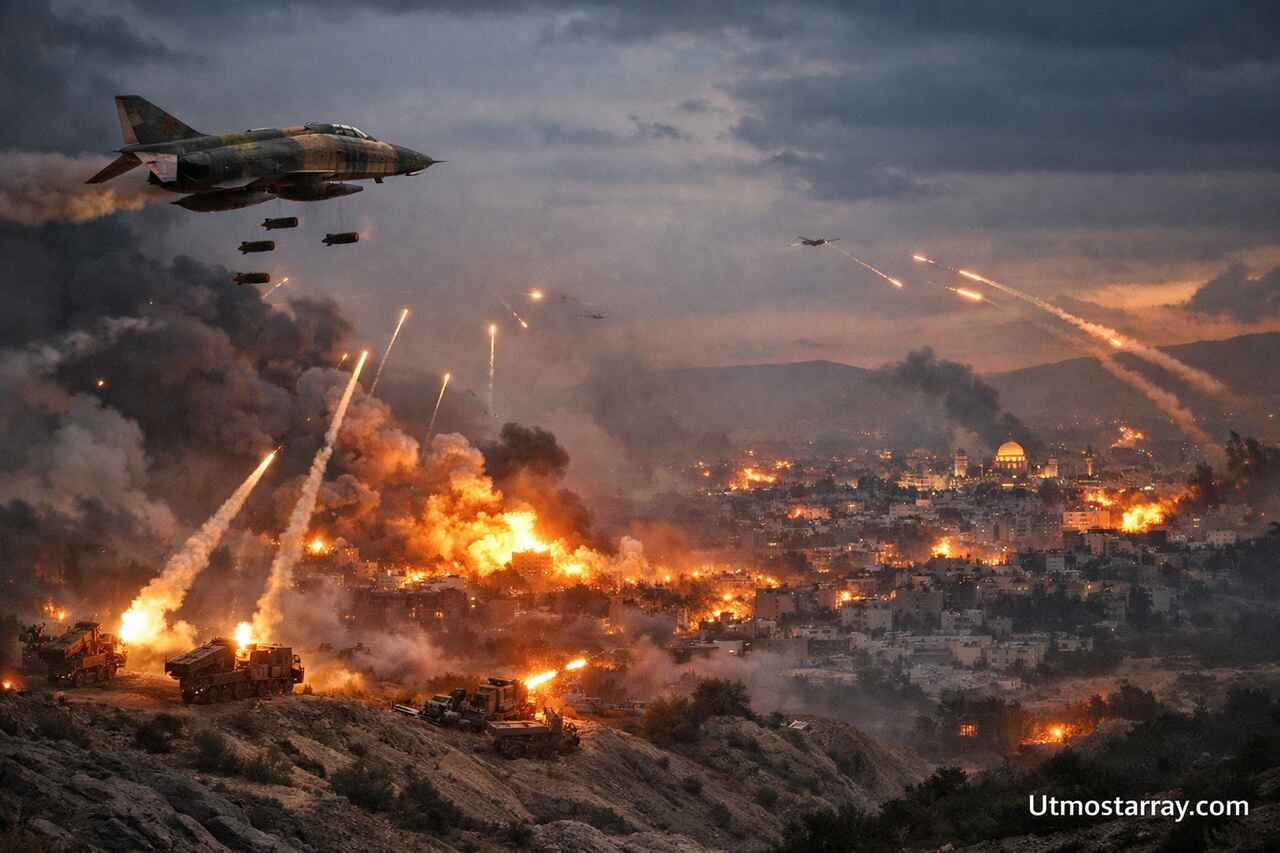
Renewed Iranian strikes signal a strategic escalation in the Israel–Hezbollah conflict, deepening regional instability across the Levant and heightening geopolitical risk for the Middle East. Iranian military actions, Israeli defense responses, and Hezbollah’s cross-border operations collectively reshape the security architecture between Gaza, southern Lebanon, and northern Israel. Escalation between state and non-state actors now drives diplomatic pressure from Washington, Tehran, and Beirut.
Why Have New Iranian Strikes Intensified Israel–Hezbollah Tensions?
Iranian strikes intensified Israel–Hezbollah tensions because Tehran expanded its deterrence posture through direct and proxy military engagement. Escalation dynamics now connect Iranian missile capabilities with Hezbollah’s battlefield operations along the Israel–Lebanon border.
Iranian Military Strategy
Iran’s Islamic Revolutionary Guard Corps (IRGC) coordinates regional deterrence through missile systems, drone warfare, and intelligence networks. Missile systems extend operational reach, while drone platforms increase tactical flexibility across contested airspace. Strategic doctrine emphasizes forward defense, meaning Iranian-backed forces operate beyond Iran’s borders to counter Israeli or Western pressure. Forward defense links Tehran’s security calculations to developments in Lebanon, Syria, and Gaza.
Hezbollah’s Role as a Proxy Actor
Hezbollah functions as Iran’s primary non-state ally in Lebanon, combining political authority with paramilitary strength. Political authority within Beirut strengthens Hezbollah’s domestic legitimacy, while paramilitary strength along southern Lebanon enhances operational capacity against Israeli forces. Operational capacity includes rocket arsenals, anti-tank missiles, and surveillance drones. Rocket arsenals create deterrence by threatening northern Israeli cities, and deterrence shapes Israeli military planning.
Israeli Defense Posture
Israel’s Defense Forces (IDF) respond to Iranian-backed threats through airstrikes, intelligence surveillance, and missile defense systems such as Iron Dome and David’s Sling. Missile defense systems intercept incoming projectiles, reducing civilian casualties in cities like Haifa and Kiryat Shmona. Reduced casualties preserve domestic resilience, and resilience sustains prolonged military readiness. Air superiority remains central to Israeli doctrine, enabling preemptive strikes against weapons transfers in Syria and Lebanon.
Regional Power Balance
Regional power balance shifts when direct Iranian involvement replaces indirect engagement. Direct involvement raises escalation risk because state-to-state confrontation differs from proxy warfare. Proxy warfare allowed calibrated ambiguity, whereas overt strikes increase attribution clarity. Attribution clarity pressures diplomatic actors such as the United States and the European Union to respond through sanctions, mediation, or military coordination.
How Do Iranian Strikes Affect Lebanon’s Political and Security Landscape?
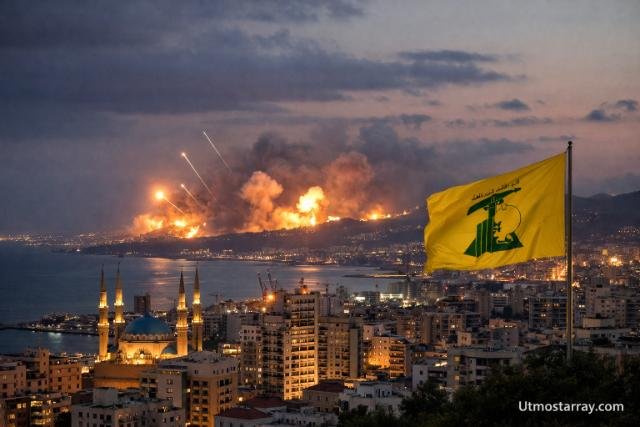
Iranian strikes destabilize Lebanon’s fragile political equilibrium by intensifying military confrontation near civilian infrastructure and weakening economic recovery prospects.
Lebanese Government Constraints
Lebanon’s central government lacks full control over Hezbollah’s military apparatus. Limited sovereignty reduces Beirut’s capacity to prevent cross-border hostilities. Cross-border hostilities trigger Israeli retaliation, and retaliation damages infrastructure in southern Lebanon. Damaged infrastructure undermines public services, including electricity grids and transportation corridors.
Civilian Impact in Southern Lebanon
Southern Lebanon experiences heightened displacement when artillery exchanges expand. Displacement increases humanitarian needs, while humanitarian needs strain already fragile economic systems. Economic systems in Lebanon suffer from currency devaluation, banking collapse, and fuel shortages. Fuel shortages limit hospital operations, and hospital strain increases public anxiety.
Economic Repercussions
Financial instability deepens as investors perceive elevated security risk. Elevated security risk reduces foreign direct investment and delays reconstruction initiatives. Reconstruction initiatives previously focused on port rehabilitation in Beirut and energy sector reform. Energy reform stagnation perpetuates electricity blackouts, and blackouts limit industrial productivity.
Diplomatic Pressures on Beirut
International actors urge Beirut to restrain Hezbollah to prevent broader war. Diplomatic engagement includes United Nations mediation through UNIFIL peacekeeping forces in southern Lebanon. UNIFIL monitors ceasefire violations, and monitoring mechanisms attempt to prevent miscalculation. Miscalculation risk increases when rapid retaliatory cycles compress decision-making timelines.
What Are the Strategic Implications for Israel and Iran?
Strategic implications include recalibrated deterrence doctrines, expanded cyber operations, and heightened risk of multi-front confrontation.
Deterrence Calculus
Deterrence between Israel and Iran depends on credible retaliation capacity. Credible retaliation capacity includes ballistic missiles, precision-guided munitions, and advanced air defense systems. Precision-guided munitions increase strike accuracy, and strike accuracy enhances strategic signaling. Strategic signaling communicates resolve without necessarily triggering full-scale war.
Risk of Multi-Front Conflict
Multi-front conflict emerges when Gaza, southern Lebanon, and Syria become simultaneous theaters. Simultaneous theaters stretch Israeli military resources, while stretched resources complicate reserve mobilization. Reserve mobilization influences domestic economic productivity, particularly in technology and manufacturing sectors.
Role of the United States
The United States supports Israel through intelligence sharing, missile defense funding, and naval deployments in the Eastern Mediterranean. Naval deployments deter further escalation by signaling readiness to protect maritime routes. Maritime route security affects global energy markets, particularly oil shipments through the Strait of Hormuz.
Cyber and Hybrid Warfare
Cyber operations increasingly complement conventional strikes. Cyber tools target critical infrastructure, financial systems, and communication networks. Infrastructure disruption creates strategic ambiguity, and ambiguity complicates attribution in international law. Legal ambiguity delays coordinated global responses.
Could the Escalation Trigger a Broader Regional War?
Broader regional war remains possible if deterrence fails and diplomatic channels collapse.
Escalation Thresholds
Escalation thresholds depend on casualty levels, infrastructure damage, and involvement of external powers. High civilian casualties alter domestic political pressure within Israel and Lebanon. Political pressure influences cabinet decisions regarding ground offensives or expanded aerial campaigns.
Regional Alliances
Regional alliances involve Syria’s cooperation with Iran and Gulf states’ cautious monitoring of developments. Gulf states balance security ties with the United States against diplomatic normalization efforts with Israel. Normalization efforts shift regional alignment patterns, and alignment patterns affect collective defense calculations.
Energy Market Volatility
Energy markets react quickly to Middle Eastern instability. Oil price fluctuations follow perceived threats to production or transit corridors. Transit corridors include the Strait of Hormuz and Eastern Mediterranean shipping lanes. Shipping disruptions elevate insurance costs, and higher insurance costs increase global trade expenses.
International Mediation Prospects
International mediation efforts may emerge through back-channel diplomacy involving Qatar, Egypt, or European intermediaries. Back-channel diplomacy reduces public rhetoric while enabling incremental de-escalation. Incremental de-escalation lowers immediate military pressure but requires sustained political compromise.
Iranian strikes and Israel–Hezbollah tensions collectively redefine regional deterrence, Lebanese stability, and global energy security. Escalation now hinges on calibrated responses from Tehran, Jerusalem, and Beirut, while international diplomacy attempts to prevent localized confrontation from evolving into full-scale regional war.
