
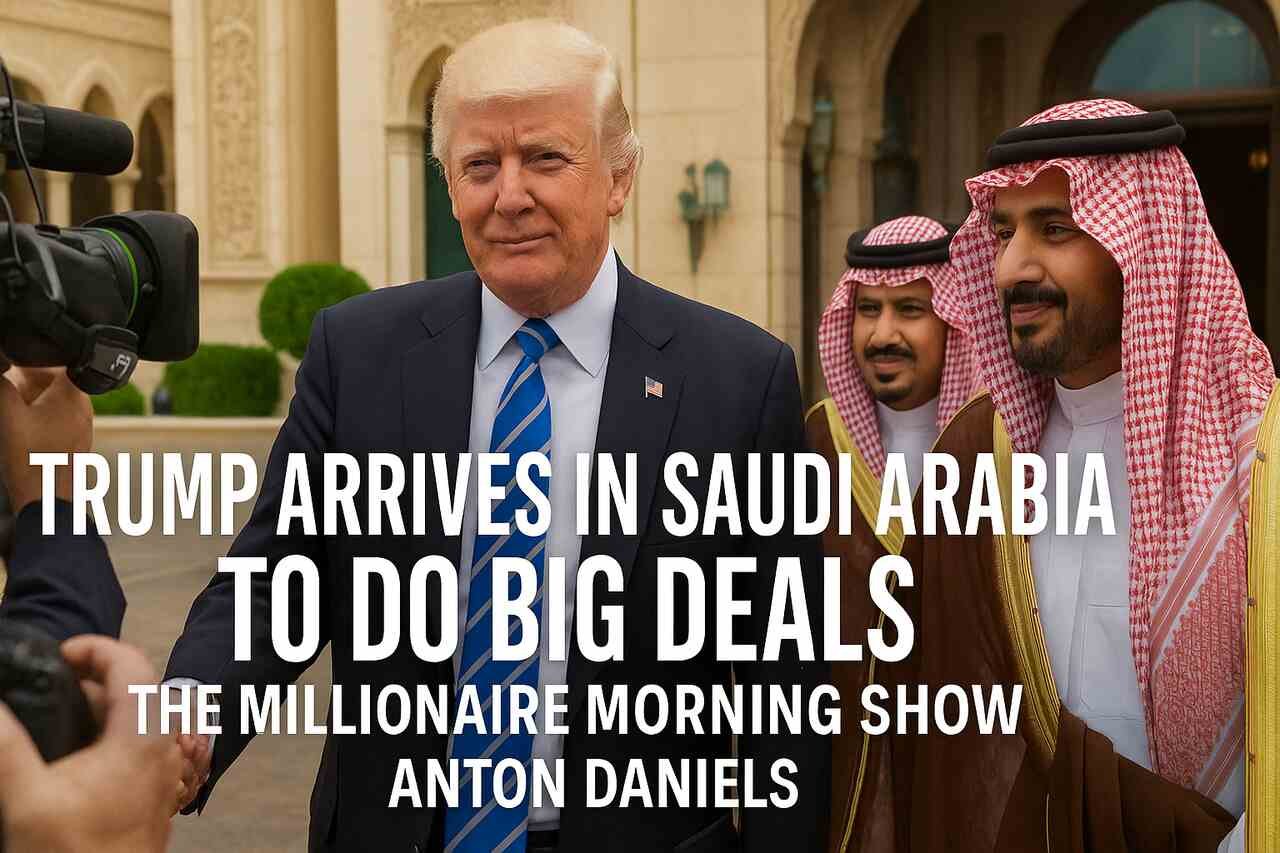
In this article, inspired by the insightful commentary from The Millionaire Morning Show w/ Anton Daniels, we’ll explore the key highlights of Trump’s visit to Saudi Arabia, the massive investment opportunities on the table, and the broader implications for U.S. economic and geopolitical interests.
President Donald Trump’s arrival in Saudi Arabia marks a significant moment on the global stage, signaling not just diplomatic engagement but a robust push toward massive investment deals. This trip is more than a routine diplomatic visit—it’s a business-driven mission designed to reshape international relationships through commerce and strategic partnerships.
A Grand Welcome and Strategic Focus
President Trump’s arrival in Riyadh was nothing short of spectacular. Air Force One was escorted by Saudi F-15 fighter jets, and the president received a royal welcome from Crown Prince Mohammed bin Salman. This warm reception underscores the close ties between the Trump administration and Saudi Arabia, a relationship built on mutual interests and strategic alliances.
Unlike traditional diplomatic visits that often focus on geopolitical discussions, this trip is squarely centered on business. Trump’s agenda is packed with meetings involving some of the world’s top CEOs, including Elon Musk, Sam Altman of OpenAI, Mark Zuckerberg of Meta, and leaders from Google, Boeing, Amazon, Nvidia, and Coca-Cola. Their presence signals the high stakes involved, particularly in technology and innovation sectors.
The Business-First Approach
One of the most striking aspects of this visit is its emphasis on transactional relationships. As Anton Daniels points out, international relations should be a two-way street—business deals where both parties gain value. For years, Daniels argues, the U.S. has been more of a generous steward on the world stage, often subsidizing global interests without sufficient return.
Trump’s visit flips that narrative. The goal is clear: secure investments that benefit the United States directly, create jobs, and stimulate economic growth at home. The administration is pushing for deals that could inject a staggering minimum of $600 billion into the American economy, with potential investments reaching up to a trillion dollars.
Massive Investment Potential: $600 Billion to a Trillion Dollars
The headline figure of $600 billion in potential investments is a game-changer. This number represents a broad spectrum of deals, including technology, infrastructure, energy, and more. It’s no coincidence that the trip includes leaders from major tech companies, signaling a focus on innovation-driven growth.
Saudi Arabia’s Public Investment Fund (PIF), which reportedly controls assets nearing $960 billion, is poised to be a key player in these investments. The Crown Prince’s vision includes launching new ventures like Humane AI, an artificial intelligence fund designed to capitalize on emerging technologies. This initiative is a clear invitation for American companies to collaborate and invest in cutting-edge AI developments.
Technology and AI: The New Frontier
The presence of AI leaders such as Sam Altman of OpenAI and Elon Musk emphasizes how critical technology is to these discussions. With AI rapidly evolving, securing partnerships and investments in this sector is vital to maintaining U.S. leadership globally.
Daniels highlights the strategic importance of these deals, especially in light of competition from countries like China, which has been aggressively acquiring intellectual property through less-than-transparent means. By fostering partnerships with Saudi investment funds, American companies can secure funding to innovate on home soil, ensuring that breakthroughs benefit the U.S. economy and workforce.
Controversies and Challenges: The $400 Million Luxury Jet
Despite the positive business outlook, the trip is not without controversy. A significant point of debate is the Trump administration’s plan to accept a $400 million luxury jet from Qatar to serve as the new Air Force One. This proposal has ignited ethical, legal, and security concerns among critics from both political parties.
Trump addressed these concerns head-on, showing no apologies for the potential acceptance of the plane. It’s a complex issue that intertwines diplomatic relations, security protocols, and public perception. Yet, it illustrates the broader theme of this trip: leveraging assets and deals to strengthen American interests while navigating the challenges that come with high-profile international engagements.
The Power Players Behind the Scenes
One of the remarkable features of this trip is the caliber of business leaders accompanying the president. CEOs and top executives from several multinational corporations are present to ensure expertise is at the table during negotiations. This approach reflects a shift toward a business-oriented presidency, where economic growth and dealmaking take center stage.
Daniels argues that having leaders with strong business acumen at the helm—whether in local governments or the presidency—is crucial. He cites Ross Perot as an example of a self-made businessman who could have brought a similar approach to the White House, emphasizing fiscal responsibility and economic growth.
Business as the Backbone of Governance
According to Daniels, governance should prioritize business principles: creating jobs, reducing taxes, increasing investments, and ultimately putting more money in the pockets of American citizens. This visit epitomizes that philosophy, steering away from traditional political rhetoric and focusing on tangible economic outcomes.
Global Implications: Redefining U.S. Foreign Relations
Trump’s visit to Saudi Arabia is emblematic of a broader shift in U.S. foreign policy—one that prioritizes economic interests and transactional diplomacy. This strategy aims to rebalance global relationships, ensuring the U.S. is not merely a benefactor but a beneficiary in international dealings.
By inviting global CEOs and tech innovators to participate in these discussions, the administration is signaling a new era where diplomacy and commerce are intertwined. The potential $600 billion to $1 trillion investment figure is not just a number; it represents a strategic pivot toward economic leadership on the world stage.
Challenges Ahead
Of course, such ambitious deals come with challenges. Skepticism remains regarding the ethical implications of some agreements, like the luxury jet, and concerns about transparency and national security. Moreover, competition from global powers like China continues to pose risks, particularly in technology sectors.
Nevertheless, this trip showcases a proactive approach to these challenges by engaging directly with key global players and leveraging the United States’ economic strengths.
Conclusion:
President Trump’s visit to Saudi Arabia is a landmark moment that blends diplomacy with high-stakes business strategy. The emphasis on securing enormous investments—potentially up to a trillion dollars—signals a renewed focus on economic growth, job creation, and technological leadership.
As highlighted by The Millionaire Morning Show w/ Anton Daniels, this trip embodies the philosophy that America should be a savvy dealmaker on the global stage, not just a generous steward. By bringing together world leaders, tech innovators, and business executives, the administration is crafting a vision of America that prioritizes tangible benefits for its citizens.