

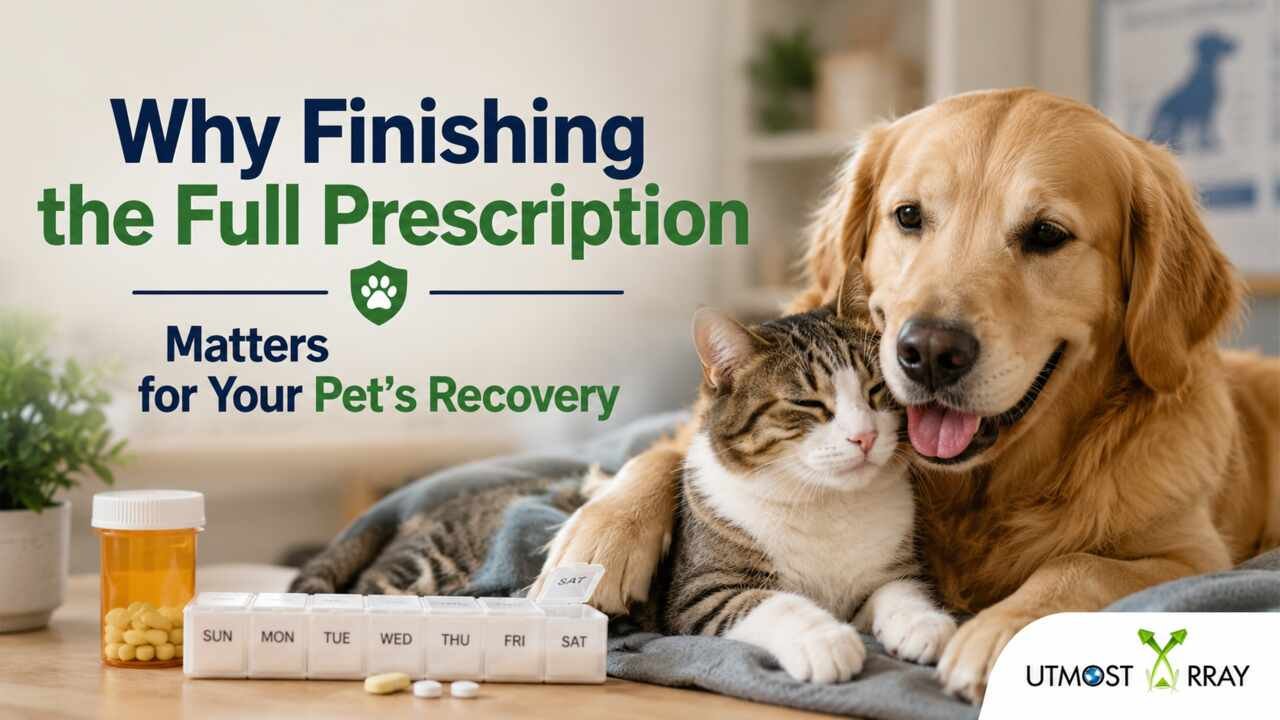
When a dog’s limp goes away or a cat’s sneezing stops, most pet parents breathe a sigh of relief and assume the problem is solved. After all, that’s your goal, right? We certainly hope so. But too often, that’s where well-intentioned pet owners go wrong. The disease that caused those symptoms can still be present in your pet’s body, just dormant enough to escape your notice.
Clinical remission vs. microbiological cure
There’s a distinction between when your pet is “looking” better and when your pet is “being” better, and it’s quite significant.
While in clinical remission, the visible symptoms of your pet’s infection disappear – the coughing, the wheezing, the runny stools, the lethargy. This is often when pet owners (and veterinarians) decide it’s a wrap. Your pet must be cured, right? This is the endpoint, isn’t it?
Not exactly. Clinical remission is an important stepping stone on the way to where you ultimately want to be, which is microbiologic cure. Microbiologic cure is the point at which we can safely say the pathogen – the bacteria, fungus, or parasite responsible for the infection – has been completely eradicated from your pet’s system.
What actually happens when you stop early
When your pet is administered broad-spectrum antibiotics, they attack the bacteria responsible for the infection until the weakest bacterial cells are destroyed. The stronger bacterial cells, i.e., the ones that have characteristics that make them slightly more resilient to the antibiotic continue to survive. If the dose of antibiotics is stopped before the full treatment has been administered, the stronger bacterial cells will continue to live and reproduce. With the weaker bacterial cells destroyed, the resistant bacterial cells will multiply faster and easier. This causes reinfection due to bacterial cells that are more resistant to the antibiotics used in the first round of treatment.
The real cost of a relapse
A relapse is not equivalent to the beginning of a process. It will be the beginning of a more difficult one.
The infection comes back because the bacteria were never fully eradicated, allowing them to multiply because their competition for space on the host’s tissues has been temporarily eliminated or diminished.
When they reinitiate treatment, the second-line drug must work against a population of bugs that has had a head start in doing exactly what they evolved to do – survive against all existing threats. These second-line medications tend to be more expensive, sometimes significantly. They also carry a higher likelihood of side effects, because they’re designed to work harder. So the owner who stopped the antibiotics three days early to spare their cat some gastrointestinal upset may end up with a sicker cat, a more stubborn infection, and a larger vet bill.
Managing the real struggles of medicating a pet
There’s no shame in struggling to give your pet a pill. It’s difficult to do, and that’s why it’s worth having a conversation about what is practical.
Resources like finepethealth.com are designed to provide assistance with this exact kind of day-to-day problem. That gap between what a vet prescribes and what can easily be done at home when your pet simply rejects the medication you’re trying to give them.
Here are a few tips that can help:
Pill pockets are chewy and tasty treats with a small opening where you put the medication. Most dogs will gobble them up without any issues, which will save you a lot of trouble. Many cats will gladly eat them as well, assuming they like the flavor.
Mixing the medication with a small amount of wet food could be a convenient way to go if your pet can handle the whole quantity. The important thing is to give them just enough to ensure they finish the entire portion, instead of just hiding the pill in the entire meal.
If your pet simply keeps rejecting solid medication and you start to notice vomiting, making you wonder if they are actually digesting the medication, then you should consult your vet about a liquid alternative. Many of the antibiotics used in veterinary medicine, for example, come in liquid form, making it much easier for you to administer and easier for your pet to stomach.
Minor side effects will not necessarily mean that you have to stop giving the medication. For example, if your pet starts to feel a bit more tired or if it seems like their stool has softened, you might simply want to add vet-approved probiotics to their diet. They will help to settle the stomach without interrupting their treatment. Just consult with your vet before adding any new supplements to your pet’s diet.
The one thing that actually changes outcomes
It’s best to contact the clinic before you miss a dose or decide to stop giving a medication. The context might matter. Maybe an alternative could be provided. The dosage could be adjusted. A long-acting injection might be appropriate.
If your pet is reacting badly to a medication, if you’re struggling to administer it, if you’ve missed several doses and aren’t sure what to do next – that conversation belongs with your veterinarian, not a forum. A vet can adjust the approach, switch formulations, or tell you whether stopping is genuinely warranted. That decision shouldn’t be made based on how your pet looks on a Tuesday afternoon.
Finishing the prescription isn’t about rigidly following instructions for their own sake. It’s about making sure the invisible work of eradication is actually done – so your pet doesn’t have to go through it again, harder.
