

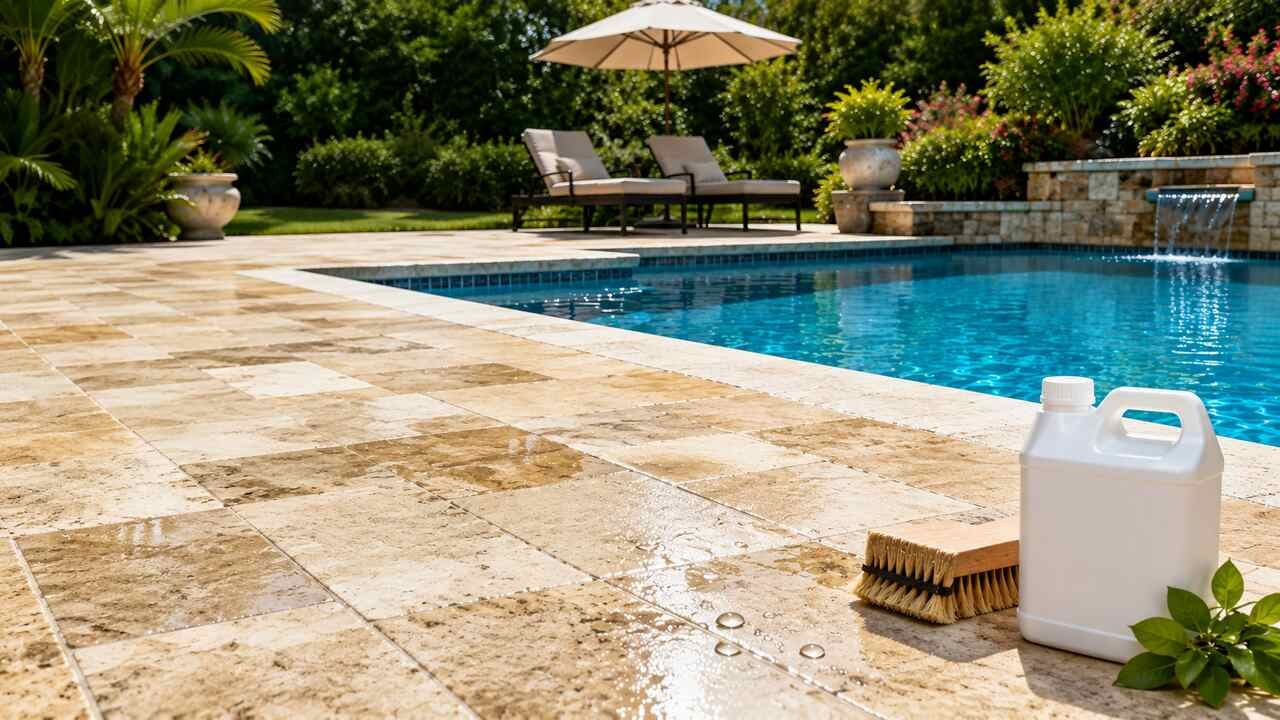
Pool decks and coping stones face a uniquely harsh mix of moisture and chemicals. Chlorine, salt, and constant splashing can quickly break down sealers not designed for pools. You get consistent results every time you apply TSS Pro Stone Sealants, even in conditions where other sealers often fail. Its formula resists chemical breakdown while still allowing trapped moisture vapor to escape naturally. Pool owners want stone that stays safe underfoot even when it gets fully wet. When you apply pool-safe stone sealant, you protect the surface and keep swimmers safe nearby.
Understanding Pool Safe Sealants
Pool safe sealants have a different chemical makeup that allows them to withstand constant water exposure without breaking down. They must also resist constant chemical exposure without breaking down or discoloring over time. Most pool sealers also need to provide reliable slip resistance for constantly wet feet. Breathability also matters greatly, since trapped moisture can eventually cause stone to crack apart. When your sealer has strong UV stability, it stops yellowing and fading even under daily direct sunlight. Good sealers must balance all these needs without sacrificing natural stone appearance or texture.
Chemical Exposure And Stone Damage
Chlorine and bromine remain effective sanitizers but stay quite harsh on unprotected stone surfaces. Over the years, harsh chemicals wear down stone surfaces until the color fades and the structure weakens. Saltwater pools introduce additional corrosive elements that can accelerate mineral breakdown within the stone. Sunscreen residue and body oils add yet another layer of daily chemical exposure too. Without proper protection, these combined factors can quickly shorten a stone surface lifespan significantly. A strong sealer creates a barrier that keeps chemicals from penetrating the stone deeply.
Slip Resistance And Safety Standards
Pool areas always require sealers that maintain solid traction even when surfaces stay wet. Slippery pool decks put both children and adults at risk of falls and injuries. Low sheen finishes often provide much better grip than glossy, high shine coatings do. Many local safety codes now clearly address acceptable slip resistance ratings for pool decks. Testing traction under both dry and fully wet conditions gives a more complete picture. A truly safe finish protects both the stone itself and everyone walking around it.
Application Around Pool Environments
Applying sealer near pools always requires very careful attention to timing and weather conditions. Surfaces must be thoroughly cleaned and made completely dry before any product is applied. Pool chemical levels should be balanced beforehand to avoid interfering with the curing process. Applicators often work in careful sections to keep coverage even across large deck areas. Curing time before pool reopening usually varies based on temperature and current humidity levels. Following manufacturer guidelines closely helps ensure a smooth, long lasting final result overall.
Maintaining Sealed Pool Surfaces
Sealed pool surfaces still need routine, regular cleaning to remove built up chemical residue. Mild, pH balanced cleaners generally work best and will not damage the sealed finish. Harsh acidic cleaners can quickly strip protective coatings and expose stone to further damage. Reapplying sealer periodically also keeps protection strong against ongoing pool chemical exposure over time. Inspecting the surface each pool season helps catch early signs of wear more quickly. When you keep up with regular care, your pool area stays safe and looks great for years.
Chlorine and constant sunlight wear down pool decks faster than sealers made for drier areas. A sealer built specifically for pools keeps the surface safe while preserving its natural color and shine. Strong chemical resistance and good traction stop slips and keep the stone from breaking down early. When you choose a sealer made for pool conditions, you avoid costly repairs and repeated resealing. A saltwater pool wears differently than a chlorine pool, so the sealer needs may not match. When you apply the sealer as directed, chlorine and sunlight no longer cause stains or surface cracks.
