
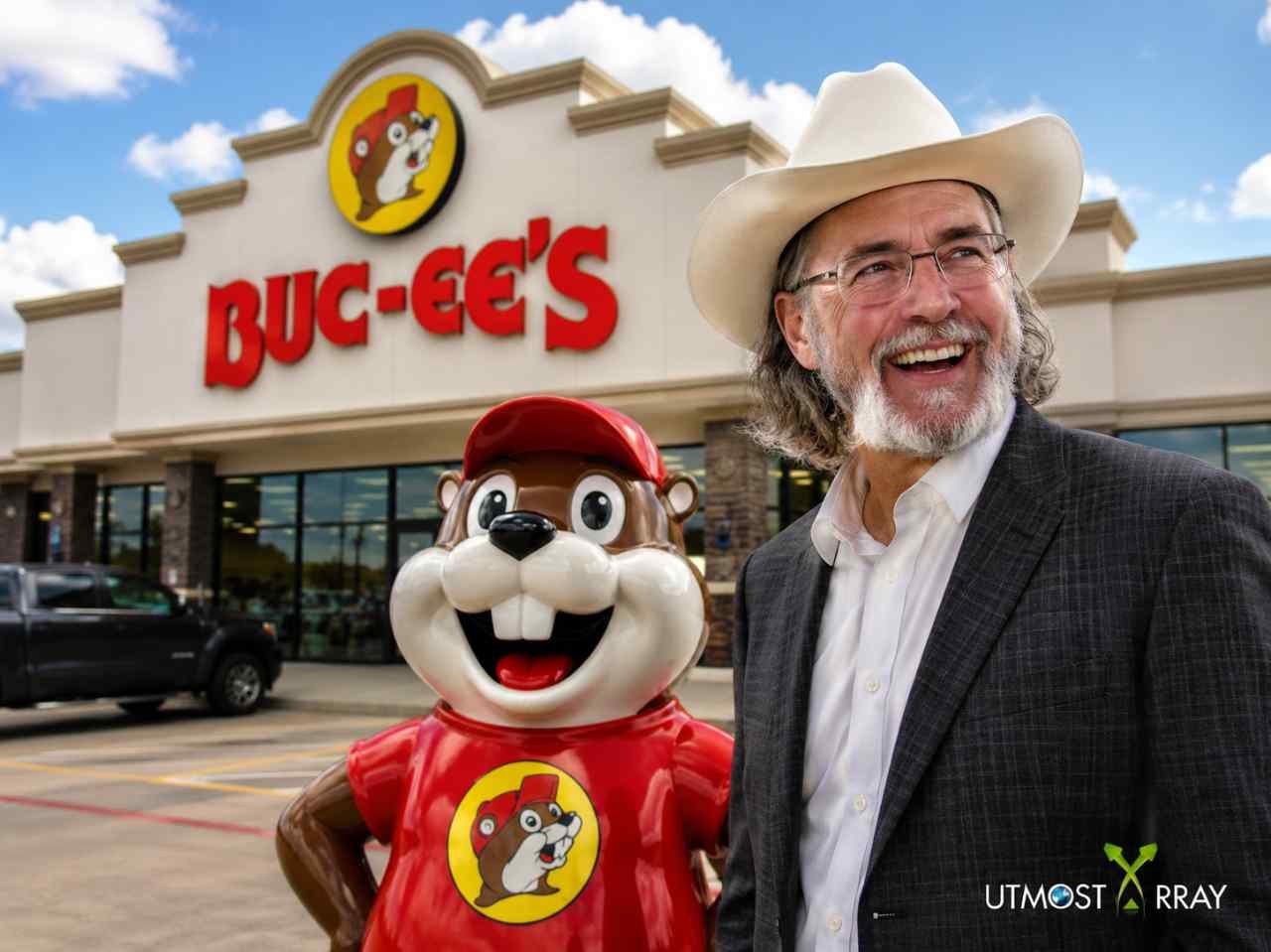
Buc-ee’s has become one of the most recognizable travel center brands in the United States, famous for its massive convenience stores, spotless restrooms, Texas barbecue, Beaver Nuggets, and extensive fuel stations. As the company continues expanding across multiple states, many people ask one question: Who is the owner of Buc-ee’s?
The answer is straightforward. Buc-ee’s was co-founded by Arch “Beaver” Aplin III, who remains the company’s majority owner and driving force. The business was originally launched with Don Wasek, and today it continues to operate as a privately owned company rather than a publicly traded corporation. Understanding the ownership, leadership, and growth of Buc-ee’s provides valuable insight into how the brand became one of the fastest-growing travel center chains in America.
This guide explains who owns Buc-ee’s, how the company was founded, who manages its operations, how its business model works, and what the future holds for the iconic convenience store chain.
Learn Who Owns Buc-ee’s Today
The current owner and majority shareholder of Buc-ee’s is Arch “Beaver” Aplin III. He co-founded the company in 1982 and has remained its primary leader throughout its growth.
Aplin earned the nickname “Beaver” during childhood, and that nickname inspired the famous Buc-ee’s mascot. His vision centered on creating a travel stop that combined clean facilities, quality food, extensive fuel services, and exceptional customer service under one roof.
Unlike many retail chains that sell ownership to public investors, Buc-ee’s remains privately owned. This ownership structure allows company leadership to make long-term business decisions without pressure from public shareholders.
| Ownership Detail | Information |
| Majority Owner | Arch “Beaver” Aplin III |
| Co-Founder | Don Wasek |
| Company Founded | 1982 |
| Headquarters | Lake Jackson, Texas |
| Ownership Type | Privately Held Company |
| Industry | Convenience Stores and Travel Centers |
Explore How Buc-ee’s Was Founded
Buc-ee’s began in 1982 when Arch Aplin III partnered with Don Wasek to open the first convenience store in Lake Jackson, Texas.
The founders noticed an opportunity to improve the traditional gas station experience. Rather than focusing solely on fuel sales, they emphasized customer satisfaction through cleaner stores, larger product selections, and superior service.
Over time, the founders invested heavily in expanding store sizes, improving food offerings, and maintaining exceptionally clean restrooms. These decisions became major differentiators that helped Buc-ee’s build a loyal customer base across Texas before expanding into other states.
Their approach transformed Buc-ee’s from a regional convenience store into one of America’s best-known travel destinations.
Understand Arch “Beaver” Aplin III’s Leadership
Arch Aplin serves as the face of Buc-ee’s and has guided the company through decades of expansion.
His leadership philosophy emphasizes consistency. Every Buc-ee’s location maintains similar standards for cleanliness, customer experience, food quality, and product selection.
Several factors define his management approach:
- Customer-first operations
- Large-format retail stores
- High employee wages compared to many competitors
- Strict cleanliness standards
- Fresh food prepared throughout the day
- Strategic location selection
These principles have helped Buc-ee’s develop one of the strongest reputations in the convenience retail industry.
Discover Don Wasek’s Role in Buc-ee’s
Although Arch Aplin is widely recognized as the public face of the company, Don Wasek played an important role in co-founding Buc-ee’s.
Wasek helped establish the early business and contributed to its operational growth. While he has maintained a much lower public profile than Aplin, his partnership during the company’s early years helped create the foundation for future expansion.
The collaborative efforts of both founders enabled Buc-ee’s to develop a business model that combined convenience retail, fuel sales, and destination shopping.
Examine How Buc-ee’s Business Model Supports Private Ownership
Remaining privately owned gives Buc-ee’s several competitive advantages.
Without quarterly earnings pressure from public investors, company leadership can prioritize long-term investments. New stores often require significant capital because they feature hundreds of fuel pumps, expansive retail areas, and large parking facilities.
The company also controls nearly every aspect of the customer experience, including:
- Fresh food production
- Branded merchandise
- Fuel operations
- Store design
- Employee training
- Customer service standards
This centralized control helps maintain consistency across locations while supporting continued growth.
Review the Products That Built the Buc-ee’s Brand
Buc-ee’s has become famous for offering far more than gasoline.
Its stores feature an extensive selection of products that attract travelers who may spend considerable time shopping before returning to the road.
Popular offerings include:
- Beaver Nuggets
- Texas barbecue
- Fresh brisket sandwiches
- Homemade fudge
- Jerky
- Candied nuts
- Kolaches
- Fresh bakery items
- Coffee
- Fountain drinks
- Branded clothing
- Home décor
- Outdoor accessories
- Gifts
- Seasonal merchandise
These product categories generate significant retail revenue in addition to fuel sales.
Follow Buc-ee’s Expansion Across the United States
Buc-ee’s originally operated only in Texas but has expanded into several states across the South and Midwest.
New locations have opened in states including:
| State | Buc-ee’s Presence |
| Texas | Extensive network |
| Alabama | Multiple locations |
| Florida | Multiple locations |
| Georgia | Growing presence |
| Kentucky | New expansion |
| South Carolina | Operating locations |
| Tennessee | Operating locations |
| Missouri | Expansion underway in recent years |
| Mississippi | Operating locations |
| Colorado | Planned expansion announced |
Each new location follows the company’s proven blueprint of large stores, extensive fuel stations, fresh food, and exceptional cleanliness.
Recognize the Leadership Philosophy Behind Buc-ee’s Success
Buc-ee’s leadership has consistently focused on operational excellence rather than rapid expansion.
Instead of opening hundreds of smaller stores, the company builds fewer but significantly larger locations capable of serving thousands of travelers daily.
Key principles include:
- Premium customer experience
- Large retail inventory
- High-volume fuel sales
- Employee retention
- Operational efficiency
- Strong brand identity
- Strategic interstate locations
These priorities have helped Buc-ee’s maintain strong customer loyalty while expanding into new markets.
Compare Buc-ee’s Ownership With Other Convenience Store Chains
Ownership structures vary widely across the convenience store industry.
| Company | Ownership Type | Primary Business |
| Buc-ee’s | Private | Travel centers and convenience stores |
| 7-Eleven | Subsidiary of Seven & i Holdings | Convenience stores |
| Wawa | Privately held | Convenience stores and fuel |
| Sheetz | Family-owned private company | Convenience stores and fuel |
| Casey’s | Publicly traded | Convenience stores |
| Circle K | Subsidiary of Alimentation Couche-Tard | Convenience stores |
Buc-ee’s shares similarities with other privately held chains but distinguishes itself through exceptionally large stores and destination-style retail experiences.
Understand the Future of Buc-ee’s Ownership and Growth
Arch Aplin III continues leading Buc-ee’s as it expands into additional states. The company has shown no indication of becoming publicly traded, allowing it to preserve its long-term strategy and maintain operational control.
Future growth is expected to focus on carefully selected interstate locations that can support the company’s large-format stores and high customer traffic. By expanding deliberately rather than rapidly, Buc-ee’s aims to protect the standards that have made the brand successful.
Continued investment in fresh food, employee training, branded merchandise, and customer service is likely to remain central to its competitive advantage.
Conclusion
The owner of Buc-ee’s is Arch “Beaver” Aplin III, the company’s co-founder and majority owner. Alongside co-founder Don Wasek, he launched the first Buc-ee’s store in 1982 with a vision of redefining the convenience store experience. Today, Buc-ee’s remains a privately held company known for its oversized travel centers, exceptional cleanliness, fresh food, and customer-focused operations.
Private ownership has enabled the company to prioritize long-term growth over short-term financial pressures, helping it become one of the most successful travel center brands in the United States. As Buc-ee’s continues expanding into new states, its ownership structure and leadership philosophy remain key factors behind its enduring popularity.