

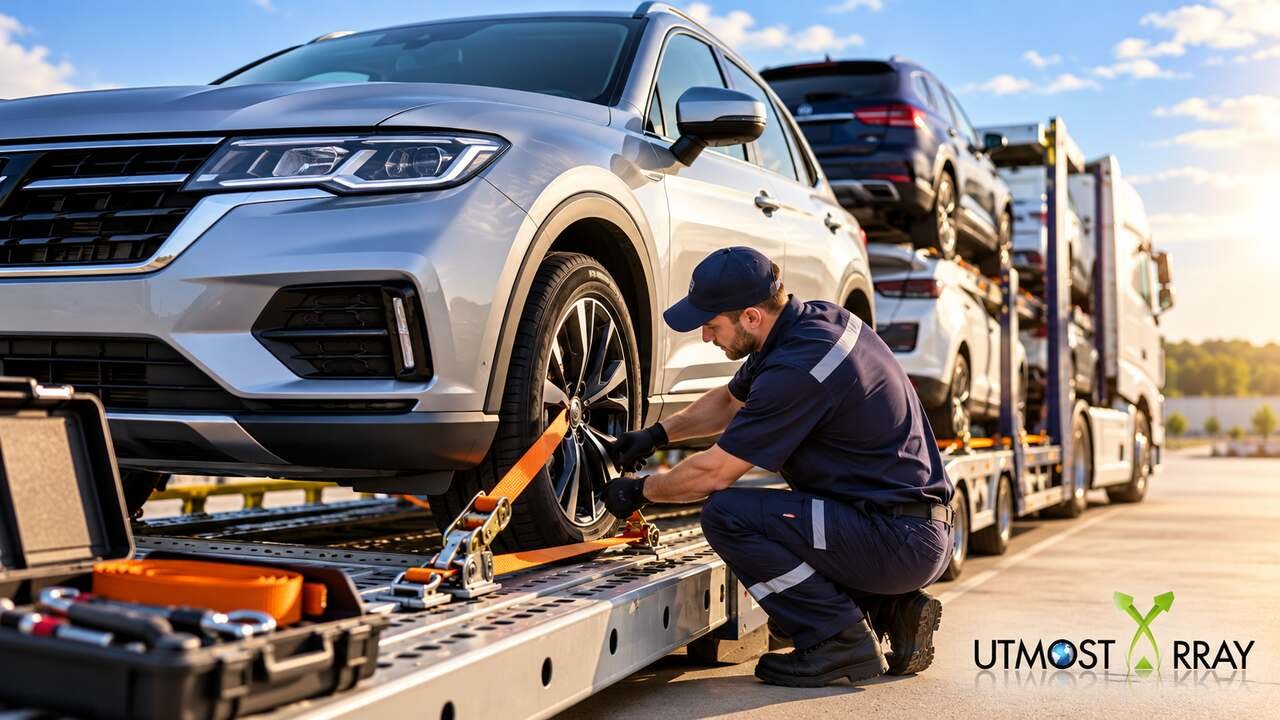
Most cars aren’t damaged on the truck because the driver did something wrong. They’re damaged because the owner sent a car that wasn’t ready to be tied down, winched and hauled at highway speed. Prep it the way an experienced operator would and you take almost all of that risk off the table.
Photograph everything before the truck arrives
Start with your phone rather than your keys. Walk around the car in good light and photograph all four sides, along with the roof and lower bumpers. Get close to every mark, no matter how small, then photograph the odometer and dash lights. Turn the time stamp on or hold that day’s paper in one frame so there’s no argument later about when the photos were taken.
Drivers ask for this because damage claims live or die on proof. A transport company works from a bill of lading and condition report that both sides sign at pickup. That sheet records chips, scratches and dents that were already there, and your photos need to match it. If a new scrape shows up at drop-off, those paired records are what get it fixed without a fight.
Don’t skip this step. It takes about ten minutes and gives both you and the driver a clear record of the car’s condition before loading begins.
Take four corner shots that show two panels at once, followed by straight-on shots of each panel. Photograph the wheels, glass and mirrors as well. Include the under-bumper lip if the car sits low. Owners may forget the roof and then argue over a branch scratch that no one can date, so photograph it even if it looks clean.
Dated photos win disputes.
Keep those files somewhere you can pull them up quickly at delivery. Don’t rely on the driver or the transport company to store them for you.
Sort leaks, tyres and fluids first
A transporter can refuse a car that drips. Oil, coolant, brake fluid and transmission fluid all make steel decks slick, and any of them can start a fire in the wrong place. Check the driveway for fresh spots on the morning before pickup. Look under the engine and transmission. If you see wet lines or smell fuel, get the problem fixed or at least contained, then tell the company up front.
The concern is practical rather than fussy. A flatbed has a steep winch angle and a smooth steel surface. A car that leaks can slide slightly on the ramps and leave fluid where the next car’s tyres need grip. Crews won’t put that risk on their truck. A small seep contained in a drip tray, with a note to the driver, is one thing. An active leak you didn’t mention can lead to a refused load.
Tyres matter just as much. Inflate them to the pressure shown on the door sticker and look closely at the sidewalls for bulges and cuts. A soft tyre squashes and shifts once the tie-down straps pull tight. It can roll off the rim during winching or blow out on the bed. Spare tyres in the boot should also be secured because loose spares can bounce around and crack trim.
Top up brake fluid and coolant to their normal levels, but don’t overfill either system. Leave the washer fluid where it is. You want systems sealed and caps tight so nothing sloshes onto hot parts or the deck during loading and transport. Wipe down the engine bay if it’s grimy so any fresh leaks are easy to spot at handover.
Strip it, shut it down and lighten it
Take out everything that isn’t bolted down. That includes phone mounts, loose change, tools, sports gear and boxes in the boot. Remove toll tags, parking passes and detachable stereo faces. Pull off roof crossbars and bike mounts if you can, and remove loose trim or covers that could lift at speed.
There’s a hard safety reason for doing this. AAA Foundation for Traffic Safety research (2016) found that road debris, including items that fell or broke off vehicles, caused more than 200,000 crashes and roughly 500 deaths on roads between 2011 and 2014 (AAA Foundation for Traffic Safety). A roof bar or floor jack that breaks loose on an open trailer becomes a danger to everyone nearby.
Fuel adds weight, and weight affects the truck’s rating. Keep the tank at about a quarter full. That’s enough to load and unload the car, then drive to a station, without adding 80 kilos of fuel high up in the vehicle. It also limits spill risk on steep ramps and keeps you within most company weight policies. Curb weight, the fuel load and anything left in the boot all help determine whether the winch and truck brakes are rated for the load.
Battery condition can make or break the day. A weak battery won’t run the hazards during loading, and it may not restart after a cold night on an open deck. Charge it and clean the terminals before pickup. If you know it drains down, tell the operator so the driver can bring a battery pack.
A quarter tank is usually the sweet spot, giving the driver enough fuel to move the car without carrying unnecessary weight.
Locking wheel nuts, valet modes and immobilizers all need a plan before the truck shows up, which brings us to alarms and keys.
Decide between a DIY trailer and a professional flatbed
This is where many owners get stuck. A tow dolly or car trailer can look cheap until you price the hitch, wiring and larger tow vehicle, as well as the day you lose to loading it properly. You also take responsibility for load securement rules. Straps must sit on rated points on the wheels or frame, while chains must not crush brake lines. The trailer’s lights and brakes also need to work. Get any part of that wrong and the car can walk sideways at 90 kph.
Flatbed Towing is the standard for a reason. The whole car rides off the ground, so there is no drag on the gearbox and no wear on the tyres. Low cars can use low-angle ramps and a winch pull instead of scraping their way up steel. Tie-down straps hold the vehicle at four points with even tension. For long hauls or cars with real value, enclosed transport adds protection from weather and stone chips. Open transport costs less and is suitable for most daily drivers.
Be honest about your skill and equipment. If you’ve never set strap tension or backed a trailer, your first attempt should not involve your own car on a busy road. Drivers in the Hunter region who don’t want to gamble on a first-time load often book verified professional car transport newcastle nsw instead of hiring a trailer and learning load securement on the fly. You pay for a rated truck, an experienced driver who loads vehicles every day and insurance that actually covers transit.
Hiring the job out is often the sensible choice. Getting the loading or securement wrong can cost far more than professional transport.
Tell the operator how the car actually behaves
Now put yourself in the tow truck driver’s seat. The operator plans the whole load around whether the car rolls, steers and brakes normally. If it doesn’t, they need to know before arriving so they can bring extra blocks, skates or a second person.
Say if the car doesn’t start, if the brakes grab or if the steering locks. Mention a sticking parking brake as well. A car that rolls freely can be winched in neutral with light steering input. A vehicle with seized brakes or a locked gearbox needs skates under the dead wheels and a slower pull, which changes the time, space and equipment required.
Drivetrain details also shape the method. Flatbed Towing avoids most drivetrain concerns because none of the car’s wheels touch the road. Wheel-lift or dolly Towing does not offer the same separation. A rear-wheel-drive or all-wheel-drive car pulled with its rear wheels down can wreck its transmission unless the driveshaft is disconnected. A neutral transmission is required for most non-flatbed pulls, while ground clearance determines the right ramp choice. Tell the dispatcher the ride height if the car is lowered or has a long front overhang.
The best results are when owners send a short note listing the year, model, curb weight, ground-clearance quirks and known faults. Add photos of the front lip and any leak points. That information lets the crew choose strap points that won’t bend control arms and set tension that won’t flat-spot soft tyres.
Leave the parking brake off for the winch pull, then let the driver set the chocks and brake once the car is correctly placed. Don’t argue about the sequence. That order keeps stress off the cables while preventing the car from hopping on the deck.
Have the handover ready when the driver arrives
Have the papers and keys in your hand rather than inside the house. The driver must check ownership documents and registration papers, then confirm that the name matches the booking. Have your photo ID ready too. If the car has locking wheel nuts, place the key adapter on the passenger seat with the spare key. If there’s a kill switch or tracker, demonstrate how it works and leave clear written steps.
Keys deserve more thought than most owners give them. Bring every working remote and leave a spare with a good battery. Test the lock, unlock and start functions the night before pickup. Disarm the alarm system and turn off auto-arming if possible. Modern alarms can re-arm during the trip, lock the doors and flash until the battery dies. The result is a dead car on arrival and a driver who can’t move it without breaking in.
Walk around the car with the driver and read the condition report line by line. Point out every dent you photographed earlier. Make sure curb weight and fault notes appear on the sheet if the car has known issues. Both of you should sign the report, and you should keep a copy on your phone.
Clear a flat loading area with enough room for the doors to open and the ramps to drop. Move bins and bikes out of the way, along with any other cars. Keep pets and children inside during loading. Good light helps with early or late pickups. A calm, clear site makes the winch pull faster and safer for everyone involved.
Safe road transport mostly comes down to preparation completed before the truck arrives. Take dated photos and stop any drips, then set the tyre pressure, lighten the load and brief the operator on known faults. Have the keys and papers ready for handover. Do those jobs properly and Towing becomes boring in the best way: the car goes up straight, sits securely and comes down in the same shape it left.
